28 February, 2006

A Lenten Reflection


So the proud and esteemed Right Reverend Bishop Prelato says to the lowly Pastor Presbyterio,

"What are you going to give up for God this Lenten season?"

The meek and humble Pastor Presbyterio says to the Right Reverend Bishop Prelato,

"For God, this Lenten season, I am going to give up...Lent."

27 February, 2006

Labels, Labels, Labels!

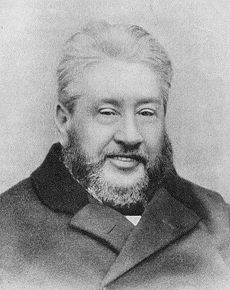
Charles Spurgeon is loved by many Baptists. He is by far one of the greatest Baptist preachers of all time. I think that this quote from Pastor Charles Spurgeon is one that would make many modern Baptists cringe. How could their beloved Spurgeon make such a comment? Spurgeon loved Christ and loved the Gospel and in this quote he tears through the labels and cuts at the heart.

"There is no such thing as preaching Christ and Him crucified, unless we preach what nowadays is called Calvinism. It is a nickname to call it Calvinism; Calvinism is the gospel, and nothing else. I do not believe we can preach the gospel, if we do not preach justification by faith, without works; nor unless we preach the sovereignty of God in His dispensation of grace; nor unless we exalt the electing, unchangeable, eternal, immutable, conquering love of Jehovah; nor do I think we can preach the gospel, unless we base it upon the special and particular redemption of His elect and chosen people which Christ wrought out upon the cross; nor can I comprehend a gospel which lets saints fall away after they are called, and suffers the children of God to be burned in the fires of damnation."
-Charles Spurgeon, Defense of Calvinism

25 February, 2006

Meditation: Psalm 131

O LORD, my heart is not proud, nor my eyes haughty; Nor do I involve myself in great matters, Or in things too difficult for me. Surely I have composed and quieted my soul; Like a weaned child rests against his mother, My soul is like a weaned child within me. O Israel, hope in the LORD From this time forth and forever.
-Psalm 131, NASB


In the providence of God this Psalm has been on my heart and mind quite a bit lately. This Psalm was assigned for me to preach- but the text was in error and now I have Romans 12.1-2. In the past week I have spent much time meditating on this Psalm as well as hearing it expounded by Seminarian Bill Boekestein of the United Reformed Churches and Rev. Ray Lanning of my church.

The Psalm begins with the great king of Israel in humble submission to the Lord. He speaks of being humbled in areas of thought, word, and deed. David stands before God in humility. This is our calling as Christians as well- we are to be humbled before the Lord.

The second verse of the Psalm speaks of great trust. The weaned child is one who has learned to trust that his mother will provide nourishment in due time. The Christian rests in the arms of Christ knowing that all needs will be supplied; even in great hunger and calling out to God- the Christian can rest assured that the Lord will provide and give care.

The third verse is one that goes from the individual attention of David to the entire people of God. Not only does David rest and trust in the Lord, but he calls on all of Israel to have this great hope. As followers of Jesus Christ, we too, need to call-out for the Church to trust in the Lord. All those that love Christ will love His bride and have her care in mind. Not only should we rest peaceably on the chest of Christ, but we should call the Church to have this peace as well.

The vain desires with which men are carried away, originate in their seeking to be wise and careful above what is necessary. David adds accordingly, my soul over me is quieted, not as expressing the language of self-confidence, but speaking as if his soul lay sweetly and peacefully on his bosom, undisturbed by inordinate desires. He contrasts the wayward and tumultuous agitation which prevails in those of a discontented spirit, with the peace which reigns in the man who abides in the calling of the Lord. From the verse with which the Psalm closes, we see the reason why David asserted his having undertaken nothing in the spirit of a carnal ambition. He calls upon Israel to hope in the Lord, words which must have been abrupt had it not deeply concerned the common safety of the Church, to know that he sat upon the throne of the kingdom by Divine appointment, in which case the faithful would be certain of the bestowment of the promised blessing. Our hope is of the right kind when we cherish humble and sober views of ourselves, and neither wish nor attempt anything without the leading and approbation of God. -John Calvin, Commentary on the Psalms, volume 5

23 February, 2006

Bible Works 7

Bibleworks newest version (7) has arrived, this has been available since the end of January. From the time that I have spent using it already, it is going to prove to be an invaluable resource. This will make studying the original languages much easier as it has many of the texts diagrammed for you and my favorite- all of the parsing is done for you! I saved a lot of time this week in doing work on I Corinthians 12.1-11. What usually requires a desk full of Greek lexicons and other aids can be done with my laptop. Check out how much this program has to offer. If you want to have a deeper understanding of the original Hebrew and Greek (even if you do not know any) than you should pick up a copy of Bibleworks.

21 February, 2006

Righteous Anger

Christians are to be angry people. We are to be angry at many things:

We are to be first, angry at our own sin. Our sin is that which nailed Christ to the tree of the cross. We are to be angry that after we have been redeemed, we still have difficulties living lives of gratitude and thankfulness. We continue to sin and to struggle with sin all of our days.
Christians are also to be angry at the sin of others. When we see that God is being blasphemed we should not take this lightly. We are not to act in ungodly ways towards others, but this should spur us on to confrontation and to evangelism. Anger should motivate us to defend the rights of Christ.
When we see that the Church remains in a miserable state, refusing God's commands, refusing to walk the way Christ walked, and refusing to be a submissive bride- we are to be angry and we are to call out to God to right these wrongs. We are to encourage teachers in the Church to defend the bride and we are to diligently pray that she is reformed to what Scripture requires of the Church.

The Apostle Paul said to be angry and sin not. This tells us that the Christian is entitled to this emotion. This emotion, when harnessed and used for the glory of God, can be a great tool in the quiver of God. Anger should not make us desire our way or our rights; but it should make us cry out for the rights and ways of God. Righteous anger should make us herald proclaiming that which is godliness.

Friends, when is the last time that you were angry at your sin? Angry at a backslidden church? Angry at a world that despises God and Christ? Be angry and sin not.

"I never work better than when I am inspired by anger; for when I am angry, I can write, pray, and preach well, for then my whole temperament is quickened, my understanding sharpened, and all mundane vexations and temptations depart." -Martin Luther

16 February, 2006

Meditation:Psalm 36.9

The moment one becomes a Christian their whole life begins to look differently to them. The new Christian sees him or herself in the light of God's Word. That light makes a tension in the life of the believer, a tension, which aides in sanctification. The Christian begins to see his or her sin in the light of the Word, which brings misery. The Christian also sees that he or she is an image bearer of God. The Psalmist said, "I am fearfully and wonderfully made."

This new light from Scripture, and applied by the Holy Ghost, causes a new new mind to see God's dealings in various disciplines and spheres of life. John Calvin said that when he was converted it was as if the Lord made his mind teachable. This is the truth for all those who truly love God. The mind becomes teachable and the mind begins to see things in the light of God's great standard.

There is an old Puritan way to discuss this light on the mind- a maid is cleaning the master's house because of a great gathering that he is having in the morning. She looks upon her work with joy, but in the morning she and the master are devastated. The home is a dusty mess! Why is the home so dusty? After night the sun rose and shone brightly into the estate. In the light of the sun, the maid was able to see the dust covering everything. This is how it is with humanity as well. Man thinks that he is pretty good, that he keeps his life in good order- but in the Light of The Son, man is revealed to be a filth covered sinner. In thy light shall we see light.

In thy light shall we see light.

Light is the glory of life. Life in the dark is misery, and rather death than life. The Lord alone can give natural, intellectual, and spiritual life; he alone can make life bright and lustrous. In spiritual things the knowledge of God sheds a light on all other subjects. We need no candle to see the sun, we see it by its own radiance, and then see everything else by the same lustre. We never see Jesus by the light of self, but self in the light of Jesus. No inward intelligence of ours leads us to receive the Spirit's light, but the rather, it often helps to quench the sacred beam; purely and only by his own illumination, the Holy Ghost lights up the dark recesses of our heart's ungodliness. Vain are they who look to learning and human wit, one ray from the throne of God is better than the noonday splendour of created wisdom. Lord, give me the sun, and let those who will delight in the wax candles of superstition and the phosphorescence of corrupt philosophy. Faith derives both light and life from God, and hence she neither dies nor darkens.
-Charles Spurgeon, 1885

14 February, 2006

Your True Love?

How much do you love the Lord Jesus today? How do you count him sweet to your life?

By looking unto Jesus we mean an inward experimental knowing, desiring, hoping, believing, loving, calling on Jesus, and conforming to Jesus. It is not a bare swimming knowledge of Christ; it is not a bare thinking of Christ. As Christ has various excellences in Himself, so has He formed the soul with a power of diverse ways of apprehending, that so we might be capable even as the creatures having their several uses. God has accordingly given us several senses, that so we might enjoy the delights of them all. What the better had we been for pleasant odiferous flowers, or sweet perfumes, if we had not possessed the sense of smell? Or what good would language or music, have done us, if God had not sent us the sense of hearing? Or what delight should we have found in meats or drinks, or sweetest things, if we had been deprived of the sense of tasting? So what pleasure should we have had even in the goodness and perfection of God in Christ, if we had been without the faculty and power of knowing, desiring, hoping, believing, loving, and enjoying? As the senses are to the body, so are these spiritual senses, powers, and affections to the soul the very way by which we must receive sweetness and strength from the Lord Jesus. -Isaac Ambrose, Looking Unto Jesus, 1680

13 February, 2006

What do theologians leave behind when they die?

If you were a world-famous theologian that was looked upon for wisdom and guidance by all of Europe what would you leave behind when you died?

THE WILL OF JOHN CALVIN.

In the name of the Lord – Amen. I, John Calvin, minister of the word of God in the church of Geneva, finding myself so much oppressed and afflicted with various diseases, that I think the Lord God has determined speedily to remove me out of this world, have ordered to be made and written, my testament, and declaration of my last will, in form and manner following: First, I give thanks to God, that taking compassion on me whom he had created and placed in this world, he not only delivered me by his power out of the deep darkness of idolatry, into which I was plunged, that he might bring me into the light of his gospel, and make me a partaker of the doctrine of salvation, of which I was most unworthy; that with the same goodness and mercy he has graciously and kindly borne with my multiplied transgressions and sins, for which I deserved to be rejected and cut off by him; and has also exercised towards me such great compassion and clemency, that he has condescended to use my labor in preaching and publishing the truth of his gospel. I also testify and declare, that it is my full intention to pass the remainder of my life in the same faith and religion, which he has delivered to me by his gospel; having no other defense or refuge of salvation than his gratuitous adoption, on which alone my safety depends. I also embrace with my whole heart the mercy which he exercises towards me for the sake of Jesus Christ, atoning for my crimes by the merits of his death and passion, that in this way satisfaction may be made for all my transgressions and offenses, and the remembrance of them blotted out. I further testify and declare that, as a suppliant, I humbly implore of him to grant me to be so washed and purified by the blood of that sovereign Redeemer, sited for the sins of the human race, that I may be permitted to stand before his tribunal in the image of the Redeemer himself. I likewise declare, that according to the measure of grace and mercy which God has vouchsafed me, I have diligently made it my endeavor, both in my sermons, writings, and commentaries, purely and uncorruptly to preach his word, and faithfully to interpret his sacred Scriptures. I testify and declare that in all the controversies and disputes, which I have conducted with the enemies of the gospel, I have made use of no craftiness, nor corrupt and sophistical arts, but have been engaged in defending the truth with candor and sincerity.
But, alas! my study, and my zeal, if they deserve the name, have been so remiss and languid, that I confess innumerable things have been wanting in me to discharge the duties of my office in all excellent manner; and unless the infinite bounty of God had been present, all my study would have been vain and transient. I also acknowledge that unless the same goodness had accompanied me, the endowments of mind bestowed upon me by God, must have made me more and more chargeable with guilt and inactivity before his tribunal. And on these grounds I witness and declare, that I hope for no other refuge of salvation than this alone – that since God is a Father of mercy, he will show himself a Father to me, who confess myself a miserable sinner. Further, I will, after my departure out of this life, that my body be committed to the earth in that manner, and with those funeral rites, which are usual in this city and church, until the day of the blessed resurrection shall come. As for the small patrimony which God has bestowed upon me, and which I have determined to dispose of in this will, I appoint Anthony Calvin, my very dearly beloved brother, my heir, but only as a mark of respect. Let him take charge of, and keep as his own, my silver goblet, which was given me as a present by Mr. Varanne: and I desire he will be content with it. As for the residue of my property, I commit it to his care with this request, that he restore it to his children at his death. I bequeath also to the school for boys, ten golden crowns, to be given by my brother and legal heir, and to poor strangers the same sum. Also to Jane, daughter of Charles Costans and of my half-sister by the paternal side, the sum of ten crowns. Furthermore, I wish my heir to give, on his death, to Samuel and John, sons of my said brother, my nephews, out of my estate, each forty crowns, after his death; and to my nieces Ann, Susan, and Dorothy, each thirty golden crowns. To my nephew David, as a proof of his light and trifling conduct, I bequeath only twenty-five golden crowns.

11 February, 2006

Plucking Eyes and Cutting off Hands

And if thy right eye offend thee, pluck it out, and cast it from thee: for it is profitable for thee that one of thy members should perish, and not that thy whole body should be cast into hell.
And if thy right hand offend thee, cut it off, and cast it from thee: for it is profitable for thee that one of thy members should perish, and not that thy whole body should be cast into hell.

-Matthew 5.29-30

Christian reader:
What is your view of sin? Does the thought of remaining sin in your life pester you? Does the thought of offending the Lord Jesus Christ through your continued rebellion cause you to come to Christ in repentance? The fact is that we are to have a holy violence against the sin that causes us to stumble. The sin that makes the unconverted look upon you and me as a hypocrite is in need to be cut off as the Lord Jesus said in the Sermon on the Mount. Many so-called Christians today live in a state of rebellion against the savior, living as though grace was a license to sin; living as though they are under no obligation to be conformed to the image of the Son of God. What is that image? How did Christ live? Christ lived in perfect obedience to the law of God and we are to live in obedience to the general equity of the law. This is the will of God in Christ. We are to hate our sin, we are to fight against what the Apostle Paul calls the "old man". We are in need of daily repentance, daily conversion to Christ- we are to regard sin with such heinousness that we would be willing to enter heaven dismembered and maimed than to offend our true Love, Jesus Christ.

Brothers and sisters, when was the last time that you repented and brought your sin before God with tears? When is the last time that you meditated upon your sin that Christ bore upon that cross of judgment?

Now to arm such Christians against their special sins, their peculiar sins- whose sins are advantaged against them, either by their constitutions and complexion, or else by their particular calling, or else their outward state and condition, or else by their distinct and peculiar ages, or else by their particular way of breeding and education- is my present work and business; for though the reigning power of this or that special peculiar sin be broken in a man's conversion, yet the remaining life and strength that is still left in those corruptions, will by Satan be improved against the growth, peace, comfort, and assurance of the soul. Satan will strive to enter in at the same door; and by the same Delilah, by which he hath betrayed and wounded the soul, he will do all he can to do the soul a further mischief. Satan will be still a-reminding of the soul of those former sweets, pleasures, profits, delights, and contents that have come in upon the old score, so that it will be a hard thing, even for a godly man, to keep himself from iniquity, from his special or peculiar sin, which the fathers commonly call, though not truly peacetime in daleks, a man's special daring and beloved sin.

Well, Christians, remember this once for all- that sound conversion includes a noble and serious revenge upon that sin which was once a man's beloved, bosom, darling sin: 2 Cor 7.11, "Yea, what clearing of yourselves, yea, what indignation, yea, what fear, yea, what vehement desire, yea what zeal, yea what revenge." You see this in Cranmer, who when he had subscribed with his right hand to that which was against his conscience, he afterwards, as a holy revenge, put that right hand into the flames; so Mary Magdalene takes that hair of hers. Of all sins, saith the sound convert I am resolved to be avenged on my once beloved, bosom, darling sins, by which I have most dishonoured God, and wronged my own precious and immortal soul, and by which I have most endangered my everlasting estate.
-Thomas Brooks (1608-1680)

09 February, 2006

How to Rule Over Your Wife With an Iron Fist

"So ought men to love their wives as their own bodies. He that loveth his wife loveth himself. " -Ephesians 5.28

Any fool can get married.

About half of them can stay married.

Some of those understand the requirements of scripture in how a man is to respond to his wife.

Even the Christian Church there is a huge problem with the proper understanding of how a husband is to respond to his wife in a Biblical manner. Men know that they are the heads over their wives. Often they will be more than willing to wield that title and to use that title to usurp his wife and her person. Often, especially in conservative (Reformed and Evangelical) churches, men will use this biblical title to oppress, enslave, and even harm their wives. Men can and do take this biblical idea and use it as a way to lift up their own sinful desires and to use their wives as one more way to get their own sinful desires fulfilled.

We, as husbands, need to learn how to respond to our wives in a biblical manner. There is more to Ephesians chapter five than husbands ruling and wives submitting. When a husband has a biblical understanding of himself and his own sinful desires he will be much more careful in his headship; making sure that he is desiring God's will and not his own will.

"The real cause of failure, ultimately, in marriage is always self, and the various manifestations of self. Of course that is the cause of trouble everywhere and in every realm. Self and selfishness are the greatest disrupting forces in the world. All the major problems confronting the world, whether you look at the matter from the standpoint of nations and statesmen, or from the stand point of industry and social conditions, or from any other standpoint- all of these troubles ultimately come back to self, 'my rights', to 'what I want', and to 'who is he?' or 'who is she'? Self with its horrid manifestations, always leads to trouble, because of its two 'selves' come into opposition there is bound to be a clash. Self always wants everything for it-self."
-Martyn Lloyd-Jones, Life in the Spirit: in Marriage, Home, & Work, 1973

Way to Go! Cornerstone!

It makes a blogger happy when he can report that a Christian organization has held its standards higher than criticism from the outside world. Cornerstone University has fired a Roman Catholic employee for not fitting the University requirements of an evangelical Christian. (Of course my criticism would be why did they hire a Roman Catholic in the first place?)

Way to go Cornerstone University!

Catholic Fired

06 February, 2006

The Way to Build Wealth and Fame


All people on this earth are storing up treasures for themselves. Some do this by way of cars and toys. Others do this by way of education or in the serving of their family and children. Some people store up treasures in friendships and in entertainment. All men are investing in, valuing, and storing up treasures in something. With the right use, all things mentioned are fine, but Scripture requires us to be investing in, valuing, and storing treasures into eternal things. So many in this world think that things, friends, marriage, beauty, education, and/or love will fulfill them. This is simply a lie.

Do not store up for yourselves treasures on earth, where moth and rust destroy, and where thieves break in and steal. But store up for yourselves treasures in heaven, where neither moth nor rust destroys, and where thieves do not break in or steal; for where your treasure is, there your heart will be also. The eye is the lamp of the body; so then if your eye is clear, your whole body will be full of light. But if your eye is bad, your whole body will be full of darkness. If then the light that is in you is darkness, how great is the darkness! No one can serve two masters; for either he will hate the one and love the other, or he will be devoted to one and despise the other. You cannot serve God and wealth. For this reason I say to you, do not be worried about your life, as to what you will eat or what you will drink; nor for your body, as to what you will put on. Is not life more than food, and the body more than clothing? -Matthew 6.19-25

"The whole design of God in all His Providence to us is to advance His own glory by drawing off our minds from the things which are seen, and which are temporal, to those that are invisible and eternal, and by all our earthly losses to teach us more the value of His own grace...what is more inexcusable than for a man , for a sinner, to dread poverty and outward meanness, and contempt, and not be afraid of hell, to live as if he were all body, and had no soul to save, to be fond of life, never to think of death, as if this would never perish, and that never come?" -Timothy Rogers (1658-1728)

04 February, 2006

Reason # 434

Yet another reason we here at PRESBYTERIAN THOUGHTS consider ourselves to be Reformed rather than Evangelical:

Mega Church: the video game

03 February, 2006

Ho, Everyone That Thirsteth

The Free Gospel Call
by Ralph Erskine (1685-1752)
from Isa. 55:1-3

"Ho, every thirsty soul, and all
That poor and needy are,
Here's water of salvation's well
For you to come and share.

Here's freedom from sin and woe,
And blessings all divine,
Here streams of love and mercy flow,
Like floods of milk and wine.

Approach the fountain head of bliss,
That's open like the sea,
The buyers that are moneyless,
To poorest beggars free.

Why spend you all your wealth and pains,
For that which is not bread,
And for unsatisfying gains,
On which no soul can feed ?

While vain ye seek with earthly toys,
To fill an empty mind,
You lose immortal solid joys,
And feed upon the wind.

Incline your ear, and come to me;
Hear and your soul shall live:
For mercies sure as well as free,
I bind myself to give."

01 February, 2006

Come and Welcome to Jesus Christ

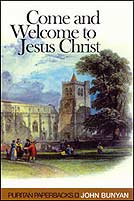
I have just completed a book review on Come and Welcome to Jesus Christ (c.1681) by John Bunyan. What a lovely and pastoral book. This book is based on this text in John: All that the Father giveth me shall come to me; and him that cometh to me I will in no wise cast out. -John 6.37 AV Bunyan gives comfort as well as exhortation to both believers as well as unbelievers in this book. I would recommend this book to be given to one that is struggling with assurance of faith, or one who has back slidden and feels as though they are unable to come back to Christ. Bunyan shows the truth of the Gospel in bidding sinners- Come and Welcome to Jesus Christ.

"For there had not been a proneness in us to fear ‘casting out’ Christ would not have needed, as it were, to waylay our fear, as he does by this great and strange expression, ‘In no wise;’ ‘And he that cometh to me, I will in no wise cast out.’...For this word, ‘in no wise’, cuts the throat of all objections; and it was dropped by the Lord Jesus with that very purpose and to help the faith that is mixed with unbelief." (p149-150).

"The person speaking in the text (John 6.37) is he alone by whom poor sinners have entrance to and acceptance with the Father, because of the glory of his righteousness, by and in which he presents them amiable and spotless in his sight. Neither is there any way besides him so to come to the Father: ‘I am the way,’ he says, ‘the truth, and the life; no man cometh to the Father but by me’ (John 14.6). All other ways to God are dead and damnable ; the destroying cherubim stand with flaming swords, turning every way to keep all others from his presence (Gen. 3.24). I say, all others but them that come by him. ‘I am the door; by me,’ he says, ‘if any man enter in, he shall be saved’ (John 10.9)". (p69-70)

"Sinner do you hear? You have it freely. Let him take the water of life freely. I will give him of the fountain of life freely. And when they had nothing to pay, he frankly forgave them both’ (Luke 7.42). Freely, without money and without price. ‘Ho! Everyone that thirsteth, come ye to the waters, and he that hath no money, come buy wine and buy milk without money and without price’ (Is.55.1). Sinner, are you thirsty? Are you weary? Are you willing? Come then and regard not your stuff; for all the good that is in Christ is offered to the coming sinner, without money and without price. He has life to give away to such as want it, and that has not a penny to purchase it; and he will give it freely. O what a blessed condition is the coming sinner in!". (p196)

31 January, 2006

Peter, do you love me? Feed my sheep.

I would like to finish the impromptu series on preaching with a quote. I believe that others are able to answer questions better than me, so I will leave this to a professional on the topic of preaching. If any are interested in further study on the topic of preaching and what preaching looks like in the scriptures, I would recommend, Feed My Sheep edited by Don Kistler. The need is so great for preaching to be founded in the scriptures, and the need is even greater for the people who are called by the name of God to reclaim the book of the Bible and to devour it and to fall in love with it. Preaching is the means by which men and women of God are able to eat the Words of the Lord.

"Perhaps that is why [expository preaching] is so rare. Only those will undertake it who are prepared to follow the example of the Apostles and say, " It is not right that we should give up preaching the Word of God and serve tables...We will devote ourselves to prayer and to the Ministry of the Word (Acts 6.2,4). The systematic preaching of the Word is impossible without the systematic study of it. It will not be enough to skim through a few verses in daily Bible reading, or only study a passage when we have to preach from it. No. We must daily soak ourselves in the Scriptures. We must not just study, as through a microscope, the linguistic minutiae of a few verses, but take out our telescope and scan the wide expanses of God's Word, assimilating its grand theme of Divine sovereignty in the redemption of mankind. "It is blessed," wrote CH Spurgeon, "to eat into the very soul of the Bible until, at last, you come to talk in Scriptural language, and your spirit is flavored with the words of the Lord, so that your blood is Bibline and the very essence of the Bible flows from you.'"

John RW Stott, The Preacher's Portrait, pp30-31

28 January, 2006

The Apostle Paul's View of Preaching

I find it to be expedient in the light of the last post (see post below) to allow the Apostle Paul, the New Testament theologian, to give his insights on preaching and the necessity of preaching well. Paul's view was that people would not BE SAVED without preaching (from a sent preacher)! If this is the case, and I believe that it is, then we should, as preachers and hearers of preachers, be careful to know what scripture says about preaching:

Romans 10.13-15

For whosoever shall call upon the name of the Lord shall be saved.

How then shall they call on him in whom they have not believed? and how shall they believe in him of whom they have not heard? and how shall they hear without a preacher?

And how shall they preach, except they be sent? as it is written, How beautiful are the feet of them that preach the gospel of peace, and bring glad tidings of good things!

* There were a variety of questions in the last post that I will address this Sabbath evening.

26 January, 2006

Follow That Grasshopper...He KNOWS Something!

There are very few preachers who preach good biblical sermons today. The Christian minister should preach sermons that are exegetical in nature and give the congregation an understanding of what the text means, its historical context, as well as ways in which to apply the sermon to living out the Christian life. This is the pattern that is found within scripture- the preachers of scripture open the law and gospel and give the hearers its meaning as well as its application.

Here are a few unbiblical ways in which preachers preach today. We discussed these in Homiletics and they are quite fun (although they should be avoided):

Hobby horse sermons:
The minister relates every sermon to their favorite secondary or tertiary doctrine. (Examples: Satan, the Millennium, the Nation of Israel, Evangelism, etc.)
Rocket sermons:
This type of sermon is begun from the text but quickly launches into space and goes off on tangents that no-one can follow.
Heart on the sleeve sermons:
The sermon is preached with such great emotion that the hearers are moved to great emotional highs or lows....but they do not know what the text was about.
Sky scraper sermons:
Patchwork quilt of entertainment and other things. They are one story piled on top of another. The text is never really developed but the stories and illustrations are piled high as the sky.
Grasshopper sermons:
A preacher takes a text and he finds a theme and then hops all through the bible making the listener try to follow in their Bibles. It is a string of texts that are connected with a few sentences. (A child with a concordance can preach like this).
Sherlock Holmes sermons:
The preacher wows everyone with the depths and the mystery of the Bible but never really tells you anything about what the text means.

I think that all preachers tend to lean in one way or another to one of these errors. As a Calvinist I have heard some of these from time to time. Although I believe in the doctrines of grace whole-heartedly (and would die defending them) I do not think that every page of the Bible is talking about unconditional election!
24 January, 2006

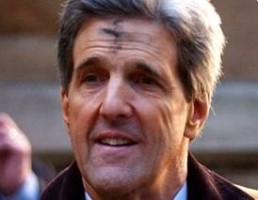
Hypocrites and other fake Christians

Hypocrisy is when one claims to hold a belief that they do not really possess. The term hypocrite was used in Old French as a play-actor; someone pretending to be something that they were not. Hypocrisy has its roots in Greek and was someone who wore a mask; someone pretending to be someone that they were not or someone that had "two faces" concerning a belief.

Many non-Christians see the hypocrites in the church and they are rightly disgusted. Hypocrites make up a number of the members of the church; but these people are not genuine professors of religion, merely frauds playing the role of the Christian. The hypocrites are what the Bible calls tares and Jesus is quite content with allowing the tares to be in the Church. These hypocrites have always been a part of genuine religion, and they will remain a part of genuine religion until the day of judgment when the wheat is separated from the tares. Jesus speaks of this in the Gospel according to Saint Matthew:

Another parable put he [Jesus] forth unto them [his disciples], saying, The kingdom of heaven is likened unto a man which sowed good seed in his field: But while men slept, his enemy came and sowed tares among the wheat, and went his way. But when the blade was sprung up, and brought forth fruit, then appeared the tares also. So the servants of the householder came and said unto him, Sir, didst not thou sow good seed in thy field? from whence then hath it tares? He said unto them, An enemy hath done this. The servants said unto him, Wilt thou then that we go and gather them up? But he said, Nay; lest while ye gather up the tares, ye root up also the wheat with them. Let both grow together until the harvest: and in the time of harvest I will say to the reapers, Gather ye together first the tares, and bind them in bundles to burn them: but gather the wheat into my barn.

What does this all mean for you and for me? How does this apply to our lives?
-If you are a genuine Christian, someone who has professed faith in Christ's atoning sacrifice for sins and are being renewed by the power of the Holy Ghost, then you should strive to be more and more conformed to the image of Christ. We should never allow the unbeliever to blaspheme Christ and his bride on account of our carelessness in sanctification.
-If you are not a Christian, then it is my Christian duty to warn you that your fate is the same fate of those tares. Hypocrisy and unbelief will be eternal bed-fellows in the fires of hell. Hypocrite: flee to Christ for redemption. Unbeliever: flee to Christ for redemption.

"Tell me, you vain professor [of Christianity], when did you shed a tear for the deadness, hardness, unbelief, or earthliness of your heart? Do you think that such an easy religion can save you? If so, we may invert Christ's words and say, 'Wide is the gate, and broad is the way, that leadeth to life.'" -JOHN FLAVEL

"Knowledge without repentance will be but a torch to light men to hell."
-THOMAS WATSON

23 January, 2006

Profiting from the Word

Earlier this month I gave the English Puritan, Richard Greenham's suggestions on how to read the Scriptures with diligence. (See: 4 Jan. 2006) I would like to give another Puritan, Thomas Boston (1676-1732) on how to profit from the reading of the scriptures. Thomas Boston was a Scottish Presbyterian and he was best known for his aid in the Marrow Controversy. Boston gives nine ways to improve on the reading of the scriptures:

1. Follow a regular plan in reading of them, that you may be acquainted with the whole; and make this reading a part of your private devotions. Not that you should confine yourselves only to a set plan, so as never to read by choice, but ordinarily this tends most to edification. Some parts of the Bible are more difficult, some may seem very barren for an ordinary reader; but if you would look on it all as God's word, not to be scorned, and read it with faith and reverence, no doubt you would find advantage.

2. Set a special mark, however you find convenient, on those passages you read, which you find most suitable to your case, condition, or temptations; or such as you have found to move your hearts more than other passages. And it will be profitable often to review these.

3. Compare one Scripture with another, the more obscure with that which is more plain, 2 Pet. 1:20. This is an excellent means to find out the sense of the Scriptures; and to this good use serve the marginal notes on Bibles. And keep Christ in your eye, for to him the scriptures of the Old Testament look (in its genealogies, types, and sacrifices), as well as those of the New.

4. Read with a holy attention, arising from the consideration of the majesty of God, and the reverence due to him. This must be done with attention, first, to the words; second, to the sense; and, third, to the divine authority of the Scripture, and the obligation it lays on the conscience for obedience, 1 Thess. 2:13, "For this reason we also thank God without ceasing, because when you received the word of God which you heard from us, you welcomed it not as the word of men, but as it is in truth, the word of God, which also effectively works in you who believe."

5. Let your main purpose in reading the Scriptures be practice, and not bare knowledge, James 1:22, "But be doers of the word, and not hearers only, deceiving yourselves." Read that you may learn and do, and that without any limitation or distinction, but that whatever you see God requires, you may study to practice.

6. Beg of God and look to him for his Spirit. For it is the Spirit that inspired it, that it must be savingly understood by, 1 Cor 2:11, "For what man knows the things of a man except the spirit of the man which is in him? Even so no one knows the things of God except the Spirit of God." And therefore before you read, it is highly reasonable you beg a blessing on what you are to read.

7. Beware of a worldly, fleshly mind: for fleshly sins blind the mind from the things of God; and the worldly heart cannot favour them. In an eclipse of the moon, the earth comes between the sun and the moon, and so keeps the light of the sun from it. So the world, in the heart, coming between you and the light of the word, keeps its divine light from you.

8. Labour to be disciplined toward godliness, and to observe your spiritual circumstances. For a disciplined attitude helps mightily to understand the scriptures. Such a Christian will find his circumstances in the word, and the word will give light to his circumstances, and his circumstances light into the word.

9. Whatever you learn from the word, labour to put it into practice. For to him that has, shall be given. No wonder those people get little insight into the Bible, who make no effort to practice what they know. But while the stream runs into a holy life, the fountain will be the freer.