23 January, 2007

Christian Love Book Study

I am hoping to start a monthly book study at my house on Sunday nights following evening worship. I would like to go through the Puritan Paperbacks, beginning with Christian Love by Hugh Binning. I will be submitting a proposal to session, and am wondering if this is something that people would be interested in. It will only be once a month and we will cover one or two chapters per month. I would be happy to provide the book to anyone who cannot afford it.
Is this something that people would be interested in? All are welcome as long as there is a commitment to reading the material and interacting with it. Children are also welcome, since the church is a covenant community, not just a community of adult believers.

16 January, 2007

Closed This Week

Well folks, it seems as though they found the still in the cellar. Just kidding! I will be back next week.
  • Please pray for me as I preach at Rose Point Reformed Presbyterian Church this coming Lord's Day

  • Pray that the semester gets off to a good start, I have 19 credits, plus my job.

  • Pray that my Dutch Reformed Ecclesiology professor sees the superiority of the Westminster over the Three Forms of Unity.

14 January, 2007

Sabbath a'Brakel

Prayer is a glorious work, for it permits us to enter the inner chambers of the King of kings--of God, the Lord of heaven and earth (III: 469).

11 January, 2007

Logic 201: Rev. Brian Schwertley on Salvation

The Arminian view of Christ’s atonement not only contradicts the biblical definition of Christ’s redemptive work, but also contradicts itself. An examination of three options regarding Christ’s death will prove that Arminianism is irrational. Jesus Christ paid the price and endured God’s wrath against sin for either: 1) all the sins of all men, 2) all the sins of some men, or 3) some of the sins of all men. If number 3 is true, then all men still have the guilt of some sins to answer for. This would mean that all men will go to hell, for it only takes the guilt of one sin to merit eternal damnation. If one holds to option 2, that Christ died for all of the sins of some men, then one believes that only some men (i.e., God’s elect) will be saved and go to heaven. This is simply biblical Christianity; that Christ actually achieved the salvation of all of God’s elect. The non-elect are passed by and perish. Arminianism, or inconsistent universalism, holds to position number 1, that Christ died for all the sins of all men. If this position is true, then why are not all men freed from the punishment of all their sins. The Arminian will answer: “because they refused to believe in Jesus Christ. They are guilty of unbelief.“ But this unbelief, is it a sin or is it not a sin? If unbelief is not a sin, then why should anyone by punished for it? If unbelief is a sin, then Christ was punished for it in His death. If Christ paid for this sin as all others, then why must this sin stop anyone from entering heaven more than any of the other sins (e.g., murder, adultery, homosexuality, etc.). Furthermore, if Christ did not die for the sin of unbelief, then one cannot say that He died for all the sins of all men. The Arminian cannot escape from the horns of this theological dilemma.

09 January, 2007

Logic 101: John Owen on Salvation


The Father imposed His wrath due unto, and the Son underwent punishment for, either:
All the sins of all men.
All the sins of some men, or
Some of the sins of all men.


In which case it may be said:
That if the last be true, all men have some sins to answer for, and so, none are saved.
That if the second be true, then Christ, in their stead suffered for all the sins of all the elect in the whole world, and this is the truth.
But if the first be the case, why are not all men free from the punishment due unto their sins?

You answer, "Because of unbelief."
I ask, Is this unbelief a sin, or is it not? If it be, then Christ suffered the punishment due unto it, or He did not. If He did, why must that hinder them more than their other sins for which He died? If He did not, He did not die for all their sins!"

07 January, 2007

a'Brakel on Conduct AFTER the Lord's Supper

Be very careful to conduct yourself well after the Lord's Supper. If Satan has not been able to gain the advantage over you in the preparation for and celebration of the Lord's Supper, he will yet endeavor to get the advantage over you after the Lord's Supper. After the Lord Jesus had been baptized, He was tempted of the devil, and after the disciples had celebrated the Lord's Supper with Christ, they were in that same night offended and dispersed, and Peter was sifted as the wheat. After Paul had been drawn into the third heaven, there came an angel of Satan who buffeted him. This is generally also true for believers--after having been comforted they must arm themselves against the assaults of the enemy, so that he may not get a hold upon them. As one must be on guard against the enemy, he must likewise take special care to conduct himself appropriately toward God, his Benefactor. We may indeed apply to this spiritual meal what God demanded of Israel upon their arrival in Canaan with its abundance: "When thou hast eaten and art full, then thou shalt bless the LORD thy God for the good land which He hath given thee. Beware that thou forget not the LORD thy God" (Deu. 8:10-11) [II: 593].

05 January, 2007

Loose Lips Sink Ships

I often read and meditate upon the control of the tongue and thoughts. James said that the tongue is the smallest member of the body, yet the most difficult to bridle. I believe that this area will be the last to be sanctified for many Christians. We have grown up hearing 'sticks and stones will break my bones, but words will never hurt me!'

When that is filtered through a Christian worldview there can only be one assessment- it is a lie. Words are very powerful. The worlds were created at the speaking of a word. Satan will finally be destroyed at the speaking of a word. Christian witness, Christian homes and marriages, Christian friendships, and Christian churches can all be destroyed as well by the speaking of our words.


Let us heed the words of John Calvin,
I consider looseness with words no less of a defect than looseness of the bowels.

04 January, 2007

Some thoughts on the Lord's Supper

What is it for the Lord's people to renew their covenant with him at his table?

A. It is to acquiesce anew in the covenant of grace, as made with Christ, Isa. 44:5; and, in so doing, to surrender themselves to the Lord, to be wholly his, trusting that he will keep them by his power, "through faith unto salvation," 1 Pet. 1:5.

What is it for them to renew their love to all the saints on that occasion?

A. It is to embrace the opportunity of being at the Lord's table, to breathe out the secret and habitual desires of their souls before him, that all the saints, as well as themselves, may share abundantly out of the fulness of Christ, Psalm 90:14; and that they keep themselves "in the love of God, looking for the mercy of our Lord Jesus Christ unto eternal life," Jude ver. 21.

Taken from Fisher's Catechism

02 January, 2007

Used Book Sale

Baker Book House, my place of employment while I was at Calvin College, is having a huge used book sale. In my 10 years in Grand Rapids I have never seen them budge one red cent on the price of their overly-priced used books.

They are having a 20% off sale now until the 13th of January. Today my family packed up the Mountaineer and headed with my list of wants and desires. I found four books that I have been looking for, two of which are replacements for loaned books.

Help to Domestic Happiness by James Angell James
Shepherding God's Flock by Jay E. Adams
Today's Gospel by Walter Chantry (I used to have 5 at a time on hand and give this one out- I had none left.)
Signs of the Apostles by the same author.

All of these books were well under $30. Good deal, and yes, I have already added them to my librarything.

01 January, 2007

My Rights Versus God's Rights

How often do we allow people to blaspheme God by their words, deeds, or actions and silently think, "well its not my business." But when we are personally offended by something we demand that our rights be vindicated. The Scottish Covenanter, James Renwick had a favorite saying that puts all of this life into perspective:

Let us be lions in God's cause and lambs in our own. -James Renwick

Happy New Year: Edward's Resolutions

Jonathan Edwards, as a boy, wrote 70 resolutions by which to formulate his life. These resolutions come up in his writings through-out his life, which is evidence that he ruminated over them for a lifetime. In this season of resolutions, let us resolve to follow Edwards as he followed Christ.

BEING SENSIBLE THAT I AM UNABLE TO DO ANYTHING WITHOUT GOD' S HELP, I DO HUMBLY ENTREAT HIM BY HIS GRACE TO ENABLE ME TO KEEP THESE RESOLUTIONS, SO FAR AS THEY ARE AGREEABLE TO HIS WILL, FOR CHRIST' S SAKE.
Remember to read over these Resolutions once a week.
1. Resolved, that I will do whatsoever I think to be most to God' s glory, and my own good, profit and pleasure, in the whole of my duration, without any consideration of the time, whether now, or never so many myriads of ages hence. Resolved to do whatever I think to be my duty and most for the good and advantage of mankind in general. Resolved to do this, whatever difficulties I meet with, how many soever, and how great soever.
2. Resolved, to be continually endeavoring to find out some new contrivance and invention to promote the aforementioned things.
3. Resolved, if ever I shall fall and grow dull, so as to neglect to keep any part of these Resolutions, to repent of all I can remember, when I come to myself again.
4. Resolved, never to do any manner of thing, whether in soul or body, less or more, but what tends to the glory of God; nor be, nor suffer it, if I can avoid it.
5. Resolved, never to lose one moment of time; but improve it the most profitable way I possibly can.
6. Resolved, to live with all my might, while I do live.
7. Resolved, never to do anything, which I should be afraid to do, if it were the last hour of my life.
8. Resolved, to act, in all respects, both speaking and doing, as if nobody had been so vile as I, and as if I had committed the same sins, or had the same infirmities or failings as others; and that I will let the knowledge of their failings promote nothing but shame in myself, and prove only an occasion of my confessing my own sins and misery to God. July 30.
9. Resolved, to think much on all occasions of my own dying, and of the common circumstances which attend death.
10. Resolved, when I feel pain, to think of the pains of martyrdom, and of hell.
11. Resolved, when I think of any theorem in divinity to be solved, immediately to do what I can towards solving it, if circumstances do not hinder.
12. Resolved, if I take delight in it as a gratification of pride, or vanity, or on any such account, immediately to throw it by.
13. Resolved, to be endeavoring to find out fit objects of charity and liberality.
14. Resolved, never to do any thing out of revenge.
15. Resolved, never to suffer the least motions of anger towards irrational beings.
16. Resolved, never to speak evil of anyone, so that it shall tend to his dishonor, more or less, upon no account except for some real good.
17. Resolved, that I will live so, as I shall wish I had done when I come to die.
18. Resolved, to live so, at all times, as I think is best in my devout frames, and when I have clearest notions of things of the gospel, and another world.
19. Resolved, never to do any thing, which I should be afraid to do, if I expected it would not be above an hour, before I should hear the last trump.
20. Resolved, to maintain the strictest temperance, in eating and drinking.
21. Resolved, never to do any thing, which if I should see in another, I should count a just occasion to despise him for, or to think any way the more meanly of him. (Resolutions 1 through 21 written in one setting in New Haven in 1722)
22. Resolved, to endeavor to obtain for myself as much happiness, in the other world, as I possibly can, with all the power, might, vigor, and vehemence, yea violence, I am capable of, or can bring myself to exert, in any way that can be thought of.
23. Resolved, frequently to take some deliberate action, which seems most unlikely to be done, for the glory of God, and trace it back to the original intention, designs and ends of it; and if I find it not to be for God' s glory, to repute it as a breach of the 4th Resolution.
24. Resolved, whenever I do any conspicuously evil action, to trace it back, till I come to the original cause; and then, both carefully endeavor to do so no more, and to fight and pray with all my might against the original of it.
25. Resolved, to examine carefully, and constantly, what that one thing in me is, which causes me in the least to doubt of the love of God; and to direct all my forces against it.
26. Resolved, to cast away such things, as I find do abate my assurance.
27. Resolved, never willfully to omit any thing, except the omission be for the glory of God; and frequently to examine my omissions.
28. Resolved, to study the Scriptures so steadily, constantly and frequently, as that I may find, and plainly perceive myself to grow in the knowledge of the same.
29. Resolved, never to count that a prayer, nor to let that pass as a prayer, nor that as a petition of a prayer, which is so made, that I cannot hope that God will answer it; nor that as a confession, which I cannot hope God will accept.
30. Resolved, to strive to my utmost every week to be brought higher in religion, and to a higher exercise of grace, than I was the week before.
31. Resolved, never to say any thing at all against any body, but when it is perfectly agreeable to the highest degree of Christian honor, and of love to mankind, agreeable to the lowest humility, and sense of my own faults and failings, and agreeable to the golden rule; often, when I have said anything against anyone, to bring it to, and try it strictly by the test of this Resolution.
32. Resolved, to be strictly and firmly faithful to my trust, that that, in Proverbs 20:6,‹A faithful man who can find?Å  may not be partly fulfilled in me.
33. Resolved, to do always, what I can towards making, maintaining, and preserving peace, when it can be done without overbalancing detriment in other respects. Dec. 26, 1722.
34. Resolved, in narrations never to speak any thing but the pure and simple verity.
35. Resolved, whenever I so much question whether I have done my duty, as that my quiet and calm is thereby disturbed, to set it down, and also how the question was resolved. Dec. 18, 1722.
36. Resolved, never to speak evil of any, except I have some particular good call for it. Dec. 19, 1722.
37. Resolved, to inquire every night, as I am going to bed, wherein I have been negligent,- what sin I have committed,-and wherein I have denied myself;-also at the end of every week, month and year. Dec. 22 and 26, 1722.
38. Resolved, never to speak anything that is ridiculous, sportive, or matter of laughter on the Lord' s day. Sabbath evening, Dec. 23, 1722.
39. Resolved, never to do any thing of which I so much question the lawfulness of, as that I intend, at the same time, to consider and examine afterwards, whether it be lawful or not; unless I as much question the lawfulness of the omission.
40. Resolved, to inquire every night, before I go to bed, whether I have acted in the best way I possibly could, with respect to eating and drinking. Jan. 7, 1723.
41. Resolved, to ask myself, at the end of every day, week, month and year, wherein I could possibly, in any respect, have done better. Jan. 11, 1723.
42. Resolved, frequently to renew the dedication of myself to God, which was made at my baptism; which I solemnly renewed, when I was received into the communion of the church; and which I have solemnly re-made this twelfth day of January, 1722-23.
43. Resolved, never, henceforward, till I die, to act as if I were any way my own, but entirely and altogether God' s; agreeable to what is to be found in Saturday, January 12, 1723.
44. Resolved, that no other end but religion, shall have any influence at all on any of my actions; and that no action shall be, in the least circumstance, any otherwise than the religious end will carry it. January 12, 1723.
45. Resolved, never to allow any pleasure or grief, joy or sorrow, nor any affection at all, nor any degree of affection, nor any circumstance relating to it, but what helps religion. Jan. 12 and 13, 1723.
46. Resolved, never to allow the least measure of any fretting uneasiness at my father or mother. Resolved to suffer no effects of it, so much as in the least alteration of speech, or motion of my eye: and to be especially careful of it with respect to any of our family.
47. Resolved, to endeavor, to my utmost, to deny whatever is not most agreeable to a good, and universally sweet and benevolent, quiet, peaceable, contented and easy, compassionate and generous, humble and meek, submissive and obliging, diligent and industrious, charitable and even, patient, moderate, forgiving and sincere temper; and to do at all times, what such a temper would lead me to; and to examine strictly, at the end of every week, whether I have done so. Sabbath morning. May 5, 1723.
48. Resolved, constantly, with the utmost niceness and diligence, and the strictest scrutiny, to be looking into the state of my soul, that I may know whether I have truly an interest in Christ or not; that when I come to die, I may not have any negligence respecting this to repent of. May 26, 1723.
49. Resolved, that this never shall be, if I can help it.
50. Resolved, I will act so as I think I shall judge would have been best, and most prudent, when I come into the future world. July 5, 1723.
51. Resolved, that I will act so, in every respect, as I think I shall wish I had done, if I should at last be damned. July 8, 1723.
52. I frequently hear persons in old age, say how they would live, if they were to live their lives over again: Resolved, that I will live just so as I can think I shall wish I had done, supposing I live to old age. July 8, 1723.
53. Resolved, to improve every opportunity, when I am in the best and happiest frame of mind, to cast and venture my soul on the Lord Jesus Christ, to trust and confide in him, and consecrate myself wholly to him; that from this I may have assurance of my safety, knowing that I confide in my Redeemer. July 8, 1723.
54. Whenever I hear anything spoken in conversation of any person, if I think it would be praiseworthy in me, Resolved to endeavor to imitate it. July 8, 1723.
55. Resolved, to endeavor to my utmost to act as I can think I should do, if, I had already seen the happiness of heaven, and hell torments. July 8, 1723.
56. Resolved, never to give over, nor in the least to slacken, my fight with my corruptions, however unsuccessful I may be.
57. Resolved, when I fear misfortunes and adversities, to examine whether I have done my duty, and resolve to do it, and let the event be just as providence orders it. I will as far as I can, be concerned about nothing but my duty, and my sin. June 9, and July 13 1723.
58. Resolved, not only to refrain from an air of dislike, fretfulness, and anger in conversation, but to exhibit an air of love, cheerfulness and benignity. May 27, and July 13, 1723.
59. Resolved, when I am most conscious of provocations to ill nature and anger, that I will strive most to feel and act good-naturedly; yea, at such times, to manifest good nature, though I think that in other respects it would be disadvantageous, and so as would be imprudent at other times. May 12, July 11, and July 13.
60. Resolved, whenever my feelings begin to appear in the least out of order, when I am conscious of the least uneasiness within, or the least irregularity without, I will then subject myself to the strictest examination. July 4, and 13, 1723.
61. Resolved, that I will not give way to that listlessness which I find unbends and relaxes my mind from being fully and fixedly set on religion, whatever excuse I may have for it-that what my listlessness inclines me to do, is best to be done, etc. May 21, and July 13, 1723.
62. Resolved, never to do anything but duty, and then according to Ephesians 6:6-8, to do it willingly and cheerfully as unto the Lord, and not to man:‹knowing that whatever good thing any man doth, the same shall he receive of the Lord.Å  June 25 and July 13, 1723.
63. On the supposition, that there never was to be but one individual in the world, at any one time, who was properly a complete Christian, in all respects of a right stamp, having Christianity always shining in its true luster, and appearing excellent and lovely, from whatever part and under whatever character viewed: Resolved, to act just as I would do, if I strove with all my might to be that one, who should live in my time. January 14 and July 13, 1723.
64. Resolved, when I find those groanings which cannot be uttered (Romans 8:26), of which the Apostle speaks, and those breakings of soul for the longing it hath,Å  of which the Psalmist speaks, Psalm 119:20, that I will promote them to the utmost of my power, and that I will not be weary of earnestly endeavoring to vent my desires, nor of the repetitions of such earnestness. July 23, and August 10, 1723.
65. Resolved, very much to exercise myself in this, all my life long, viz. with the greatest openness, of which I am capable of, to declare my ways to God, and lay open my soul to him: all my sins, temptations, difficulties, sorrows, fears, hopes, desires, and every thing, and every circumstance; according to Dr. Manton' s 27th Sermon on Psalm 119. July 26, and Aug.10 1723.
66. Resolved, that I will endeavor always to keep a benign aspect, and air of acting and speaking in all places, and in all companies, except it should so happen that duty requires otherwise.
67. Resolved, after afflictions, to inquire, what I am the better for them, what am I the better for them, and what I might have got by them.
68. Resolved, to confess frankly to myself all that which I find in myself, either infirmity or sin; and, if it be what concerns religion, also to confess the whole case to God, and implore needed help. July 23, and August 10, 1723.
69. Resolved, always to do that, which I shall wish I had done when I see others do it. August 11, 1723.
70. Let there be something of benevolence, in all that I speak. August 17, 1723.

31 December, 2006

Sabbath a'Brakel: Prudence

Prudence is a great virtue which is greatly praised and highly recommended in the Word of God, and is given as an extraordinary gift to God's children. It is praised as being an extraordinary ornament: "Therefore whosoever heareth these sayings of mine, and doeth them, I will liken him unto a wise man, which built his house upon a rock" (Mat. 7:24); "Who then is a faithful and wise servant...blessed is that servant...Verily I say unto you, That he shall make him ruler over all his goods" (Mat. 24:45-47) [IV: 132].

30 December, 2006

Saddam in Hell- should Christians be happy?

Just over a year ago I told you of the execution of Tookie Williams in California. This weekend Saddam Hussein was executed by the people of Iraq for murdering hundreds of Iraqi people. As Christians we are to rejoice in justice served by the sword of the magistrate, but to be heavily saddened by this death as well. Hell is never to be taken lightly since hell is not the absence of God, but the fullness of God in justice without mercy.

Ezekiel 33:11 "Say to them: 'As I live,' says the Lord GOD, 'I have no pleasure in the death of the wicked, but that the wicked turn from his way and live. Turn, turn from your evil ways! For why should you die, O house of Israel?'

Friends, if you do not know of your eternal destiny- flee to Christ for the remission of sins.

The Reformed Doctrine of Hell

29 December, 2006

Heartlessly Reformed

"Without the heart it is no worship. It is a stage play. It is an acting of a part without being that person, really. It is playing the hypocrite."
-Stephen Charnock


On this blog I talk a lot about the outward forms of worship and what constitutes worship according to the Word of God. In contemporary theology we use the term 'regulative principle of worship' to describe what God desires in worship. I have stated, and attempted to defend, what the Westminster Confession of Faith sets out as worship, and to some degree I have attempted to uphold the directory for publick worship as well.


Again, I believe that worship is strictly regulated by God and that he is to be approached only on his terms that are revealed in the Scriptures. Worship is also something that is internal and spiritual by nature. If worship is done strictly according to God's Word, but the heart is not in worship, then you are not worshiping.


The Apostle Paul tells us that worship is to be done with grace in the heart. Grace in the heart requires preparation for worship by prayer and meditation on the Word of God. Preparation is also being sure that no brothers or sisters have been offended by your behavior prior to coming to worship. Preparation requires a right frame of heart and mind and a desire to see Jesus Christ elevated in the lives of the saints.


Worship is regulated by Scripture, and part of the regulations require that Christians come to worship in a right frame of mind. Many of us 'RPW' types are quick to judge fellow believers who do not follow what Scripture says concerning the act of worship.
Are we as quick to judge our own hearts and minds when we knowingly come to worship unprepared, ill-prepared, or holding resentment in our hearts? Are we as quick to hold believers in our 'own camp' accountable for less-than-spiritual conversation on the Lord's Day, or using the day for self-fulfillment rather than complete devotion to God and Christ?
Do we desire to sacrifice the hypocrisy of our own hearts or just to make sure that every one only sings Psalms (as noble as that is)? Brothers and sisters, hold me accountable to my profession of faith, and, with the Lord's help, I will hold you accountable. Most of all, desire a right heart and mind as you approach a holy, all-consuming God in your public worship, family worship, and private worship. Do not play the hypocrite.

28 December, 2006

Edwards Speaks to the Post-Modern Church

I love reading our fathers and coming across a quote that speaks to our day and age. The churches that claim the Reformation heritage has removed many of their landmarks. They are slowly (more or less) losing their identity as Reformed churches. Pray that the Lord revives those who claim a goodly heritage.

What a dead and barren time has it now been, for a great while, with all the churches of the Reformation? The golden showers have been restrained; the influences of the Spirit suspended; and the consequence has been that the gospel has not had any eminent success. Conversions have been rare and dubious; few sons and daughters have been born to God; and the hearts of Christians not so quickened, warmed, and refreshed under the ordinances, as they have been.

-Jonathan Edwards

25 December, 2006

Library Thing

My library is being cataloged online. I am almost finished. I still have a few shelves around the house to do as well as my antiquarian books. They will have to be entered manually. I paid $25 for a lifetime membership to librarything and would recommend it for anyone that has more than $500 dollars worth of books (which most Reformed Christians do). Check it out- it is quite fun and addicting!

The Reign of Christ

De Regno Christi is a new (to me) blog that is worth linking.

24 December, 2006

Sabbath a'Brakel: On Loving God

To love God is a privilege of the elect. They, as others, were the children of wrath. However, God draws them out of the state of sin, gives them life and a child-like disposition, and thus also a loving heart. Since they are born of God, and since God is love, their nature resembles the nature of their heavenly Father, and they love Him. Their intellect, will, and affections have not only been rendered capable, but they are also active in love toward God. It is not sufficient for them to nourish love within, but they are active in manifesting this with their tongue, eye, and the entire body. They are thus known as lovers of God and are therefore also referred to as "those that love." Ye that love the LORD, hate evil" (Psa. 97:10); "They that love His Name shall dwell therein" (Psa. 69:36) [III: 266].

22 December, 2006

Christmass in the 1660s

This is what you would have seen in New England in the 1660s if you were about town during the Christmass season.

21 December, 2006

The Schooling of Christ

So why are you a Christian? Archibald Alexander probes us to ask this question. Have you been converted to Christ by the Spirit of God, or are you a Christian because that is how you have been raised. It is worth meditating on whether you believe because you have been taught thus by earthly tutors, or have you been taught at the footstool of Christ?

“Suppose a person to be educated in the Christian religion from childhood, and is taught to believe that the Scriptures are of divine authority, that Christ is the only Savior and that he must depend upon Him alone for salvation together with all the other doctrines which are essential to salvation. He has that kind of faith in these things which is common to most men who live in a Christian country. He believes them as he does a historical record. And we may suppose him also to attend to the external part of all those duties which he has been taught as incumbent on him as a Christian, he may also have exercises which seem to resemble those of a real Christian, and may have his mind sometimes considerably engaged in thinking about religion. This man is possessed of what I would call a dead faith, and it is of the very same kind he would have had if he had been educated in the religion of Mohammed; for he believes in Christ for the very same reason, and in the same manner which a Turk believes in Mohammed."
-Dr. Archibald Alexander, 1772-1851, Princeton Seminary

19 December, 2006

The Quiver Is Filling

We will be needing one of these as we expecting our third child.
Please pray for us as Lydia is still in the beginning stages of the pregnancy.

Psalm 127

A Song of degrees for Solomon.

Except the LORD build the house,
they labour in vain that build it except the LORD keep the city,
the watchman waketh but in vain.
Lo, children are an heritage of the LORD...
and the fruit of the womb is his reward.
As arrows are in the hand of a mighty man;
so are children of the youth.
Happy is the man that hath his quiver full of them:
they shall not be ashamed,
but they shall speak with the enemies in the gate.

18 December, 2006

Voices in Print

Good books have always been a way to feed the soul. It is amazing to me how through the inventions of methods of printing have been a way for the godly men of old to maintain a voice within the Church. It is quite plausible to say that without the technology of mass printing the Reformation and Second Reformations would not have occurred. Maybe a third Reformation will be spurned by the use of new technology- but until then, read the good books!

"Bring the cloak that I left at Troas with Carpus when you come, and the books, especially the parchments." (2 Timothy 4:13)

When we consider how much good has been done by the published works of such men as Baxter, Owen, Doddridge, Alleine, Boston, Edwards, etc., we wonder that men gifted with a talent for writing attractively and powerfully, do not devote more of their time to the preparation of good books. But although, in theory, we acknowledge the all-pervading power of the press, yet the importance of the subject is not practically felt in all its momentous consequences. The man who is enabled to write a truly evangelical and useful book, or even a single tract of first-rate excellence, may convey the saving truth of the gospel to a thousand times more people than the living preacher can ever instruct by his voice. And hundreds of years after the death of the writer, the production of his pen may be but just commencing its career of usefulness, only to be terminated with the end of the world. Those men, therefore, who are blessed with the ability of producing one work of evangelical excellence, may be considered among the most highly favored of our race, and must enjoy a rich reward hereafter.
The plan of first publishing important views of evangelical truth from the pulpit, and then from the press, with such changes as may serve to render them more popular, is a wise economy of time; and considering the incalculable power of the press, more of our learned and eloquent preachers should avail themselves of this method of benefiting the public, by diffusing abroad the precious truths of the gospel. -Archibald Alexander
(1772-1851)

17 December, 2006

Sabbath a'Brakel

There is no sin from which a regenerated person is safeguarded in an absolute sense. Nobody can say: "I shall never fall into that sin." A person will never be delivered from the indwelling corruption of his nature. It will always prevent and defile that which is good, always stir up lusts, and daily cause a man to offend in many things, doing so either out of carelessness, or due to the sudden occurrence of an event (IV: 255).

13 December, 2006

The Immediate Future

My semester is winding down, which feels nice for awhile. Here is what is left:
  • I have one take home exam for Experiential preaching that I have to complete by Monday.
  • I have a Bernard of Clairvaux paper that I just need to edit and then turn in.
  • I have to finish a sermon that I am writing on I John 3.1-3.

When I am finished I have a few things that I am really looking forward to:

10 December, 2006

Something With Which To Buy Time While I Finish Out the Semester

Today we are going to check where we are in the scope of theological traditions. You can do it here and you have to post the results in the comments section.

For the record- I was 100% Presbyterian-Reformed (can you imagine?)

Sabbath a'Brakel: The Sad Truth

The eating from this tree was not a minor sin, even though the eating of the fruit itself was a small matter. Rather, it was a dreadful crime in which the breaking of the entire law was comprehended. It was a breach of love, obedience, and the covenant, resulting in the perdition of himself and all his descendants (I: 372).

09 December, 2006

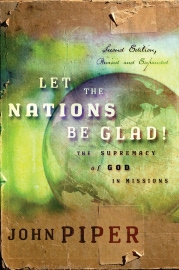
Let the Nations Be Glad!

Many evangelical Christians believe that evangelism is the highest calling of the Christian life. Many believe that they are converted so that they can lead others to Christ. Although as Christians we are to be missions minded and evangelistic, this is not our ultimate purpose. Worship of the true and living God is the highest end of the Christian life. We are to glorify and enjoy our Sovereign Lord!

“Missions is not the ultimate goal of the church. Worship is. Missions exists because worship doesn’t. Worship is ultimate, not missions, because God is ultimate, not man. When this age is over, and the countless millions of the redeemed fall on their faces before the throne of God, missions will be no more. It is a temporary necessity. But worship abides forever.”
- John Piper, Let the Nations Be Glad

07 December, 2006

Salt Losing Saltiness

Some churches will lose their saltiness and cease from being churches at all. Some turn into social clubs, some become cults, and others become part of the false church led by Anti-Christ. We should pray for the well-being of our churches. We should pray that she aims to regain the attainments she once had as well as be relevant to her current cultural surrounding. The burden of the church should be on the heart of all true believers.

“It follows, also, from the very nature of the visible Church and its condition in this world, that its purity is a matter of degree, varying at different times and in different sections. The teaching of Scripture as to the nature of the kingdom under the present dispensation (Matt. xiii.), the nature of man yet imperfectly sanctified, and the universal experience of the churches, lead us to the conclusion that the very purest churches are yet very imperfect, and will continue so to the end, and that some will become so corrupt as to lose their character as true churches of Christ altogether.” -AA Hodge, The Confession of Faith

05 December, 2006

Thought for the First Week of Advent


Nothing says reverence and awe this Christmass season than a violation of the second commandment in which Jesus is a baby carrot.

04 December, 2006

How Long O Lord?

Our Presbyterian forefathers had to give up so much. If persecution came to our country, what would we be willing to give up for the sake of the Gospel? Someone once said, If the Church wants the fashions of Egypt, let her have Egypt's plagues as well. Clothing suitable for a Christian is that which he is willing to die in. Jesus said, 'in this world you would have trouble...'.

I pray that my family would be faithful in times of persecution- the 'killing times' in Scotland took 20,000 faithful men to glory as martyrs. How long O Lord, holy and true, dost thou not judge and avenge our blood on them that dwell on the earth?

On July 22, 1680, faithful Richard Cameron was martyred in Airsmoss. His head and hands cut off and taken to Edinburgh, just as Robert M'Ward had spoken. Before his murderers committed the barbarous act of publicly displaying his head and hands upon the Netherbow Port, they first had one further act of antichristian cruelty to enact. His father being in prison for the same cause, they carried them to him, to add grief unto his former sorrow, and inquired at him if he knew them. Taking his son's head and hands which were very fair--being a man of fair complexion like himself--he kissed them, and said, "I know--I know them; they are my son's--my own dear son's. It is the Lord--good is the will of the Lord, who cannot wrong me nor mine, but hath made goodness and mercy to follow us all our days." After which, by order of the Council, his head was fixed upon the Netherbow Port, and his hands beside it with the fingers upward.

-John Howe, Scot's Worthies

03 December, 2006

Sabbath a'Brakel: Temperment Test

Take to heart what manner of person you are before God and what will befall you due to this.

(1) Do you have such an even-tempered and stable disposition of heart when people maltreat you in word and deed?

(2) Or do you have a cross, fretful, and irritable nature? Do you have as many spines as a porcupine does, or are you as prickly as a bush of thorns, so that one cannot be in your presence without being pricked? (IV: 84-85).

02 December, 2006

New Meeting Place

The Associate Reformed Church of Grand Rapids has a new meeting place.
We would love if you could join us for worship!
We are meeting at the lovely chapel of Puritan Reformed Theological Seminary and have space for growth.
Morning Worship: 10 AM
Sabbath School: 11:30 AM
Evening Worship: 6 PM

2965 Leonard Street NE, Grand Rapids, Michigan, 49525

Come and experience historically Reformed, yet contemporary worship.

01 December, 2006

A Showcase of the Kingdom of God

"Israel was to be a living example or 'showcase' of the righteous kingdom of God. The nations could learn through the faith and life of Israel and say, Here are people who know and serve a wonderful God. His laws are fair and benefit everyone. They even protect the animals and preserve the soil. Best of all, these people have hope.." -Roger Greenway, Go and Make Disciples, P&R

Is this what the world sees in the Church? Does the Church posess the ability of being seen by an unbelieving world as a people who 'showcase' the righteousness of the kingdom of God? Does the church even have an understanding of what the kingdom of God is, nonetheless a righteous one? And does the world see a people with hope, or do they see the same materialism, worldlimindedness, and pessimism that has become a cultural norm?

30 November, 2006

Pagan TV Attacks Sacred Things

The History Channel needs to double check its sources! They claim that days that many Christians hold dear are actually pagan!

29 November, 2006

A True Friend Is an Honest Friend

Here is a good quote that Dr. Beeke shared with us today during Homiletics. The context was in giving application that is relevant for a minister's specific congregation. I think that this is to be something of what all true Christians are to experience in communion of the saints. When you look at the book of Proverbs on what it means to be a friend- it rings all the more true!

“The man that loves you the most is the man that tells you the most about yourself.”
- Robert Murray McCheyne

28 November, 2006

Today is My Birthday

Today is my 29th birthday. It has been a wonderful day!

I had the opportunity to lead worship at chapel at Puritan Seminary.

This was my outline of Revelation 19.11-16:
I. The Character of the Rider
A. Faithful
B. True
C. Judges war righteously
II. The Artillery of the Rider
A. The Description of the rider
1. Eyes as a flame of fire
2. Kingly attire
3. Called the Word of God
B. The description of the rider's army
1. Martyrs of Revelation 6
2. On white horses
3. No weapons but righteousness
III. The Purpose of the Rider
A. smite the nations
B. rule with a rod of iron
C. tread the winepress
D. proclaim himself King of King and Lord of Lords.

And what did I get for my birthday you ask?
Let me preface with 'Thou shalt not covet':
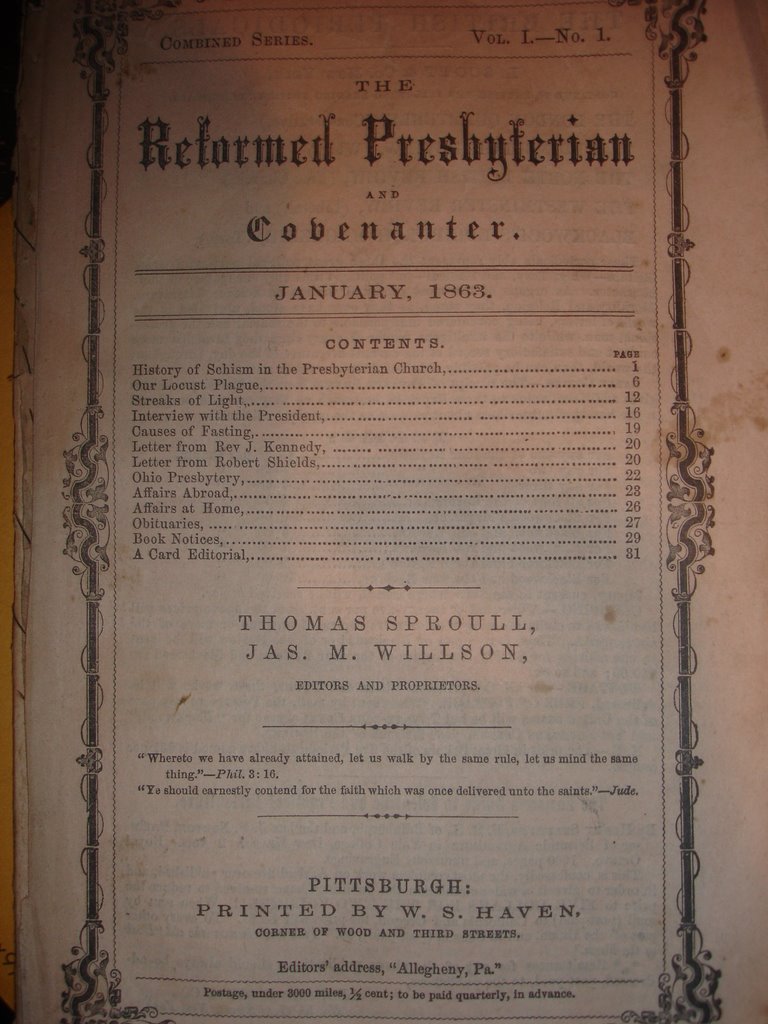
I received volume one, number one of the Reformed Presbyterian Covenanter from January, 1863.


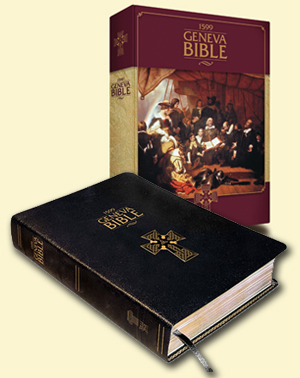
I also received the new edition of the 1599 Geneva Bible in Genuine Leather.


Happy birthday to me!

27 November, 2006

The Reverend Jesse Jackson Speaks


The Reverend Jesse Jackson has called for Hollywood to stop using words that are
offensive to racial minorities.
Fine, good, great.
I call on Jesse Jackson to stop calling himself Reverend.
That title,
applied to his name,
is offensive to Christians.

Is IKEA the New Reformation?


26 November, 2006

Sabbath a' Brakel: Promises Stored

He who, in reading the Bible, has accumulated numerous promises to be readily available upon becoming subject to a trial has a great advantage (II: 619).

25 November, 2006

Thomas Smyth on Harmony Amongst Church Members

1. To remember that we are all subject to failings and infirmities, of one kind or another.—Matt 7:1-5; Rom 2:21-23.

2. To bear with and not magnify each other's infirmities.—Gal 6:1.

3. To pray one for another in our social meetings, and particularly in private.—James 5:16.

4. To avoid going from house to house, for the purpose of hearing news, and interfering with other people's business.—Lev 19:16.

5. Always to turn a deaf ear to any slanderous report, and to allow no charge to be brought against any person until well founded and proved.—Prov 25:23.

6. If a member be in fault, to tell him of it in private, before it is mentioned to others.—Matt 18:15.

7. To watch against shyness of each other, and put the best construction on any action that has the appearance of opposition or resentment.—Prov 10:12.

8. To observe the just rule of Solomon, that is, to leave off contention before it be meddled with.—Prov 17:14.

9. If a member has offended, to consider how glorious, how God-like it is to forgive, and how unlike a Christian it is to revenge.—Eph 4:2.

10. To remember that it is always a grand artifice of the Devil, to promote distance and animosity among members of Churches, and we should, therefore, watch against everything that furthers his the Devil's end.—James 3:16.

11. To consider how much more good we can do in the world at large, and in the Church in particular when we are all united in love, than we could do when acting alone, and indulging a contrary spirit.—John 13:35.

12. Lastly, to consider the express injunction of Scripture, and the beautiful example of Christ, as to these important things.—Eph 4:32; 1 Pet 2:21; John 13:5,35.

(via Crazy Calvinist)

24 November, 2006

RPCNA Sites of Interest

It is no secret that I would like to preach in the Reformed Presbyterian Church of North America when I am completed with my Master's of Divinity. I am attempting to compile a list of websites that will be of interest to anyone who would like to know more about the RPCNA. Please add to this list via the comments section if you know of any more.

Main denominational website

Wikipedia definition and articles

Position paper on worship and history

A downloadable and printable Constitution (what they believe)

A list of Congregations

Some of their Youth Ministries

Short Term Mission trips

Home Missions and Church Planting

Exciting Foreign Missions (including one in Japan and one in Cyprus)

Their denominational college

Their denominational Seminary

Their denominational publishing house

Book of the Year

Meet The Puritans has won book of the year by Shepherd's Scrapbook. This book is a worthy tome and is an excellent reference for those who want to get to know the Puritans better. Beeke and Pederson have given a biography of each Puritan- American, English, Scottish, and Dutch. They also list the Puritan books that have been reprinted in the last 50 years. Rev. Ray Lanning has compiled a wonderful glossary of terms, places, and concepts.

The book retails for $35, but at Heritage Books you can get one for $25. I will also pick up a copy for anyone local. (I have a loaner copy as well- if you would like to add it to your library, but would like to peruse it first, let me know.)

22 November, 2006

Thanksgiving ad fontes

Today Thanksgiving is called Turkey-day and it is when people over-eat and sit and watch NFL football all afternoon (at least that's how it was in my home growing up). Historically it was a great time of thanking the Lord for his provisions and a day set apart for worship and for prayer. Do we come to the Thanksgiving table with that same devotion to Christ that our Puritan forefathers did?

Our Corne did proue well, & God be praysed, we had a good increase of Indian Corne, and our Barly indifferent good, but our Pease not worth the gathering, for we feared they were too late sowne, they came vp very well, and blossomed, but the Sunne parched them in the blossome; our harvest being gotten in, our Governour sent foure men on fowling, that so we might after a more speciall manner reioyce together, after we had gathered the fruit of our labors; they foure in one day killed as much fowle, as with a little helpe beside, served the Company almost a weeke, at which time amongst other Recreations, we exercised our Armes, many of the Indians coming amongst vs, and among the rest their greatest King Massasoyt, with some nintie men, whom for three dayes we entertained and feasted, and they went out and killed fiue Deere, which they brought to the Plantation and bestowed upon our Governour, and upon the Captaine, and others. And although it be not alwayes so plentifull, as it was at this time with vs, yet by the goodneses of God, we are so farre from want, that we often wish you partakers of our plenty. -Edward Winslow, December 11, 1621

They begane now to gather in ye small harvest they had, and to fitte up their houses and dwellings against winter, being well recovered in health & strenght, and had all things in good plenty; for some were thus imployed in affairs abroad, others were excersised in fishing, aboute codd, & bass, & other fish, of which yey tooke good store, of which every family had their portion. All ye somer ther was no wante. And now begane to come in store of foule, as winter aproached, of which this place did abound when they came first (but afterward decreased by degree). And besids water foule, ther was great store of wild Turkies, of which they took many, besids venison, &c. Besids they had aboute a peck a meale a weeke to a person, or now since harvest, Indean corne to yt proportion. Which made many afterwards write so largly of their plenty hear to their freinds in England, which were not fained, but true reports.
-Governor William Bradford

21 November, 2006

The Conquering Warrior-King

I have been meditating on Christ's kingdom a lot of late. I have been especially moved by the amount of places in Scripture that present the kingdom of Christ as one that will issue forth as a force that will not be stopped.

In our time, and from our point-of-view, it may seem as though the cause of Christ is being lost in our culture. We cannot despair. He who is called Faithful and True is riding forth to conquer- and he will.

Revelation 19. 11 And I saw heaven opened, and behold a white horse; and he that sat upon him was called Faithful and True, and in righteousness he doth judge and make war. 12 His eyes were as a flame of fire, and on his head were many crowns; and he had a name written, that no man knew, but he himself. 13 And he was clothed with a vesture dipped in blood: and his name is called The Word of God. 14 And the armies which were in heaven followed him upon white horses, clothed in fine linen, white and clean. 15 And out of his mouth goeth a sharp sword, that with it he should smite the nations: and he shall rule them with a rod of iron: and he treadeth the winepress of the fierceness and wrath of Almighty God. 16 And he hath on his vesture and on his thigh a name written, KING OF KINGS, AND LORD OF LORDS. 17 And I saw an angel standing in the sun; and he cried with a loud voice, saying to all the fowls that fly in the midst of heaven, Come and gather yourselves together unto the supper of the great God; 18 That ye may eat the flesh of kings, and the flesh of captains, and the flesh of mighty men, and the flesh of horses, and of them that sit on them, and the flesh of all men, both free and bond, both small and great.

20 November, 2006

Hearing Preaching in Post-Modernity

The concept of preaching has been challenged in the post-modern evangelical church. This may be because the preaching is not good, but it may also be that the hearing is not good.

Preachers need to be diligent in making their sermons Christ centered, exegetical, and applicatory to these post-modern times. On the other hand, hearers of sermons need to train their minds, ears, and rear-ends to endure a 40 minute sermon. My generation has the attention span of a gnat. I have heard it said that even in conversation the 20-somethings down to teens are not really having conversations, but verballing IM-ing each other.

With our culture being visually oriented and having less and less abilities to focus and to concentrate, we as Christians need to retrain our minds and be not conformed to the ways of this world. After-all, faith comes by hearing- and that requires a preacher.

The Right Hearing of Preaching
By this subject matter of preaching the word of God, we may receive a good direction to observe two caveats enjoined by Christ concerning hearing:

The first is concerning the matter which we hear, "Take heed what you hear," Mark 4:24. We must hear nothing with approval except what we know to be the word of God. We must, therefore, be well acquainted with the Scriptures ourselves, and by them test the things which we hear, whether they are the word of God or not, as the men of Berea did, Acts 17:11.

The second caveat is concerning the manner of hearing, "Take heed how you hear," Luke 18:18. That which we know to be grounded upon the Scriptures we must receive, "not as the word of men, but, as it is in truth, the word of God," 1 Thess. 2:13. We must with reverence attend to it; we must in our hearts believe, and we must in our lives obey it.
-William Gouge, (1575-1653)

19 November, 2006

Sabbath a' Brakel

Listen to the knocking and arousing voice of the Lord Jesus and reflect upon the words of the bride: "I sleep, but my heart waketh: it is the voice of my beloved that knocketh, saying, Open to me, my sister, my love, my dove, my undefiled: for my head is filled with dew, and my locks with the drops of the night." She, not being worthy of arising says, "My beloved put in his hand by the hole of the door, and my bowels were moved for him...My soul failed when he spake" (Song of Sol. 5:2, 4, 6) [IV: 273].

17 November, 2006

All Roads Lead to Rome

Eight Days OF Silence is an article about a Christian Reformed minister who went to a monastery and was silent for eight days. This experience was considered to be invigorating and reviving of his own personal spiritual life. He encourages us to do the same thing.

Is this really what minister's of the Gospel are supposed to be doing? Does a church with the name Reformed attached remember from what we have reformed? Does the blood of the martyrs not cry out against such practices that attempt to bring us, once again, under the blood-stained-staff of the so called Holy Father of Rome?

If we are going to drop the distinctives that Reformed churches have maintained since the 1500s (and not to mention the lights that shone in the Ancient and Medieval church), should we not just pack our bags and go knocking on the door of Saint Peter's basilica?

I desire one united catholic church- if others desire the same thing and have no problems with the errors and abuse of Rome- then they should return unto her shepherd. She is there to welcome you with open arms!

13 November, 2006

An Emotional and Logical Religion

Does your heart burn with within as grace is exercised? Does God excite your heart as you live out of obedience to Him? True religion is one that changes the way that we use our emotions and respond to God through them. True religion is not just an exercise of the mind.

The Spirit of God, in those that have sound and solid religion, is a spirit of powerful holy affection; and therefore, God is said to have given them the spirit of power, and of love, and of a sound mind (II Tim. 1:7). And such, when they receive the Spirit of God, in his sanctifying and saving influences, are said to be baptized with the Holy Ghost, and with fire; by reason of the power and fervor of those exercises the Spirit of God excites in their hearts, whereby their hearts, when grace is in exercise, may be said to burn within them; as is said of the disciples (Luke 24:32).
-Jonathan Edwards, Religious Affections

Sabbath a' Brakel: Offices of Christ

Come to this Prophet, humbly beseeching Him that He will teach and guide you. "Shew me Thy ways, O LORD; teach me Thy paths; "Lead me in Thy truth, and teach me" (Psa. 25:4-5); "Open thou mine eyes, that I may behold wondrous things out of Thy law" (Psa. 119:18). Then believe that He shall hear you and grant you wisdom. "If any of you lack wisdom, let him ask of God, that giveth to all men liberally, and upbraideth not; and it shall be given him. But let him ask in faith, nothing wavering" (James 1:5-6), that is, doubting neither the power and the willingness of the Lord nor the fact that He will grant any matter at His time, in His manner, and in a measure determined by Him (I: 529)

08 November, 2006

Living Out of Feelings or Living by Faith?

Ebenezer Erskine ( One of the founders of the Associate Presbyterian Church) makes the distinction in his preaching between the assurance of faith and what he calls 'the assurance of sense'. This distinction is what we would call living by your feelings versus living by faith. One man places his trust in his religious experience. The other man places his trust in the promises of God and by faith.

1. Sense gives an important status to what is enjoyed and in hand, but faith looks to all of what man has in Christ comprehensively.
2. Sense is ready to judge of the love of God by providences; Faith wreaths the love of God in all circumstances.
3. Sense and sight is a variable and fluctuating thing, but faith is steady and fixed like Abraham who against hope staggered against unbelief.
4. Sight and sense look only to things present, but faith, like a prophet looks to things to come.
5. Sense and sight are superficial and are easily taken in with appearances bt faith is a diving thing (it probes deeply).
6. Sense and faith differ in their order. Faith is the leader and sense is the follower. Faith is duty and sense follows in the wake of faith.
7. Sense is hasty and precipitous in judgment; faith is patient and waits to see God's end.
8. A life of sense is dangerous; a life of faith is sure and safe.
9. Sense has its only foundation and confidences within the believer himself, ittreadss in the shallow waters of experimental attainments and marks of grace; but faith has its foundation outside the man with Christ in God's covenant and in the great and precious promises. While the Mariner stays in the shallow waters in continuous fear of rocks and sandbars- while he is in the deep waters he feels safe. So it is with the shallowness of living out of sense and depths of living by faith.

06 November, 2006

Kerugma: A New "To Me" Blog

Kerugma: Pulpit and Pew
is a new blog that I have linked. Please check it out and see some of the great thoughts that are being published there. Pastor Lewis is a former Covenanter in the RPNA, in Edmonton Canada. He is also a former ARP minister. Pastor Lewis is now serving in the Free Reformed Churches.

I had the opportunity of meeting him at Puritan Seminary where he sat in on one of my sermon critiques. He had some great recommendations and we had the opportunity to spend some time together speaking of the great depths of the riches of Christ.

I would also recommend listening to his sermon on Sermon Audio entitled Preparation For Rain. It is a true call to the church that all should hear!

05 November, 2006

A Meditation From the Depths Towards the Heights

Sometimes in the Christian experience we have dark nights of the soul. These are times when our experiences of the world around are affecting us to the point where God feels far from us. Our soul longs for closeness and communion with God, through Christ, yet we cannot muster the energy to bring worship from the depths of our being. The Puritans referred to these times as being in the Valley of Vision. This is where we are brought low as into a valley for the purpose of seeing our loving God on the apex of the mountains above us.

The Psalms are perfect meditations for times in the Valley of Vision. John Calvin called the Psalms a complete anatomy of Christian experience. Allow me to share one such Psalm that I have been meditating on today. May the Lord be blessed as we command praise from the depths of our souls!

The tune is Freu Dich Sehr, also entitled, Thirsting. The text is a translation of the Genevan poet Louis Bourgeous' rendition of Psalm 42. It was originally written in 1551 and then translated by Dewey Westra in 1931.

This meditative Psalm is one that is worth putting into memory for such a time as this. Again, may the Lord be blessed as we walk in the Valley of Vision.

As the hart, about to falter,
In its trembling agony,
Panteth for the brooks of water,
So my soul doth pant for Thee.
Yea, athirst for Thee I cry;
God of life, O when shall I
Come again to stand before Thee
In Thy temple, and adore Thee?

Bitter tears of lamentation
Are my food by night and day;
In my deep humiliation
Where is now thy God? they say.
Yea, my soul doth melt in me,
When I bring to memory,
How of yore I did assemble
With the joyful in Thy temple.

O my soul, why art thou grieving,
Why disquieted in me?
Hope in God, thy faith retrieving;
Let Him still thy refuge be.
I shall yet extol His grace
For the comfort of His face;
He has ever turned my sorrow
Into gladness on the morrow.

From the land beyond the Jordan
I bewail my misery;
From the foothills of Mount Hermon,
O my God, I think of Thee.
As the waters plunge and leap,
Deep re-echoes unto deep;
All Thy waves and billows roaring
O'er my troubled soul are pouring.

But the Lord will send salvation,
And by day His love provide;
He shall be my exultation,
And my song at eventide.
On His praise e'en in the night
I will ponder with delight,
And in prayer, transcending distance,
Seek the God of my existence.

I will say to God, my fortress:
Why hast Thou forsaken me?
Why go I about in sadness
For my foes' dread tyranny?
Their rebukes and scoffing words
Pierce my bones as pointed sword,
As they say with proud defiance:
Where is God, thy soul's reliance?

O my soul, why art thou grieving;
Why disquieted in me?
Hope in God, thy faith retrieving;
He will still thy refuge be.
I shall yet through all my days
Give to Him my thankful praise;
God, who will from shame deliver,
Is my God, my rock, forever.

Sabbath a'Brakel: On Unconverted Church Members

By maintaining that only true believers are members of the church, we do not claim that there are no unconverted in the congregation, but that they are not present as true members there. There neither has been, nor will ever be a church upon earth in which there are no unconverted, that is, those who merely run along; yes, the latter are generally in the majority. There is a significant difference between being in the church, and being of the church (II: 14).

02 November, 2006

Jesus, Thou Joy of Loving Hearts

Some of the greatest meditations on the life and work of the Lord Jesus Christ come from the pen of the 12th century mystic, Bernard of Clairvaux. Bernard is highly honored amongst those in the experiential Christian tradition. Bernard is extensively quoted by John Calvin as well as by many Puritan authors. He is well known for his work on the Love of God as well as for his extensive meditations on the relationship between Christ and his Bride as described in the book of Canticles.
Jesus, Thou Joy of loving hearts,
Thou Fount of life, Thou Light of men,
From the best bliss that earth imparts,
We turn unfilled to Thee again.

Thy truth unchanged hath ever stood;
Thou savest those that on Thee call;
To them that seek Thee Thou art good,
To them that find Thee all in all.

We taste Thee, O Thou living Bread,
And long to feast upon Thee still;
We drink of Thee, the Fountainhead,
And thirst our souls from Thee to fill.

Our restless spirits yearn for Thee,
Wherever our changeful lot is cast;
Glad when Thy gracious smile we see,
Blessed when our faith can hold Thee fast.

O Jesus, ever with us stay,
Make all our moments calm and bright;
Chase the dark night of sin away,
Shed over the world Thy holy light.