20 October, 2006

Goals of Education

John Milton described Christian education by way of the telos, or the purpose of education. Today we seem to have reduced Christian education to mean the same thing that secular education means except with prayer and Bible reading.

Secular education plus Bible and prayer does not make Christian education, but sets up false dichotomies in the minds of our children. The realm of education cannot be removed from the idea of submission to God. Education needs to reflect our faith and our deepest core values.

The end then of learning is to repair the ruins of our first parents by regaining to know God aright, and out of that knowledge to love him, to imitate him, and to be like him.
-John Milton, Of Education, 1644

17 October, 2006

The Magnifying Glass and the Sackcloth

Why do we as Christians have such a difficult time living with the perspective of heaven in our minds and hearts? Why do we, as Christians, often struggle with worldliness and find that most of our anxieties are related to the temporal and not related to pleasing the Lord Jesus Christ. Why do we live with roots so deep into this world when the Bible tells us that we are mere pilgrims passing through. When we will fix our eyes on the prize, which is Jesus Christ in glory? When will we be found singing those pilgrim psalms as we march on to that city whose builder and maker is God? When will the ties to this world be cut so that we may be truly free to serve Christ as we ought?

The things of this world appear to us more, and those that are to come less, than they are; and hence it is that many are so hot and eager for things that be in the world, and so cold and heartless for things that be in heaven. Satan is here a mighty artist, and can show us all earthly things in a multiplying glass; but when we look up to things above, we see them as through sackcloth of hair: but take thou heed, and be not ruled by thy sensual appetite that can only savour fleshly things, neither be thou ruled by carnal reason, which always darkeneth the things of heaven. But go to the Word, and as that says, so judge thou. That tells thee all things under the sun are vanity, nay, worse, vexation of spirit; that tells thee that the world is not, even then when it doth most appear appear to be. Wilt thou set thine heart upon that which is not? for riches certainly make themselves wings, and fly away as an eagle towards heaven. The same may be said for honours, pleasures, and the like; they are poor, low, base, things to be entertained by a Christian's heart.
-John Bunyan, Paul's Departure and Crown

16 October, 2006

Dark Corners of the Soul

One of the great dangers of those who claim faith in Christ is not living in a way that reflects what one believes. Often people who have some theological knowledge are deceived in that they do not live in a way that reflects the grace of God that they claim. This is a very serious error for which each Christian needs to be on guard.

As we study the Scriptures and as we read sound theological books that encourage us and spur us on to greater godliness; we need to search out our own heartsand minds for the sin of hypocrisy. Each one of us have those dark little corners of our heart and mind that still need to be crucified and brought under the discipleship of Christ.

Let us live unto Christ, out of gratitude, for all that he has done and be careful to live out that which we profess.

"A man may be theologically knowing and spiritually ignorant."
STEPHEN CHARNOCK

15 October, 2006

Sabbath a'Brakel: The Devil's Assault During Prayer

Since the devil knows what strength, comfort, and benefit may be derived from prayer, he uses all the power and subtlety at his disposal either to keep you from praying or to trouble you while praying.
(1) He will suggest as many other activities to you as he possibly can, divert your thoughts elsewhere, and induce you to postpone prayer to a given time (having something else to do first).
(2) Sometimes he suggests that prayer is a work so difficult that you cannot do, are entirely unfit for, are presently in too sinful a condition, and that you should thus wait for a season when you will be more fit for it.
(3) Sometimes he gives a deep impression that prayer is both ineffective and fruitless.
(4) Sometimes the devil, as if throwing in a handful of dust, is also busy casting other thoughts into our minds while we are praying (IV: 239-240).

12 October, 2006

Preaching at Southfield RPCNA

Please pray for us as we travel to Southfield Reformed Presbyterian Church this weekend.

Nathan will be preaching both services and hopes that the Lord blesses the people of Southfield through the preaching of the Word. I am quite excited to have the opportunity to preach in such an historical church in Michigan's history. (This church is older than our state!)

Pray also that as we get to know these brothers and sisters in Christ bridges will be built to further the kingdom of God in Christ. Pray for us.

*It was also brought to our attention that Rev. Rick Miller of Dutton United Reformed Church had a stroke this week. Pray for him, his family, and his congregation as they work through this tragic event.

10 October, 2006

Christopher Love on Prayer

Prayer is one of the greatest weapons that the Christian Church has. She can fight against Satan, against the world, and against her members flesh with storming the throne room of Grace. Christ has attached great promises to prayer and it is one of God's primary means to work out His will in human history. Prayer is often neglected, and as James has said, we have not because we ask not.

There are many who pray sometimes and leave off praying again. Now this very much dulls men's affections in prayer. There is a Proverb: Use makes perfectness. I am sure it is so in the duty of prayer. Let a Christian pray often and he will come to pray well, and to pray with much enlargedness of heart. Let him leave off prayer and will find his heart exceeding straitened.

Take a key. If you use it frequently it will be bright, but if you lay it aside it will soon grow rusty. This it will be with a man's heart. Use prayer much, keep it close to the performance of a duty, for that is the way to have your heart bright. Let this key of prayer, which often opens heaven be used; it will be kept bright and your prayer will enter heaven. But let this key of prayer be laid aside and be seldom used and it will quickly grow rusty again. Your prayers and performances will not be able to enter heaven, and you will not be able to perform duty in this manner which God expects. If you do not watch your prayer with all carefulness, you will lose your zeal and fervent affection, and your desire after God in duty.
-The Zealous Christian, c.1653

08 October, 2006

The Kisses From Christ's Mouth

Is your experience of Christ one of doctrine and cerebral belief, or is it one that encompasses all your affections? Many Calvinists err in being focused on the mind at the expense of the affections. God has called us to love him with heart, mind, soul, and strength.
Our brethren in the Old Economy understood this as they longed for the day of full salvation. They longed to be kissed with the kisses of the Redeemer's mouth.

"Let him kiss me with the kisses of his mouth, that is, be reconciled to me, and let me know that he is so; let me have the token of his favour." Thus the Old-Testament church desired Christ's manifesting himself in the flesh, to be no longer under the law as a schoolmaster, under a dispensation of bondage and terror, but to receive the communications of divine grace in the gospel, in which God is reconciling the world unto himself, binding up and healing what by the law was torn and smitten; as the mother kisses the child that she has chidden. "Let him no longer send to me, but come himself, no longer speak by angels and prophets, but let me have the word of his own mouth, those gracious words (Luke iv. 22), which will be to me as the kisses of the mouth, sure tokens of reconciliation, as Esau's kissing Jacob was." All gospel duty is summed up in our kissing the Son (Ps. ii. 12); so all gospel-grace is summed up in his kissing us, as the father of the prodigal kissed him when he returned a penitent. It is a kiss of peace." -Matthew Henry, Canticles

A Sabbath a'Brakel Call to Self-Denial

A person who does not deny self:
(1) is a slave of his lusts, makes that which is of the world his portion, and insists that his lusts be satisfied at any cost.
(2) entertains great thoughts about himself.
(3) has this proud disposition of the heart engendering a desire to be honored and perceived as such.
(4) has himself in mind when he is or intends to be in presence of people.
(5) takes careful notice of what everyone says of him.
(6) will immediately be displeased at heart if, in his estimation, he is not loved, served, and revered according to his wishes.
(7) is envious of others if they receive more love and honor, and do more business than he does.
(8) becomes sorrowful and despondent if others do not fulfill his desires.
(9) will be a zealous Christian in the realm of religion, as long as he can gain love, honor, and profit--yes, he even wants to be counted among the most orthodox (III: 404-405).

07 October, 2006

Jack be Nimble, Jack Be Quick- Jack Go Under Limbo Stick


It seems as though the Church of Rome, which claims to never change, is changing their position on where unbaptized babies go when they die.

03 October, 2006

Approaching God in Character

Our day and age has brought about what we deem as the "worship wars". The worship wars are Christians battling out their perception of worship. Generally the debates revolve around preference and who prefers hymns versus "contemporary" songs. These churches also desire to battle over things such as organs versus guitars and drums.

The problem with this whole argument is that no one has taken the time to stop and to ask what God desires in all of this. The American church has not stopped to ask about God's character or how he has revealed himself in his Word. The debate usually never leaves the horizontal aspect of ascetics, preference, or "the way that I see it is...".

God has revealed himself in his Word and we need to reflect that character. He has also revealed principles of worship and we must bow to his sovereign will... God is in His holy temple- let the whole earth be silent.

God is a Spirit infinitely happy, therefore we must approach him with cheerfulness; he is a Spirit of infinite majesty, therefore we must come before Him with reverence; he is a Spirit infinitely high, therefore we must offer up our sacrifices with deep humility; he is a Spirit infinitely holy, therefore we must address him with purity; he is a Spirit infinitely glorious, we therefore must acknowledge his Excellency... He is a Spirit infinitely provoked by us, therefore we must offer up our worship in the name of a pacifying mediator and intercessor.
-Stephen Charnock

02 October, 2006

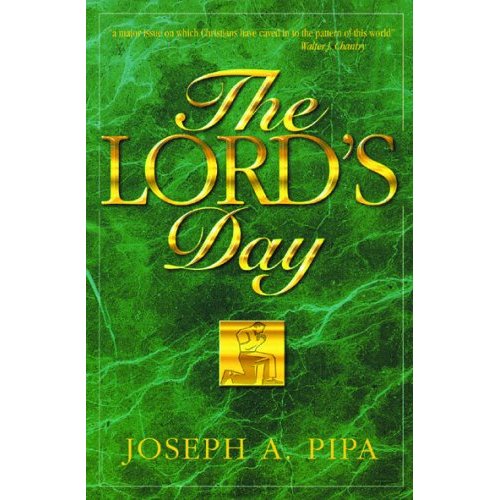
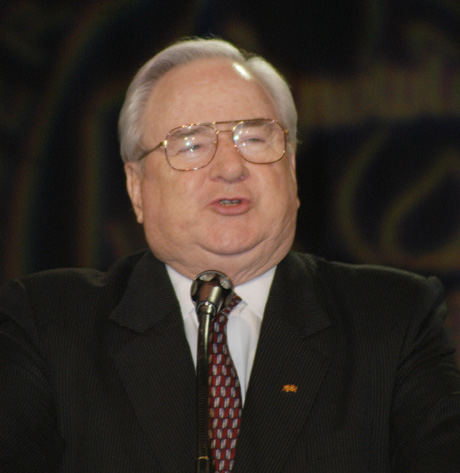
Dr. Joseph Pipa

Se Dr. Joey Pipa will be lecturing this evening at
Puritan Reformed Theological Seminary.
His topic will be the
sanctifying of the Lord's Day.
This is a much neglected topic in today's Christianity- even in Reformed Churches which hold this in high regard.
If you are able to attend, it is at 7:30pm.
If you are unable to attend, you can request a copy in tape, CD or mp3 format.

01 October, 2006

Your Lord's Day a'Brakel

The effect of spiritual courage is a courageous prevailing in the battle and a courageous perseverance in obedience toward God. That competence or propensity which never translates into deeds is useless. God has given His children grace for that very purpose--not that it would remain dormant and concealed within them, but in order that they would labor with it (III: 336-337).

28 September, 2006

Prepare Ye Your Heart

The Reformed doctrine of Holy Communion is one of great comfort to the Christian. The Christian is called to enter into the heavens to sit with Christ and to commune with Him. O to be with him and to learn at his feet. May he teach us something of the greatness of his majesty, the fullness of His love, and the depths to which he went to satisfy the demands of the law to pay God's righteous penalty for us to have eternal life. Blessed be the Holy One of Israel.
"Your eyes are looking at bread and cup. This is the evidence before your physical sight. But your faith must be instructed concerning it - this bread being Christ 's Body and the cup containing His Blood. Though perhaps these words may be enough to initiate faith, faith must be further instructed in accordance with the Prophet's words:
'Believe that you may understand' ( Is 7:9).
-St. Augustine of Hippo

25 September, 2006

Emerging Right Along

This is a comment from Chuch Weise from Dutton United Reformed Church. Mr.Weise was commenting on the Emergent Church movement in response to a question concerning the Reformed response to this movement. His comments are quite helpful so I am (without permission) giving it to all of you.

In my opinion the best resource available is a book by D.A. Carson called "Becoming Conversant with the Emerging Church." He does a good job providing an honest critique of the movement and particularly McLaren's book "A Generous Orthodoxy." I would also recommend reading McLaren's book as well as Rob Bell's book "Velvet Elvis" to get an understanding of where they are coming from. Both end up saying things you would expect to hear from Robert Schuller. Neither seem to have much theological training.McLaren seems to want to define Christianity in the beginning of his book with the Nicene Creed but then critiques Calvin later on for executing Christians who disagreed with him. The only person I know of that Calvin had some part in the execution of was Servetus who was anti-Trinitarian.

It is interesting that McLaren's harshest criticisms in the book seem to be directed at Calvinism. He seems to be very positive towards the other groups he refers to. McLaren even spends some time apologizing for those horrible masculine pronouns in the Bible.

Bell's book is heavily influenced by the teachings of Ray Vanderlaan and I think the Reformed community in general needs to be very careful in how it uses Vanderlaan's material. Bell claims that when Peter is rebuked by Jesus for his lack of faith it is not for lack of faith in Jesus but lack of faith in himself. This is one of the things lifted from Vanderlaan. I don't think Bell has any real training in Hebrew but he almost leaves the impression that you can't have any understanding of the Bible without it. He seems to think that the Talmud should always be read back into the Bible.Bell does bring up some important issues, such as the need to study the Bible in community but he does not provide any real guidelines in how to do that.

Keith Mathison's book "The Shape of Sola Scriptura" addresses the same problem but deals with the issue in a more in depth and Biblical way.Both McLaren and Bell seem to be mostly writing about themselves which is common in evangelicalism. Everything is related to some experience they had or how they feel. McLaren claims to be writing in the spirit of Chesterton but Chesterton was very harsh towards such self-centered people who couldn't tell you about anything except in relationship to themselves. When I read McLaren and Bell it reminds me of reading Plato. They are good at showing real problems in evangelicalism but when it comes to providing solutions they don't really have any reasonable ones.

I hope that the movement causes Reformed Christians to look back to the 16th Century Reformers and embrace the ancient traditions that the Reformers did. The more Reformed Churches start looking like evangelicalism, the more their members will be easy prey for the emerging church movement. The Reformed Churches should also recognize the need for a strong community of believers. Church can't just be a place you go to twice on Sunday.It's important to realize who these people are reacting against. They are both critiquing evangelicalism but both still working within and evangelical mindset. They are not the root problem, the evangelical paradigm is. Their methodology is no less Biblical than the common evangelical one. They are starting to question things in evangelicalism and that is good and hopefully will lead to dialog with the Reformed community.

Chuck Wiese
Dutton URC
Grand Rapids, MI

24 September, 2006

If the Devil ran against Senator Clinton- who would you vote for?

Lord's Day a'Brakel

This love [for Christ] will cause a minister to pray much for the congregation and pray that he himself might receive grace to communicate this to the congregation. He will study for his sermons prayerfully, and he will prayerfully traverse the street towards the pulpit. His prayer is not that he may avoid disgrace or shame, nor that he may speak in a manner pleasing to the congregation, rendering him honor and respect and enabling him to draw crowds. If such is his secret motive (even if he does not say so expressly) and he pretends to have another motive while praying for the honor of God and the edification of the congregation, he frequently does this to satisfy his conscience, but his own honor is his primary motive. Love, however, will cause him at all times to pray for the congregation, thereby seeking her benefit. "Night and day praying exceedingly that we might see your face, and might perfect that which is lacking in your faith" (1 Th. 3:10) [II: 134].

21 September, 2006

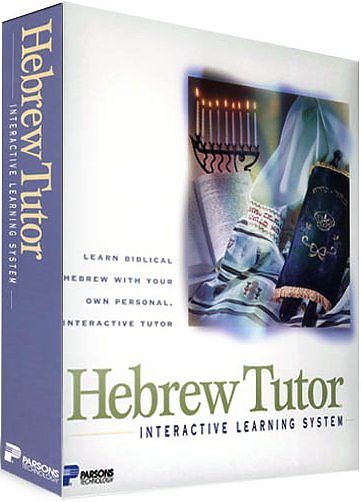
Parson's Hebrew Tutor


I have found a Hebrew Tutorial that I think will help me with my studies. I am also receiving private tutoring from Dr. Bilkes who is a master of these Semetic languages. I am having a difficult time with it though. Semetic languages are strange because there is NOTHING recognizable about them at all.

When I began Greek it was a bit easier since there is a lot of similarity between Greek and English roots. If you saw that Big Fat Greek Wedding you can recall that everything goes back to Greek.

.llew sa gnisufnoc etiuq era sretcarahc eht dna sdrawkcab si ti ecnis werbeH ot kcab seog gnihton tuB

18 September, 2006

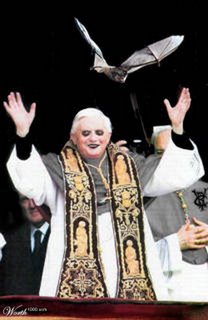
Pope Bows Knee to Allah

It seems as though the so-called Bishop of Rome has offended the Muslims. He referred to their practice of Jihad (holy war against Jews, Christians, and other 'idolators') as evil. Amongst the dying words of Mohammed, the founder of Islam, were "All Jews and Christians must die".

Does this sound evil to you? Is a hate-filled religion that fosters fear and violence an evil religion? Is a religion that denies that Jesus Christ is the Son of God evil? Is a religion that that has a God who is arbitrary and will damn you on Monday but redeem you on Tuesday evil?

Are the number one outward enemy of Christianity since the middle-ages, who dipped the blood of Christians onto their fez hats...are they evil.

Well, the Pope thought so..until the heathen raged... now he is deeply sorry for the offense.

Here is the text of his apology:

Dear Brothers and Sisters,
The pastoral visit which I recently made to Bavaria was a deep spiritual experience, bringing together personal memories linked to places well known to me and pastoral initiatives towards an effective proclamation of the Gospel for today.
I thank God for the interior joy which he made possible, and I am also grateful to all those who worked hard for the success of this Pastoral Visit.
As is the custom, I will speak more of this during next Wednesday's general audience.
At this time, I wish also to add that I am deeply sorry for the reactions in some countries to a few passages of my address at the University of Regensburg, which were considered offensive to the sensibility of Muslims.
These in fact were a quotation from a medieval text, which do not in any way express my personal thought.
Yesterday, the Cardinal Secretary of State published a statement in this regard in which he explained the true meaning of my words.
I hope that this serves to appease hearts and to clarify the true meaning of my address, which in its totality was and is an invitation to frank and sincere dialogue, with great mutual respect.


Pope Apologizes to Angered Muslims

17 September, 2006

Lord's Day a'Brakel

In [the] church there is both glory and elegance. For a moment give attentive consideration to the glorious state of that kingdom and its true subjects. The earth and the nations are enveloped in darkness; however, wondrous light is to be found in the church. The glory of the Lord illuminates this city of God and the Sun of Righteousness enlightens it with His light. Outside of her is nothing but pollution, abominations, and ungodliness; however, within there is her holiness, purity, and glory…. Ought not everyone therefore to delight himself in Zion, and be desirous to be a member of this church, a fellow citizen of the saints, and a member of the household of God? Should not everyone be desirous to submit himself to the protection and government of this King? For not only are all the these things said concerning this kingdom and this King, but all are most certainly true. (II: 58).

14 September, 2006

What We Believe Concerning the Old and New Testaments

I. Although the light of nature, and the works of creation and providence do so far manifest the goodness, wisdom, and power of God, as to leave men unexcusable;[1] yet are they not sufficient to give that knowledge of God, and of his will, which is necessary unto salvation.[2] Therefore it pleased the Lord, at sundry times, and in divers manners, to reveal himself, and to declare that his will unto his church;[3] and afterwards, for the better preserving and propagating of the truth, and for the more sure establishment and comfort of the church against the corruption of the flesh, and the malice of Satan and of the world, to commit the same wholly unto writing:[4] which maketh the Holy Scripture to be most necessary;[5] those former ways of God's revealing his will unto his people being now ceased.[6]
1. Rom. 1:19-20; 1:32-2:1; 2:14-15; Psa. 19:1-4
2. John 17:3; I Cor. 1:21; 2:13-143. Heb. 1:1-24. Luke 1:3-4; Rom. 15:4; Matt. 4:4, 7, 10; Isa. 8:205. II Tim. 3:15; II Peter 1:196. John 20:31; I Cor. 10:11; 14:37; I John 5:13; Heb. 1:1-2; 2:2-4

II. Under the name of Holy Scripture, or the Word of God written, are now contained all the books of the Old and New Testaments, which are these:

Of the Old Testament:
Genesis I Kings Ecclesiastes ObadiahExodus II Kings The Song of Songs JonahLeviticus I Chronicles Isaiah MicahNumbers II Chronicles Jeremiah NahumDeuteronomy Ezra Lamentations HabakkukJoshua Nehemiah Ezekiel ZephaniahJudges Esther Daniel HaggaiRuth Job Hosea ZechariahI Samuel Psalms Joel MalachiII Samuel Proverbs Amos Of the New Testament:
The Gospels Paul's Epistles to the Thessalonians II The first and according to the Romans Timothy I second Epistles Matthew the Corinthians I Timothy II of Peter Mark the Corinthians II Titus The first, second Luke the Galatians Philemon and third Epistles John the Ephesians The Epistle to of JohnThe Acts of the the Philippians the Hebrews The Epistle Apostles the Colossians The Epistle of Jude the Thessalonians I of James The Revelation of JohnAll which are given by inspiration of God to be the rule of faith and life.[7]
7. Luke 16:29, 31; 24:27, 44; II Tim. 3:15-16; John 5:46-47

III. The books commonly called Apocrypha, not being of divine inspiration, are no part of the canon of the Scripture, and therefore are of no authority in the church of God, nor to be any otherwise approved, or made use of, than other human writings.[8]
8. Rev. 22:18-19; Rom. 3:2; II Peter 1:21

IV. The authority of the Holy Scripture, for which it ought to be believed, and obeyed, dependeth not upon the testimony of any man, or church; but wholly upon God (who is truth itself) the author thereof: and therefore it is to be received, because it is the Word of God.[9]
9. II Peter 1:19-20; II Tim. 3:16; I John 5:9; I Thess. 2:13; Rev. 1:1-2

V. We may be moved and induced by the testimony of the church to an high and reverent esteem of the Holy Scripture.[10] And the heavenliness of the matter, the efficacy of the doctrine, the majesty of the style, the consent of all the parts, the scope of the whole (which is, to give all glory to God), the full discovery it makes of the only way of man's salvation, the many other incomparable excellencies, and the entire perfection thereof, are arguments whereby it doth abundantly evidence itself to be the Word of God: yet notwithstanding, our full persuasion and assurance of the infallible truth and divine authority thereof, is from the inward work of the Holy Spirit bearing witness by and with the Word in our hearts.[11]
10. I Tim 3:1511. I Cor. 2:4-5, 9-10; Heb. 4:12; John 10:35; Isa. 55:11, 59:21; Rom. 11:36: Psa. 19:7-11; II Tim. 3:15; I Thess. 1:5; I John 2:20, 27

VI. The whole counsel of God concerning all things necessary for his own glory, man's salvation, faith and life, is either expressly set down in Scripture, or by good and necessary consequence may be deduced from Scripture: unto which nothing at any time is to be added, whether by new revelations of the Spirit, or traditions of men.[12] Nevertheless, we acknowledge the inward illumination of the Spirit of God to be necessary for the saving understanding of such things as are revealed in the Word:[13] and that there are some circumstances concerning the worship of God, and government of the church, common to human actions and societies, which are to be ordered by the light of nature, and Christian prudence, according to the general rules of the Word, which are always to be observed.[14]
12. II Tim. 3:16-17; Gal. 1:8-9; II Thess. 2:213. John 6:45; I Cor. 2:12, 14-15; Eph. 1:18; II Cor. 4:614. I Cor. 11:13-14; 14:26, 40

VII. All things in Scripture are not alike plain in themselves, nor alike clear unto all:[15] yet those things which are necessary to be known, believed, and observed for salvation, are so clearly propounded, and opened in some place of Scripture or other, that not only the learned, but the unlearned, in a due use of the ordinary means, may attain unto a sufficient understanding of them.[16]
15. II Peter 3:1616. Psa. 119:105, 130; Deut. 29:29; 30:10-14; Acts 17:11

VIII. The Old Testament in Hebrew (which was the native language of the people of God of old), and the New Testament in Greek (which, at the time of the writing of it, was most generally known to the nations), being immediately inspired by God, and, by his singular care and providence, kept pure in all ages, are therefore authentical;[17] so as, in all controversies of religion, the church is finally to appeal unto them.[18] But, because these original tongues are not known to all the people of God, who have right unto, and interest in the Scriptures, and are commanded, in the fear of God, to read and search them,[19] therefore they are to be translated into the vulgar language of every nation unto which they come,[20] that, the Word of God dwelling plentifully in all, they may worship him in an acceptable manner;[21] and, through patience and comfort of the Scriptures, may have hope.[22]
17. Matt. 5:18; Psa. 119;8918. Isa. 8:20; Matt. 15:3, 6; Acts 15:15; Luke 16:3119. John 5:39; Acts 17:11; Rev. 1:3; II Tim. 3:14,1520. Matt. 28:19-20; I Cor. 14:6; Mark 15:3421. Col. 3:16; Exod. 20:4-6; Matt. 15:7-922. Rom. 15:4

IX. The infallible rule of interpretation of Scripture is the Scripture itself: and therefore, when there is a question about the true and full sense of any Scripture (which is not manifold, but one), it must be searched and known by other places that speak more clearly.[23]
23. Acts 15:15; John 5:46; II Peter 1:20-21

X. The supreme judge by which all controversies of religion are to be determined, and all decrees of councils, opinions of ancient writers, doctrines of men, and private spirits, are to be examined, and in whose sentence we are to rest, can be no other but the Holy Spirit speaking in the Scripture.[24]
24. Matt. 22:29,31; Acts 28:25; I John 4:1-6