27 October, 2005

Hast Thou Forgotten Grace?

This Reformation Day weekend be mindful of the fact that the Reformation was seen as a Reformation of the doctrines of grace as well as true worship. May the Lord send Reform to His churches and may He make all of His enemies His footstool.

I would challenge all of my readers to set aside some time to read or listen to some material that deals with the 16th and 17th century Reformation of True Religion. Also spend time in meditation over the state of the church as well as the Reformation of your own spiritual life.

May the world again feel the movement of the Holy Ghost in the Revival and Reformation of the True Reformed Religion.
Discussion Points:
-What does "The Reformed church should always be reforming" mean?
-Do we still see a love for the Truth...Even within the church?
-What have been your experiences in the longing and praying for True Religion?

Soli Deo Gloria! and may God send Reform to our hearts!

25 October, 2005

Family Worship IV: Psalm Singing

The Directory for Publick Worship, on the issue of Psalm singing, says,

"IT is the duty of Christians to praise God publickly, by singing of psalms together in the congregation, and also privately in the family. In singing of psalms, the voice is to be tunably and gravely ordered; but the chief care must be to sing with understanding, and with grace in the heart, making melody unto the Lord."

This may be one of the most difficult parts of worship to implement in the family worship, especially for those that do not sing well. This can also be one of the greatest additions to family worship, especially when the minister gives the Psalter selections for the Next Lord's Day. This can help the family to prepare for the next Sabbath day. Another approach would be to sing those selections that were sung at the previous Sabbath's services as a reflection upon worship and to help bring the previous sermons to memory.

Psalm singing also serves an evangelical purpose in that it causes the worshippers to hide the word of God within their heart so that it can become part of their spiritual arsenal. Words that are set to music are generally easier to recall than those only spoken. Most teens can rattle off a variety of songs that they know from the radio, but have difficulty recalling the catechism or memory verses. Psalm singing bridges that gap. The Psalms are a fantastic way (and a commanded way) to bring praise to Jehovah as well as a way to teach each other the wonderful acts of God.

May the singing of psalms become a part of the daily worship of those who love God!


THE ADEQUACY OF THE PSALMS
by Rev. Kortering (Presbyterian Reformed Church in America)

From time to time the question is raised as to the adequacy of the Psalms for the New Testament church. Is perhaps the Old Testament view of God different from the New Testament? This is the position taken by the hymn writer Isaac Watts, who gave us such hymns as "Joy to the World" and "When I Survey the Wondrous Cross." His view of the Old Testament God cautions us concerning the use of hymns. Speaking of the Psalms he writes,
Some of them are almost opposite the spirit of the gospel. There are a thousand lines in the Book of Psalms which were not made for a church in our day to assume as its own. I should rejoice to see David converted into a Christian. There are many hundred verses in the Book of Psalms which a Christian cannot properly assume in singing. Psalms 13, 16, 36, 68, 69, and 109 are so full of cursings that they hardly become a follower of the blessed Jesus. (The Psalms In Worship, p.472, index p.570.)
No, the Psalms reveal to us the one true God, surely in His fiery wrath against the workers of iniquity, yet also in His grace and mercy as the God of our salvation.
Does the Old Testament give a view of Christ that the New Testament church cannot appreciate or is inadequate? This is perhaps the most common charge brought against the use of the Psalms today. Yet, if we study the Psalms carefully we find quite a different picture. The Holy Spirit was correct when He through Paul reminded the church that by singing Psalms, "the Word of Christ dwells in us" (Col. 3:16). Christ Himself made great use of the Psalms, impressing upon His disciples that the Psalms spoke of Him: "These are the words which I spake unto you, while I was yet with you, that all things must be fulfilled, which were written in the law of Moses and in the prophets, and in the psalms, concerning me" (Luke 24:44). The Psalms did speak concerning Christ. Think of those which spoke directly to Him --e.g., Psalm 22 and 110. Some spoke typically of Him -- e.g., Psalm 16,18, 21, 61, 72, 118. His offices were explained: prophet (Ps. 22), priest (Ps. 110), and king (Ps. 2). Details of His ministry were indicated: His eternity (Ps. 90), His incarnation (Ps. 40 and 22), His rejection (Ps. 22), His triumphal entry (Ps. 8 and 118), His being beaten (Ps. 41), His cross (Ps. 22), His dying words (Ps. 31), His resurrection (Ps. 60), His ascension (Ps. 16), His return in judgment (Ps. 50, 72, 98). The prophetic character of these Psalms does not make them inadequate for the New Testament church. Frequently they were written from the viewpoint of Christ's work as already finished, and always they lift the church beyond the earthly ministry of Christ to His majestic return at the end of the world when His kingdom shall be established forever. Even in heaven we will sing the song of Moses and the Lamb.
One more point as far as the adequacy of the use of the Psalms is concerned. The Holy Spirit worked in the lives of the authors of the Psalms in such a way that they expressed their inner longing, their grief over sin, their cry for forgiveness, their hope in God. Surely, if worship is for praise and edification, the Psalms give God His due, for they present God to us, not from the subjective, emotional, even unreliable experience that God's people may have in their dealings with God, but rather, the Psalms extol the one true God, and cause us to fall on our knees in repentance and praise. Similarly, they express deep feelings on behalf of God's people. But these emotions of worship are not those of mere men, grappling with the Divine Being; they are true emotions that flow from a proper encounter with God. We identify with the grief, the heartache, the burden which the Psalmist expresses in the Psalms. These are true and correct for they have their origin in God, not man. Through such cries for need, we are lifted up to Jehovah, to view His mercy in Christ, His forgiving love that did not cancel out His justice, but satisfied it in the Person of His own Son. The cries of the children of God blend with the groans of the Son of God which rise unto the ears of the Lord of Hosts. He knows and He delivers. He is the Sovereign God of our salvation.
Do we limit the work of the Holy Spirit if we limit ourselves to singing the Psalms? Granted that the Holy Spirit inspired the Psalms, does this mean that the Holy Spirit cannot use other people to compose proper songs for the church to sing? These songs may be of different kinds. Indeed, gifted men have written spiritually edifying songs about the Christian experience which extol God. Others have written songs, or if you will, set to music passages of the Holy Scripture. Is there not a place to make use of these in the worship services? In answering this question, we must recognize that the songs we sing, the versifications of the Psalms as, e.g., in The Psalter are not themselves inspired. There is a long and interesting history as to Psalm tunes, versifications written by the reformers themselves and by others throughout the history of the church. Some of these are well done, others poorly done. In this area there is room for constant improvement and re-evaluation. The point is this, can we not add to the Psalms other themes and passages of Scripture? Admittedly, the idea of adding other Scripture passages set to music has much appeal. This is a very limited application of the idea of introducing "hymns" into the church. Could we not limit ourselves to Scripture, whether Old or New Testament? In dealing with this, we must approach it from the viewpoint that we limit the work of the Holy Spirit. Surely, He is able to give the church gifted men and able to guide them in the production. Yet, the question is more basic: has not the Holy Spirit given to us such a book already, the Psalms, and should we not consider this adequate? If the Spirit saw the need for a New Testament book of praise, He could have given that to us as He did with the Psalms. The fact is that He did not. We must not be wiser than God. If we are going to be bound by the regulative principle of the Word of God, limiting our worship to what God has given us, we do well to consider the adequacy of the Psalms for such worship.

Discussion Points:

-What Psalter selections should we start our youngest family members with?

-What Psalters do you prefer to sing from, and why?

-What use do uninspired hymns play in the teaching of Christian doctrine and experience?

22 October, 2005

The Most Grand Puritan Resource

Thursday, October 22nd, 2005, marked a great day for Puritan Reformed Seminary, as well as the greater Reformed and Presbyterian community. Rev. Dr. Sinclair Ferguson addressed the Puritan Reformed Seminary in dedicating the "Puritan Resource Center".

Here is how the Puritan Resource Center is being advertised by the Seminary:

The Puritan Resource Center houses one of the world's largest collections of seventeenth and eighteenth century antiquarian volumes written by Puritans, as well as numerous modern-day Puritan reprints and secondary sources about the Puritans. Seminary professors, theological students, and ministers are welcome to use these valuable resources under certain conditions. Those doing doctoral studies or on sabbatical leave are also welcome to study in the Resource Center. For further details, please contact the registrar, Henk Kleyn (616-977-0599, ext 120; henk.kleyn@puritanseminary.org; Puritan Reformed Theological Seminary, 2965 Leonard NE, Grand Rapids, MI 49525 ). Visit our website at www.puritanseminary.org

Here are the four points that Dr. Ferguson made in his adress, What can the Puritans teach us today?

1. The significance of spiritual brotherhood in the movements of the Holy Spirit.

2. The vital significance of the recovery of the pulpit in the Church.

3. They developed an understanding of the gospel that was deeply Trinitarian.

4. They recognized the centrality and the significance of the Church in the purposes of God.

Discussion Point:

-What has been the most influential Puritan work to your Christian life?

Family Worship III: The Elders in My Home

Family worship, as I have stated before, begins with a strong Corporate worship on the Lord's Day. Families need to be trained in the proper methods of worship by the Elders of the church for the edification of the home. Worship needs to be taught to the congregation since the natural man tends to worship that which is created instead of the Creator when left to his own devices.
I have a course this semester, taught by Dr. Joel Beeke entitled, Ministers in Ministry. We have many great works to read in the course including Spurgeon, Bridges, Logan, and Murphey. All of the books deal with Pastoral Theology but this one deals with some more current theological trends as well.

Armstrong has a paragraph that is written in passing that I would like to share with you concerning family worship:

"In addition, we must teach God's people to discipline their minds in worship, so that wandering thoughts will not disrupt them during their worship. However, if such thoughts do invade their worship, we must teach them that their response must be, 'bless the Lord O my soul, and all that is within me bless his holy name'. Finally we must faithfully instruct the whole assembly on how to implement and maintain daily private and family worship times in their homes. In so doing, we will teach them that their preparation for the next Lord's Day begins Monday morning and continues throughout their week, in both private and family worship. One of the many great ways that daily family worship benefits public worship is in helping God's people to sing out with joy. A mark of a congregation's God-centeredness in public worship is how they sing from their hearts." (p139)

Notice that the the first line says, "we must teach God's people.." The we mentioned is the ministry. This is your ruling and teaching elders. It is their responsibility before God to teach the congregation how to worship privately.

Discussion Points:
-Have your elders ever taught you how to conduct family worship? Have they questioned you on your practices?
-What model would elders use to implement family worship in the home?
-If this is not being taught by your congregation what are some tactful ways to bring this to their attention?

19 October, 2005

Youth Ministry....It Is Fishy Buisness


When the Apostle Paul wrote to the Timothy, the early church minister of the gospel, he told him not let people despise him for his youth. Timothy must have been a very young minister which fell under criticism for being too young to lead the church of Christ.

In evangelical churches this verse is the battle cry of an ever youthful milieu of people called "youth ministers". These people are generally cooler, better looking, more energetic, and more "down to earth" than the rest of us Theologians and Pastors. The typical youth minister will, without purpose, divide the youth from the rest of the congregation based upon the notion that "Pastor Tom understands me!" Teens love these people.

Yesterday I got my copy of World magazine in the mail. I always go to the section called Quick Takes first. (I am a very large man...it's like eating dessert first!) Below you will find the Quick Take that once again proves my point that "youth ministry" is not something that ordained men should be doing, nor the to-be-ordained aspiring to.


Flee fear and fish-flinging youth pastors
First Assembly of God church in Florence, Ala., launched a Fear Factor--type ministry modeled after the hit television show in which contestants complete extreme tasks for cash prizes. In the first round, the voluntary participants—parental consent required—swallow between one and three live comet goldfish to help conquer fears and possibly win the $250 cash prize. "We need to be realistic about what the Bible says about fear and not be afraid to share our faith in school," youth minister Anthony Martin told the Florence TimesDaily. For the second round of elimination, Mr. Martin said students would race to get free from a coffin covered in chains. Good thing, too. Once the pet store owner found out how Mr. Martin used the goldfish, she declared it animal cruelty.


Discussion Points:
-What biblical basis is their for the office of youth minister?
-How should a minister of the Gospel reach out to teens?
-How can Pentecostals even take themselves seriously when they pull stunts like this?

A non-Discussion Point:
-I am not for "animal rights", but I am for this man being charged with cruelty to animals, child abuse, and good old stupidity!

17 October, 2005

Family Worship II: Catechism

I have heard people, even in Presbyterian churches, complain that Reformed Christians spend too much time in the Catechism and not enough time in the Bible. Not only do I find this to be untrue, but I find it to be sad as well.

The purpose of the catechism is to teach children to think in biblical categories and to begin to train their minds to organize and to think in doctrinal terms. The proof text should always be taught and memorized along with the Catechism so that children do not attempt to learn doctrine without "owning it" through biblical evidence.

Catechism needs to become a regular part of the Christian home's worship experience. Teaching has been a part of the Christian home's worship since the days of old. We know that Moses required the catechising of children when he wrote in Deuteronomy that children are to be taught the ways of God. (Deut. 6)

Below you will find a short history of Catechising from Zacherius Ursinus (the co-author of the Heidelberg Catechism). You will find it to be both encouraging as well as thoughtful. Catechising needs to be seen as a priority in the lives of our children if we are serious about the Reformation of the Church.


WHAT IS THE ORIGIN OF CATECHISATION, AND HAS IT ALWAYS BEEN PRACTICED IN THE CHURCH?

The same thing may be said of the origin of catechisation which is said of the whole economy or service of the church, that it was instituted by God himself, and has always been practiced in the church. For, since from the very beginning of the world God has been the God, not only of those of adult age, but also of those of young and tender years, according to the covenant which he made with Abraham, saying, “ I will be a God unto thee and thy seed after thee; “ he has also ordained that both classes should be instructed in the doctrine of salvation according to their capacity; the adults by the public voice of the ministry, and the children by being catechised in the family and school. As it respects the institution designed for the instruction of adults, the case is clear and admits of no doubt.
Touching the catechisation of children in the Jewish church, the Old Testament abounds in many explicit commands. In the 12th and 13th chapters of Exodus, God commands the Jews to give particular instruction to their children and families in relation to the institution and benefits of the Passover. In the fourth chapter of the book of Deut., he enjoins it upon parents to repeat to their children the entire history of the law which he had given them. In the sixth chapter of the same book, he requires that the doctrine of the unity of God, and of perfect love to him should be inculcated and impressed upon the minds of their children; and in the eleventh he commands them to explain the Decalogue to their children. Hence, under the Old Testament dispensation, children were taught in the family by their parents, and in the schools by the teachers of religion, the principal things contained in the prophets, viz: such as respects God, the law, the promise of the gospel, the use of the sacraments, and sacrifices, which were types of the Messiah that was to come, and of the benefits which he was to purchase; for there can be no doubt but that the schools of the prophets Elijah, Elisha, etc., were established for this very purpose. It was also with this design that God delivered his law in the short and condensed form in which it is. “Thou shalt love the Lord thy God with all thy heart,” etc., “and thy neighbor as thyself.” So also as it respects the gospel; it was briefly comprehended in the promises, “The seed of the woman shall bruise the serpent’s head.” And in thy seed shall “all the nations be blessed.” They had, likewise, sacrifices, prayers, and other things which God required Abraham and his posterity to teach their children and families. Hence it is that this doctrine is presented in such a plain and simple form as to meet the capacity of children and such as are unlearned.

In the New Testament we are, told that Christ laid his hands upon little children and blessed them, and commanded that they should be brought unto him. Hence he says, “Suffer the little children to come unto me, and forbid them not, for of such is the kingdom of God.” That the catechisation of children was diligently attended to in the times of the apostles, is evident from the example of Timothy, of whom it is said that he knew the holy Scriptures from infancy; and from what is said in the epistle to the Hebrews, where mention is made of some of the principal heads included in the catechism of the apostles, such as repentance from dead works, and of faith towards God, of the doctrine of baptism, and of laying on of hands, and of resurrection from the dead, and of eternal judgment which the apostle terms milk for babes. These and similar points of doctrine were required from the Catechumens of adult age at the time of their baptism, and of children at the time of their confirmation by the laying on of hands. Hence, the apostle calls them the doctrine of baptism and laying on of hands. So likewise the Fathers wrote short summaries of doctrine, some fragments of which may still be seen in the Papal church. Eusebius writes of Origen, that he restored the custom of catechising in Alexandria, which had been suffered to grow out of use during the times of persecution. Socrates writes thus in relation to the system of catechising in the primitive church: “Our form of catechising,” says he, “is in accordance with the mode which we have received from the Bishops who have preceded us, and according as we were taught when we laid the foundation of faith and were baptized, and according as we have learned from the Scriptures,” etc. Pope Gregory caused images and idols to be placed in the churches, that they might serve as books for the laity and children. After this period the doctrine of the church, through the negligence of the bishops and the subtlety of the Romish priests, became gradually more and more corrupt, and the custom of catechising grew more and more into disuse, until at length it was changed into the ridiculous ceremony which to this day they call confirmation. So much concerning the origin and practice of catechisation in the church.

Discussion Points:

-How young should children be before they begin the memorization of the Catechism?

-What advantages/disadvantages do you see in catechising?

-Should one begin with a simplified catechism (childrens, compendium) for toddlers and preschoolers?

14 October, 2005

Family Worship I: Prayer

One of the duties of the Christian family is to come together to worship God on a daily basis. Our Puritan forefathers referred to this as family worship. In a post-Christian society a lot of families have lost this means of grace in their homes. The Puritans understood the home as a "little church" with the father being the minister to the home.

As minister of the home, the father is to lead his family in the duty of family worship. The family is to read the scriptures, sing Psalms, catechising, as well as prayer. All of this needs to done solemnly and without a feeling of being rushed. It really is a time for the family to commune with Christ and to be strengthened to face an unbelieving world. A daily Sabbath, if you will allow me the term.
For those of us who came out of non-Christian families, this duty can be difficult to establish in the home. It is very important though for maintaining a God fearing family that loves the Lord Jesus Christ and his Word. Below is a family worship prayer that was written by the Puritan Lewis Bayley. This prayer can help us to see how far we have fallen in the praying of men for their homes. This is full of more meat than a modern minister's "long" prayer. May the Lord revive the worship of Jesus Christ in the homes of the faithful!

Morning Prayer for a Family.

O Lord our God and heavenly Father, who art the only Creator and Governor of heaven and earth, and all things contained therein, we confess that we are unworthy to appear in thy sight and presence, considering our manifold sins which we have committed against Heaven and before thee; and that we have been born in sin, and daily break thy holy laws and commandments, contrary to our knowledge and consciences; although we know that thou art our Creator, who hast made us our Redeemer, who hast bought us with the blood of thine only-begotten Son and our Comforter, who bestowest upon us all the good and holy graces which we enjoy in our souls and bodies. And if thou shouldst but deal with us as our wickedness and unthankfulness have deserved, what other thing might we, O Lord, expect from thee but shame and confusion in this life, and in the world to come, wrath and everlasting condemnation?

Yet, O Lord, in the obedience of thy commandment, and in the confidence which we have in thy unspeakable and endless mercy in thy Son, our Saviour Jesus Christ, we thy poor servants, appealing from thy throne of justice, where we are justly lost and condemned, to thy throne of grace, where mercy reigneth to pardon abounding sin, do from the bottom of our hearts most humbly beseech thee to remit and forgive unto us all our offences and misdeeds; that by the virtue of the precious blood of Jesus Christ, thine innocent Lamb, which he so abundantly shed to take away the sins of the world, all our sins, both original and actual, may be so cleansed and washed from us, as that they may never be laid to our charge, nor ever have power to rise up in judgment against us.

And we beseech thee, good Father, for Christ's death and passion's sake, that thou wilt not suffer to fall upon us that fearful curse and vengeance which thy law hath threatened, and our sins have justly deserved. And forasmuch, O Lord, as we are taught by thy word, that idolaters, adulterers, covetous men, contentious persons, drunkards, gluttons, and such-like inordinate livers, shall not inherit the kingdom of God, pour the grace of thy Holy Spirit into our hearts, whereby we may be enlightened to see the filthiness of our sins, to abhor them, and may be more and more stirred up to live in newness of life, and love of thy majesty, so that we may daily increase in the obedience of thy word, and in a conscientious care of keeping thy commandments.

And now, O Lord, we render unto thee most hearty thanks for that thou hast elected, created, redeemed, called, justified, and sanctified us in good measure in this life, and given us an assured hope that thou wilt glorify us in thy heavenly kingdom when this mortal life is ended. Likewise we thank thee for our life, health, wealth, liberty, prosperity, and peace; especially, O Lord, for the continuance of thy holy gospel among us, and for sparing us so long, and granting us so gracious a time of repentance. Also we praise thee for all other mercies bestowed upon us, more especially for preserving us this night past, from all danger that might have befallen our souls or bodies. And seeing thou hast now brought us safe to the beginning of this day, we beseech thee protect and direct us in the same. Bless and defend us in our going out and coming in this day, and evermore. Shield us, O Lord, from the temptations of the devil, and grant us the custody of thy holy angels to defend and direct us in all our ways.

And to this end we recommend ourselves, and all those that belong to us, and are abroad from us, into thy hands and almighty tuition. Lord, defend them from all evil, prosper them in all graces, and fill them with thy goodness. Preserve us likewise this day from falling into any gross sin, especially those to which our natures are most prone. Set a watch before the door of our lips, that we offend not thy majesty by any rash or false oaths, or by any lewd or lying speeches. Give to us patient minds, pure hearts, and all other graces of thy Spirit which thou knowest to be needful for us, that we may the better be enabled to serve thee in holiness and righteousness. And seeing that all man's labour without thy blessing is in vain, bless every one of us in our several places and callings; direct thou the work of our hands upon us, even prosper thou our handiwork; for except thou guide us with thy grace, our endeavours can have no good success. And provide for us all things which thou, O Father, knowest to be needful for every one of us, in our souls and bodies, this day. And grant that we may so pass through the pilgrimage of this short life, that our hearts being not settled upon any transitory things which we meet with in the way, our souls may every day be more and more ravished with the love of our home, and thy everlasting kingdom.

Defend likewise, O Lord, thy universal church, and every particular member thereof: especially we beseech thee to continue the peace and prosperity of these churches and kingdoms wherein we live. Preserve and defend from all evils and dangers our gracious Queen, with all the royal family; multiply their days in bliss and felicity, and afterwards crown them with everlasting joy and glory. Bless all our ministers and magistrates, with all graces needful for their places; and govern thou them, that they may govern us in peace and godliness. And of thy mercy, O Lord, comfort all our brethren that are distressed, sick, or any way comfortless, especially those who are afflicted either with an evil conscience, because they have sinned against thy word, or for a good conscience, because they will not sin against thy truth. Make the first to know, that not one drop of the blood of Christ was a drop of vengeance, but all drops of grace, powerful to procure pardon upon repentance, for the greatest sins of the chiefest sinner in the world. And for the other, let not, O Lord, thy long sufferance either too much discourage them, or too much encourage their enemies: but grant them patience in suffering, and a gracious and speedy deliverance, which way may stand best with their comfort and thy glory. Give every one of us grace to be always mindful of his last end, and to be prepared with faith and repentance, as with a wedding-garment, against the time that thou shalt call for us out of this sinful world. And that in the meanwhile we may so in all things, and above all things, seek thy glory, that when this mortal life is ended, we may then be made partakers of immortality and life eternal, in thy most blessed and glorious kingdom.

These, and all other graces, which thou, O Father, seest to be necessary for us, and for thy whole church, we humbly beg and crave at thy hands; concluding this our imperfect prayer, in that absolute form of prayer which Christ himself hath taught us, "Our Father which art in heaven, hallowed be thy name," &c.

Discussion Points:
-How do have family worship in your home?
-Do you have a family liturgy that you follow?
-What are some ways to improve our family worship?

10 October, 2005

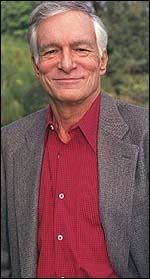
Hugh "the Puritan" Heffner

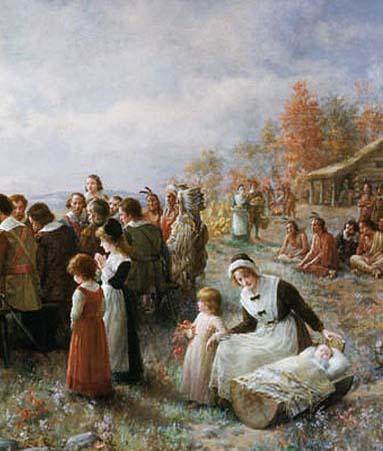
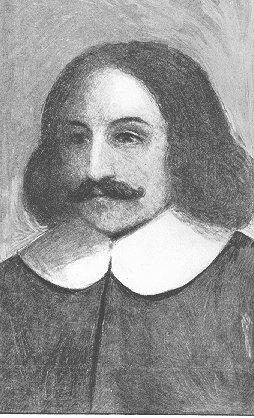
William Bradford is, of course, interesting to me due to my Calvinism and the theological heritage of which I am a part. William Bradford is the noted Puritan which governed in Massachusetts upon the arrival of the Mayflower.

Our American (and Canadian) Puritan heritage is one that is to be revered, defended, and even used as an example of Christian living in an unbelieving and even pagan culture. The Puritans, on this continent, as well as Europe, fought to bring Jesus Christ and his Kingship to the masses.

Since the 16th and 17th century, the cultures that were reformed and even strengthened by Puritanism have been fighting against the influence of Puritan ideology. Puritanism requires Jesus Christ's Lordship to rule over all until he makes all of his enemies his footstool.

So the question remains, what does William Bradford have to do with Hugh Heffner? Mr. Playboy himself has answered that in a recent interview in Time magazine. Hugh Heffner has created a life that is in direct and purposeful rebellion against Jesus Christ and the Puritanism which HIS FOREFATHERS helped to bring to this country. Like many modern and post-modern people, Heffner is raging against the Son and imagining a vain thing. The Lordship of Christ is being evidenced in the antithetical existence of one hater of God...Mr. Heffner.


FOX NEWS -Hugh Heffner, king of the Playboy empire, says he had to reinvent his identity to leave his Puritan roots behind. Heffner tells Time magazine he is a direct descendant of William Bradford, a Puritan who came over on the Mayflower. "There was a great deal of repression in their lives and the way they were raised and, in turn, the way I was raised," he said.

"Instead of the Puritan world that my folks accepted and, from my perspective, paid the price for, I created a world for myself," he told Time.

Discussion Points:

-Dr. VanTil said that "atheism presumes theism"How do Heffner's comments "prove" that?

-What about the Church's fight against her heritage? Which is worse?

-What should be the method for calling back a culture to Christ?

06 October, 2005

Closer Than A Brother: happy birthday!

Today marks the 28th birthday of a friend since I was a child.

Shawn Anderson, of Albany, NY, turns 28 years old this day.

Ten years ago Shawn was without hope in this world and not a member of the covenant of grace. In these ten years, Shawn has become a lover of Jesus Christ, a defender of the Reformed Faith, and reformer in his own right. Shawn's chief desire is to see the Church return to the landmarks that were set up by our Presbyterian forefathers.

Shawn and I are comparable to that of Jonathan and David. Our friendship is deeply rooted to the point of an inability to separate. I love Shawn as a brother and as a friend.
All who know Shawn have been touched by him in many ways.

You can visit the three blogs of Shawn's on the right:
Progressive Irrelevant Publishing
Sola Bookstora
My Trivial Soapbox

You can also email Shawn to wish him a happy birthday:
shawnthecovenanter@yahoo.ca


HAPPY BIRTHDAY BUDDY!!! Here is your birthday Psalm. Sing it with me!


Psalm 28 (Geneva 1599)
A Psalme of Dauid.

Vnto thee, O Lord, doe I crie: O my strength, be not deafe toward mee, lest, if thou answere me not, I be like them that goe downe into the pit. Heare the voyce of my petitions, when I crie vnto thee, when I holde vp mine handes towarde thine holy Oracle. Drawe mee not away with the wicked, and with the woorkers of iniquitie: which speake friendly to their neighbours, when malice is in their hearts. Reward them according to their deedes, and according to the wickednes of their inuentions: recompense them after the woorke of their handes: render them their reward. For they regarde not the woorkes of the Lorde, nor the operation of his handes: therefore breake them downe, and builde them not vp. Praised be the Lorde, for he hath heard the voyce of my petitions. The Lorde is my strength and my shielde: mine heart trusted in him, and I was helped: therfore mine heart shall reioyce, and with my song will I praise him. The Lorde is their strength, and he is the strength of the deliuerances of his anointed. Saue thy people, and blesse thine inheritance: feede them also, and exalt them for euer.

Discussion Points:
-How has Shawn effected your life? (In a good way!)
-What are some funny stories that you remember concerning Shawn?
-What would it take to get Shawn to move back to Grand Rapids?

03 October, 2005

Ode to Lydia: Biblical Submission in the Age of Feminism

The notorious Proverbs 31 woman is who Christian men desire. They want a woman that is industrious, teachable, practical, and has her family her main objective. In my opinion, my wife is a great example of the Proverbs 31 woman. She keeps a very clean house, she works from the home, she raises two children. (And does not stick them in playpens to fend for themselves).

Below is an article by Geoff Thomas. He gives a balanced view of what biblical submission looks like...Even in the 21st century.

The word of God says, "Wives, submit to your husbands as to the Lord. For the husband is the head of the wife as Christ is the head of the church, his body, of which he is the Saviour. Now as the church submits to Christ, so also wives should submit to their husbands in everything." (vv.22-24). There is no difficulty in understanding what Paul is saying. He makes it very clear.

Is this concept found just here? Was it a problem of the rebellious wives of Ephesus, just a local congregational concern? No. We turn to Colossians 3:18 and read "Wives, submit to your husbands, as is fitting in the Lord." Or again in I Corinthians 11:3 "Now I want you to realize that the head of every man is Christ, and the head of the woman is man, and the head of Christ is God." Or Titus 2:4 and 5, "train the younger women to love their husbands and children, to be self-controlled and pure, to be busy at home, to be kind, and to be subject to their husbands, so that no one will malign the word of God." You might argue that Paul is speaking here to a husband and wife who are both Christians. This wife is being loved by her husband as Christ loves the church. This husband would lay down his life for his wife. However, the Bible won't allow you to escape from submission to your unbelieving husband by that argument. Peter is speaking in his first letter, chapter 3 to wives who have been converted and their husbands have not, and he says to them in the opening two verses, "Wives, in the same way be submissive to your husbands so that, if any of them do not believe the word, they may be won over without words by the behaviour of their wives, when they see the purity and reverence of your lives." So the sentiment of our text, that a wife is to submit to her husband, is found throughout the Spirit-breathed New Testament. It is not a curious message found in just one place - like the phrase in the letter to the Corinthians of being baptized for the dead, whatever the correct meaning of that may be. So rejection of this word by those who claim to reverence the Lord Christ, is plain disobedience. What does a wife's submission to her husband entail?

i] It is the submission of a woman created by God in his own image, who is equal to her husband in dignity and value.

She is not below her husband at all; she is not even just a little below him. Men and women are equal in created dignity, and equal in natural depravity and equal in redemptive privilege. The wife has a spiritual nature and may love God more than her husband; she has a sharp mind and may have a better academic record than her husband; she has a sense of beauty which may be more refined than her husband; if her husband suffers physical decline she may be even physically stronger and tougher than her husband. She too has the same calling that he has to labour six days, to replenish and subdue the earth.Sometimes it's tempting to exaggerate differences between men and women and say, as one author does, "Men are from Mars, women are from Venus." But the Bible puts our feet firmly on earth. When Adam first saw Eve, he didn't say, "What planet did this come from?" He said, "This is bone of my bones and flesh of my flesh." He knew he was looking at his other half. Not only were Adam and Eve from the same planet, they were even from the same body. God made Adam from dust, but he didn't make Eve from a separate and independent bit of dust. He made Eve from a part of Adam. Where did God get the part of the man that he fashioned into the woman? Not from his head, as though she would be superior to him; and not from his feet, as though she would be inferior; but from his side, to be his companion and equal. When Adam first met Eve, he didn't say, "Oh good! At last I've got someone to boss around, who can do all the unpleasant chores for me and wait on me, hand, foot and finger!" Adam saw a marvel who was part of himself, equal in dignity to himself, and soon equal in native depravity to himself, and soon equal in redemptive privilege to himself, whom he should treat as well as he would treat his own body. In the context of equality and oneness Adam in his manhood was to lead and have primary responsibility as the head of the marriage, while Eve in her womanhood was to gladly affirm and support Adam; and the two, united as one, were to image God, have children and care for God's world. This was God's design for healthy marriage in Genesis, and in the New Testament it is God's design for healthy marriage among those who belong to Jesus.

ii] It is a submission which resists the errors of both chauvinism and feminism.

I am dependent on this insight from David Feddes, that when a chauvinist man treats his wife as though she is a lesser being and not one with him, what he is doing is imaging the false doctrine that Christ is inferior to the Father and not united with him as one God. When a feminist man does not lead at all and his feminist wife is not responsive to him as her head, they image the false doctrine that there is no distinction between the Father and Christ, that the two are interchangeable, and that the Father is not the head of Christ. But when a biblical husband and wife see themselves as equal and one with each other, with the husband gently leading and the wife joyfully responding, they image the truth about the Father and Christ in the holy Trinity. Their loving union offers a glimpse into the being of the God who created male and female in his own image.Feminism was supposed to bring women freedom and happiness, and so what went wrong? Certainly the feminist movement did some things right: standing up for battered women, opposing pornography, insisting that there's more to a woman than pleasing a husband and raising children, that each woman is a valuable person with her own personality and interests. But feminism went wrong by trying to make women like men-not just equal to men, but like men, and competitive with men. Earlier generations may have stressed a woman's family role too much, but feminism went to the opposite extreme, urging women to put herself before her family. If a woman happened to have a personal preference for adding a man and maybe a child or two to her life, she could make that choice. But a less-than-perfect marriage could be terminated by divorce. A less-than-desirable pregnancy could be terminated by abortion.This ideology may appeal to some who hate being women and have bad experiences with men, but the average woman is not a man-hater; she'd like to have a faithful man to love her for life. The average woman does not hate her amazing power to get pregnant and nurse a baby; she wants children. The average woman is not eager to be more involved with her job than her home. Even among working women, a majority say they'd rather stay home than go to work if they didn't need the money. Not every woman has to fit some preconceived notion of a wife and mother, but it's fair to say that most women want marriage and children, and most women's hearts are more with their home than with their job. So it's also fair to say that the Bible's words for women, though out of tune with feminism, are more in tune with most women's hearts than modern feminism has been.

iii] It is a submission that images the relation between Jesus and his church.

See what our text says, "The husband is the head of the wife as Christ is the head of the church, his body, of which he is the Saviour" (v.23). From the beginning, God designed marriage to picture the relationship that would someday come about between Christ and his church. In other words, in the garden of Eden God was thinking of his Son and his people when he set about creating man and woman. The Bible doesn't say the husband ought to be the head of the wife; it simply says he is. The man, being the head, will set the tone in the marriage and home, whether he wants to or not. It may be a good tone and a healthy home if he leads well, or it may be a bad tone and a weak home if he leads badly or not at all. In any case, the man sets the tone. Even if a man abandons his home, he still dominates the home by the very fact of his absence.The man's headship is a fact, designed to picture Christ's headship. So every husband will send a message about Christ, whether he wants to or not. Douglas Wilson has written this, "Every marriage, everywhere in the world, is a picture of Christ and the church. Because of sin and rebellion, many of these pictures are slanderous lies concerning Christ. But a husband can never stop talking about Christ and the church. If he is obedient to God, he is preaching the truth; if he does not love his wife, he is speaking apostasy and lies - but he is always talking. If he deserts his wife, he is saying that this is the way Christ deserts his bride - a lie. If he is harsh with his wife and strikes her, he is saying that Christ is harsh with the church - another lie."The husband represents the headship of Christ over the church, so if he does not lovingly provide for his wife and family, "he has denied the faith and is worse than an unbeliever" (1 Timothy 5:8). He not only harms his wife, but he defames the Lord Jesus Christ, whose headship the husband is supposed to represent. How should a husband act as head of his wife in order to show the truth about Christ, the head of the church? Our text says, "Husbands, love your wives as Christ loved the church and gave himself up for her... In this same way, husbands ought to love their wives as their own bodies. He who loves his wife loves himself. After all, no one ever hated his own body, but he feeds and cares for it, just as Christ does the church, for we are members of his body" (Ephesians 5:25-30). A Christ-like husband loves his wife, sacrifices for her, provides for her, leads her, builds her up, prizes her, and enjoys being one with her. He models his marriage on Christ's marriage to the church.Wives, in turn, are to image the church's response to Christ. What does our text say? "Now as the church submits to Christ, so also wives should submit to their husbands in everything" (v.24). A wife's conduct toward her husband always says something about the church's response to Christ, either right or wrong. If a woman does not honour her husband and is not loving toward him, if she is independent and defiant toward him, she proclaims this as the church's response to Christ and thus attacks God's Word. A wife's behaviour toward her husband either makes the Word of God more attractive or else makes it an object of contempt. Hear what Paul says to Titus about life in his congregation, that wives ought "to love their husbands and children, to be self-controlled and pure, to be busy at home, to be kind, and to be subject to their husbands, so that no one will malign the word of God" (Titus 2:4-5).In other words, the reason why wives are to submit to their husbands is not because they are wonderful guys who deserve it. Sometimes husbands deserve very little from their wives. The reason why you submit is because your Lord Jesus Christ deserves it. Out of gratitude to him, for all that he has done for you, you submit. It is not because you love your husband that much, but it is because you love the Lord Jesus more. That is the key. I obey the one I love; I do whatever he tells me to do. A wife's submission to her husband is "as to the Lord" Paul tells us in our text. I am willing to do whatever it is he tells me to do. My reverence for Christ motivates me to obey him in everything he says. I am in his Word, and I am doing his Word day by day. I am doing it in my home, in the daily chores of life.

iv] It is the submission that does not submit to all men.

A woman's submission to her husband's headship does not mean she must submit to the headship of all men. In fact, as a godly woman flourishes in her marriage to a godly man, she will be strong, active, and fearless in her relationship to others, because she draws on her husband's strength. A woman does not become stronger and happier by having a nice, harmless husband who is weak and uninformed compared to her and whom she doesn't respect. A nice wimp is better than a nasty bully, but best of all is a man who boldly and biblically seeks to represent Christ to his wife. The stronger he is in Christ, the stronger she becomes. And the stronger she becomes, the more she helps him and makes him stronger still.Let me give you an example of that from Acts chapter 18; we will read from verse 24, "Meanwhile a Jew named Apollos, a native of Alexandria, came to Ephesus. He was a learned man, with a thorough knowledge of the Scriptures. He had been instructed in the way of the Lord, and he spoke with great fervor and taught about Jesus accurately, though he knew only the baptism of John. He began to speak boldly in the synagogue. When Priscilla and Aquila heard him, they invited him to their home and explained to him the way of God more adequately" (vv. 24-26). This Christian married couple are still going along to the synagogue to see their friends and witness to the truth of the gospel. They hear a man called Apollos speaking. He had a great grasp of the Old Testament, and he had been moved by John the Baptist and he knew something of the Lord Jesus, but his understanding was imperfect. When Priscilla and Aquila heard him they coveted him for a maturer understanding of the faith. They didn't rubbish his preaching because of the weaknesses. They invited him around to their home, and you see how Luke puts the name of Priscilla before the name of her husband. She was taking the lead in this matter, and in their home she, with her husband, was able to explain to Apollos the way of God more adequately.

v] It is not a submission to everything a husband tells a wife to do.

If any man, husband or otherwise, would dare to ask us to do something that the word of God wouldn't sanction, then we must refuse to do it. We must obey the Lord over what man would say to us, however powerful or however much we love him. Remember the response of the apostles Peter and John before the Sanhedrin, "Then they called them in again and commanded them not to speak or teach at all in the name of Jesus. But Peter and John replied, 'Judge for yourselves whether it is right in God's sight to obey you rather than God. For we cannot help speaking about what we have seen and heard'"(Acts 4:18-20). If our husband is requiring things of us that we know are not of the Lord, we should take the matter to the throne of grace and ask for his wisdom on how to deal with it. We should pray for our husbands and ask the Lord to speak to them if they are in the wrong, and we should also be willing to be corrected if we are in the wrong. We should ask the Holy Spirit to resolve the conflict and to deal with the party who is wrong, and both of us should be willing to change an opinion.Let me refer you to some accounts in the Word of God that teach submission to God over submission to husbands. One familiar story is that of Mary, the virgin pregnant mother of Christ. She had submitted to what God asked her to do; "I am the Lord's servant . . . May it be to me as you have said" (Luke 1:38). She had not gone to Joseph for permission; she didn't ask her betrothed what he thought about it. In fact, Joseph wanted to put her away when he found out she was pregnant. Surely Mary tried to explain to Joseph that this child was conceived by the Holy Ghost, but Joseph couldn't receive her explanation until the Lord sent an angel to confirm to him that she indeed had heard the Lord. This is a case where a woman submitted to God first, and then the Lord dealt with her husband showing him she was in fact obeying God.Another example is found in the life of Abigail recorded in I Samuel 25. She was a woman who knew God. She was the wife of Nabal, an ungodly husband. King David had asked for food and fodder when they were being hunted down, and Nabal had violently refused. Abigail realized her husband's attitude endangered her whole household. On her own initiative she took food and rode to meet David. She was a wise woman; by disobeying her husband, she saved his life, for David would have killed him. She saved not only her husband's life, but also her own and her household's lives and possessions. She also found favour with David and with God.Women today who live by faith and obedience to God can be responsible for the salvation of their households. Through their praying and consistent godly example whole families can be brought to the Lord, even if at first the family members had objected to spiritual things. Later, they became so grateful that someone stood and believed and prayed for them. It would be quite a revelation to take an inventory of how many men came to know the Lord Jesus as a result of the faith of some woman, a praying mother, grandmother, wife or girlfriend. The first woman, Eve, instead of asking her husband about a talking serpent and the possibility of listening to what it said and defying the Lord took the initiative and ate the forbidden fruit. She helped to lead her man astray, but since then God has used many women to bring men back to him. What a privilege to live for Jesus in a home and sanctify your unbelieving husband and children by being there.

vi] True submission is complete, from the heart, voluntary, it proceeds from love and so it is tender and wise.

It is to be complete submission. Is there any area in which the Church is not subject to Jesus Christ? Can the Church say, "In matters of doctrine we will submit to Jesus, but in matters of practice, we will do our own thing"? Can the Church say, "At certain times we will submit to Jesus, but at other times, we are free"? Isn't it the case that in all things and at all times she is subject to Christ? So, for the wife to say, "I'll submit to my husband when he's around, but not when he is gone," or "I'll be subject as long as it pleases me, or when he gives me what I want, as long as he is nice to me" is to disobey Jesus. Christ's apostle says, "So let the wives be (subject) to their own husbands in everything" (v.24). Again, submission certainly requires a calm, prayerful, and peaceful spirit. In other words submission is from the heart. Throughout the Bible, God calls his people to give him their hearts. He doesn't want outward worship alone, but inward worship. "Rend your heart and not your garments" was the cry of the prophets. By grace, the Church can obey the Lord from the heart, from a love for Christ, from her inner life pulsating with a feeling for his Lordship. What a privilege it is to serve the Lord. This is the attitude of a wife to her husband. It is not just outward as some make it. But, as Peter says, "let it be that hidden man of the heart" (I Peter 3:4)Again, submission is also voluntary. The Church is not subject to Christ because she is forced kicking and screaming against her will to do it, but because of the wonderful grace of Jesus that has changed her from a rebel to a beautiful wife (see Psalm 110). So the wife doesn't submit only because she must, but she willingly does so. That also means that a husband cannot stand before his wife and demand submission, even resorting to raising his voice and verbally abusing her, or worse, in order to get it. Losing your family is a horrible price to pay for being 'correct.' Let the husband submit himself to God's hand and love his wife as Christ loved the church. That is the way ahead.Again, submission also proceeds from love. Does the Church love Christ? Of course! Then out of that love comes the Church's submission that is willing, voluntary, from the heart, and complete. God calls women to love their husbands (Titus 2:4), and out of that love comes the beauty of this life described here.Submission is also tender and wise. Let me illustrate this from an experience of Dr Martyn Lloyd-Jones; "I sometimes think that one of the most wonderful things I have ever been privileged to witness was the following. It was my custom for a number of years to go and preach in a certain church in the provinces, and after preaching to spend the night in the manse with the minister and his wife. It was always most interesting for this reason, that it was so obvious to me on the first visit, that from the standpoint of sheer ability there was no comparison between the husband and the wife. The wife was an exceptionally able and brilliant woman. The husband was not without his gifts, but his main gifts were in the matter of personality - he was an exceptionally nice and friendly and kind and gracious man. But as regards sheer intellectual ability there was no comparison. Indeed their academic record - they were both graduates - had proved this. The wife had a degree in a subject that very few women took up at that particular time, and she had taken First Class Honours. The husband, taking a much easier subject, only had a Second Class."There was no question, I say, as to the ability - her grasp of intellectual matters, her understanding, struck me immediately, and became more and more evident as I got to know them. But what I wish to say is that I do not know that I have ever seen anything more wonderful than the way in which that woman always put her husband into his true Scriptural position. She did it in a very clever and subtle way. She would put arguments into his mouth; but she always did so in such a way as to suggest that they were his, and not hers! There is an amusing aspect to the matter, but I am reporting it as one of the most moving and tremendous things I have ever experienced. She was not only an able woman, she was a Christian woman, and she was putting into operation this principle that the husband is the head. He always had to state the decision though she had supplied him with the reasons. She was acting as a help meet for him. She had the qualities that he lacked; she was complementing, she was supplementing him. But the husband was the head, and the children were always referred to him. She was guarding his position" (D. Martyn Lloyd-Jones, "Life in the Spirit: In Marriage, Home and Work, an Exposition of Ephesians 5:18 to 6:9," Banner of Truth, Edinburgh, 1973, pp. 110&111).According to the apostle there is no possibility of a married woman's surrender to a heavenly Lord which is not made visible and actual by submission to her husband. See what Paul says in our text, "Now as the church submits to Christ, so also wives should submit to their husbands in everything." That is our duty, and incidentally that is our happiness, for when this command is ignored it doesn't make life better for women it actually makes life worse. There is power in Christ to do what he requires and then the Lord is exalted in our homes.

Discussion Points:

-How irreversible is the feminism in the church?

-What can we who have biblically submissive wives do to show our appreciation?

-What does the Timothy & Titus man look like that compliments the Proverbs 31 woman?

28 September, 2005

Let a Man Examine Himself

But let a man examine himself, and so let him eat of [that] bread, and drink of [that] cup.
(I Corinthians 11.28, Geneva Bible, 1599)


Our Reformed forefathers made a lot of the examination of oneself before partaking of the Lord's Supper. This is from the marginal notes of the 1599 Geneva Bible. (My favorite translation: the Reformed choice!)

The examination of a man's self, is of necessity required in the supper, and therefore they ought not to be admitted to it who cannot examine themselves: such as children, furious and angry men, also such as either have no knowledge of Christ, or not sufficient, although they profess Christian religion: and others that cannot examine themselves.

Those who are living scandelous lives are not to partake of the supper until they are repentant. Friends, let us examine ourselves.

Larger Catechism has a lot to say on what to do if you feel as though you lack faith or have not prepared your heart enough to partake of the Supper of our Lord. On an interesting side note, if these documents were written today, there would be a question that says, "What must a man do who thinks that he is over prepared, and never questions his state before God"? Both questions merit the same response:

Flee to Christ for grace and mercy.
Examine yourself to see if you are in the faith.

Q172: May one who doubteth of his being in Christ, or of his due preparation, come to the Lord's supper?

A172: One who doubteth of his being in Christ, or of his due preparation to the sacrament of the Lord's supper, may have true interest in Christ, though he be not yet assured thereof; and in God's account hath it, if he be duly affected with the apprehension of the want of it, and unfeignedly desires to be found in Christ, and to depart from iniquity: in which case (because promises are made, and this sacrament is appointed, for the relief even of weak and doubting Christians) he is to bewail his unbelief, and labor to have his doubts resolved; and, so doing, he may and ought to come to the Lord's supper, that he may be further strengthened.

Below you will find an excellent sermon that I listened to today. It is 50 minutes long, but well worth sitting back, closing your eyes, and meditating upon the need to examine yourself before partaking of the Lord's spiritual meal.

Self Examination, Rev. Joel Beeke

Discussion Points:
-What books do you find helpful in self examination?
-What do you meditate on while examining yourself?
-What is the purpose of self examination if you ultimately look to Jesus anyway?

26 September, 2005

German Pope changes Mass

Below you will find the very controversial Question 80 of the Heidelberg Catechism. This question has caused a lot of uproar in Reformed churches that are attempting to do away with the differences between the Protestant and the Roman Catholic religions.

Now that Ratzinger is the Pope, he is attempting to bring a Bavarian flavor to the mass, and now even the faithful of Rome will have to reexamine their doctrine of the Mass.


Q80: What difference is there between the Lord's Supper and the Pope's Mass?

A80: The Lord's Supper testifies to us that we have full forgiveness of all our sins by the one sacrifice of Jesus Christ, which He Himself once accomplished on the cross; and that by the Holy Ghost we are ingrafted into Christ, who, with His true body, is now in heaven at the right hand of the Father, and is there to be worshiped. But the Mass teaches that the living and the dead do not have forgiveness of sins through the sufferings of Christ, unless Christ is still daily offered for them by the priests, and that Christ is bodily under the form of bread and wine, and is therefore to be worshiped in them. And thus the Mass at bottom is nothing else than a denial of the one sacrifice and suffering of Jesus Christ, and an accursed idolatry.


Below you will see Ratzinger's ideas on how to bring back the German people to the "Mother Church". Happy Oktoberfest Ratzinger!


As for me, I will stick with the traditional view on Rome that was shared by the Reformers and my Puritan forefathers.

Discussion Question:

-Is this not exactly what evangelical churches are doing in an attempt to combine culture and Christianity?


22 September, 2005

Of Sons and Bastards

Church discipline is something on which churches tend to have extreme positions. It seems that there are those that refuse to do any discipline at all, and there are those that find it to be the only means of grace.

In the book of Matthew, we see a pattern for church discipline that the Lord Jesus Christ gives to the elders of the church. The keys of the kingdom include the shutting out of those that are excommunicated.

This, of course, is the extreme of discipline, but it starts at a much more pastoral and compassionate place. (Not that excommunication is not compassionate..another topic.) Church discipline begins with the members of the body holding each other accountable for the profession of faith in Christ Jesus that they have made. This can be very difficult in our day. People see faith (even in the most conservative churches) as a personal matter that is not allowed to fall under the judgment of anyone or anything. This is an unfortunate place for the bride of Christ.

When believers are holding each other accountable and showing a genuine concern for their faith and the advancement of it, the possibility of a stronger and purer church is within view. Church discipline begins with brethren viewing each other's walk as something that is worth taking interest in. Accountability is making sure that we are our brother's keeper.

In the book of Hebrews we hear that without chastisement we are not counted as sons, but we are bastards. This is strong language- no one wants to be illegitimate. Concerning earthly life you do not want to be left without a father. O how much more would it hurt to be left spiritually fatherless. Friends, our call as Christians is to admonish one another, hold each other accountable to our high calling as sons and daughters of the Most High, and seek to be our brother's keeper.

Friends, seek to keep each other accountable. It is the way of Christ.


Belgic Confession, Article 19
The marks by which the true Church is known are these: If the pure doctrine of the gospel is preached therein; if it maintains the pure administration of the sacraments as instituted by Christ; if church discipline is exercised in punishing of sin; in short, if all things are managed according to the pure Word of God, all things contrary thereto rejected, and Jesus Christ acknowledged as the only Head of the Church. Hereby the true Church may certainly be known, from which no man has a right to separate himself.

Westminster Confession, Article 30
I. The Lord Jesus, as King and Head of his church, hath therein appointed a government, in the hand of church officers, distinct from the civil magistrate.
II. To these officers the keys of the kingdom of heaven are committed; by virtue whereof, they have power, respectively, to retain, and remit sins; to shut that kingdom against the impenitent, both by the Word, and censures; and to open it unto penitent sinners, by the ministry of the gospel; and by absolution from censures, as occasion shall require.
III. Church censures are necessary, for the reclaiming and gaining of offending brethren, for deterring of others from the like offenses, for purging out of that leaven which might infect the whole lump, for vindicating the honor of Christ, and the holy profession of the gospel, and for preventing the wrath of God, which might justly fall upon the church, if they should suffer his covenant, and the seals thereof, to be profaned by notorious and obstinate offenders.
IV. For the better attaining of these ends, the officers of the church are to proceed by admonition; suspension from the sacrament of the Lord's Supper for a season; and by excommunication from the church; according to the nature of the crime, and demerit of the person.

Calvin, Institutes of the Christian Religion, IV.xii.8
"Some persons, in their hatred of discipline, recoil from its very name, let them understand this: if no society...can be kept in proper condition without discipline, it is much more necessary in the Church, whose condition should be ordered as possible.

John Murray, Collected Writings, 2.382
The Session is under obligation to exclude from the Lord's Supper those who are guilty of such overt sin as requires exclusion... To deny this necessity is to waive completely the demands of discipline.

AA Hodge, Confession of Faith, p371
The end of Church Discipline are declared to be: the purity of the Church, the recovery of the erring brother himself, the force of example to deter others from like sin, and the exhibition of righteousness and fidelity to principle presented to the world without.

Matthew Henry, Commentary on the Whole Bible, p1706
Christian reproof is an ordinance of Christ for the bringing of sinners to repentance, and must be managed as an ordinance.

a Brakel, Christian's Reasonable Service, 2.185
You (the elders) must engage in this task (Church discipline) in the realization that it is the Lord's work, for in doing so you will gain ability and boldness. You will then begin to observe your congregation, neighborhood by neighborhood, and if you become suspicious about someone, you ought to enquire into this. You should privately address such an individual, exhort and rebuke him, and seek to correct such a person in the spirit of meekness. If he hears you, you have gained him.

IBID, 2.187
The use of this key purifies the congregation, makes others fearful of sinning, and delivers those who are weak from that which offends. It will cause the Church to demand respect from those who are without (the church), who in turn will aspire after godliness and salvation and will be enticed to join the Church.
Blessed be the congregation where this may be practiced. "For there the LORD commanded the blessing, even life for evermore" (Psalm 133.3).

Discussion Points:

-What can we do to encourage accountability in the church?

-What place does "small groups", "cell groups", or "societies" play in accountability?

-What are some of thindrancesces to accountability?

17 September, 2005

With Some Reservation: Choosing A Church * *

There are many things to look for when Christians are seeking a body of believers to join itself to. Let me say from the start that I am talking about Reformed or Presbyterian churches only. Since I am Presbyterian I am speaking out of my own presuppositions. If you are not Reformed or Presbyterian, you are free to join one! Many people will disagree on what to look for in a church since the Scriptures guide us to join ourselves to the true church and the idea of denominations is foreign to the Word of God.

We know that the history of Israel had two major factions of people who claimed to worship YHWH, but the prophets frequently speak out against the Northern kingdom and its worship.
The reason that the prophets spoke out against the Northern kingdom was that they had departed from biblical worship. The sin of Jeraboam is a frequently repeated phrase in the Old Testament. The sin was worshipping God in a way that was not prescribed in the Scriptures. One of these Northern kingdom worshippers asked Jesus Christ about his input on the "worship wars" of his day. The woman at the well, I am sure, was really interested in his opinion about her choice of "denomination". Jesus responded to the woman, "You do not even know what you worship!" He concluded that there will come a time, and it now is, that those who worship God will do it in Spirit and in Truth.

What does this have to do with choosing a church? First off, it shows that the worship of God is very important to Jesus Christ. Worship is not something that is open for private interpretation. Worship needs to be done according to the prescription of God's word.

Point One: Know how the Church views the Bible. Do they believe that it is God's inspired and inerrant Word? Do they say that it is and then deny it in the way that they order their church? (Point three includes more on the view of Scripture).

Point Two: Seek out a Church that worships according to biblical principles of worship. If you do not know what a biblical principle is, then seek it out in scripture. Be able to cite a handful of verses that support biblical worship. Do not just assume that the way things are done are okay with God. Remember the woman at the well.

Point Three: Know what the church believes. Ask about doctrinal standards. If they have written standards read them and study them. Talk with the elders of the church if you do not understand points.
If the church is Presbyterian ask about its denominations writings other than the Westminster Standards. They all have documents that help to interpret the Standards. Also ask if the church has any position papers. These will help you to see how they apply the Standards and the Bible. (For example; The OPC has a position on abortion [in a certain circumstance] that many evangelicals will not like.)
If the church is Reformed ask about other papers as well. The CRC has a position paper called "Our world belongs to God". The URC has available synodical papers that help to discuss what they believe. The Protestant Reformed people have Herman Hoeksema's Reformed Dogmatics and that IS IT!

Point Four: (This one will be strange for some) Ask about the church's history. What denomination did it break off of? What reasons did it leave the body that it once was a member of? Did it have a legitimate reason to split or should it have joined an already existing body? What is it doing to re-unify the Reformed and Presbyterian churches? Does it have a heart for "one body", or does it enjoy being "alone"?

Point Five: Is it apparent that the (professing) members have lives that are transformed by the power of the gospel? Is it apparent that her people have hearts that seek to order their lives according to Scripture? Do you see a mature zeal to have families that glorify God and enjoy him? (This will show the power of the preaching in the church as well as the teaching that the members sit under.)

These five points will begin to help you on your path of choosing a body of believers that you can join with and work with towards bringing glory to God. I am sure that there are other things that are important and others can give input from their experiences.
This is not something that should be done without prayer, much discussion with elders and other godly counsel, and more prayer. Church membership is so important that you should see it as something that your children and grand-children will be effected by. Your choice could help you in your walk with Jesus Christ and it could also be the first step towards being spiritually dead. This is SERIOUS business!

Below you will find a helpful article by one of my favorite modern writers. It is easy to read and filled with biblical advice. ( The blog, Johannes Weslianus also has some insight into this: it is linked on my blogger section).

Choosing A Church

Discussion Points:
-What would you add my five points for consideration?
-What are biblical reasons to LEAVE a church?
-What should be the "battle plan" for what is called, church "shopping"?

* * TO ALL MY READERS: I am not thinking of leaving my church, but I have friends and family that are in the early stages of seeking out a new church and this topic has been something that I have been praying about and meditating on for the sake of friends of kin!

12 September, 2005

Calling the Sabbath a Delight

Recently in our congregation we have had discussion about the evening worship service and the sad fact that attendance of it ebbs and flows. Pastor Lanning put out a few paragraphs on the importance of attending both services as well as seeing evening as important as morning worship.

The importance of evening worship opens the door for another, and in my opinion, bigger discussion. How are we as Christians to use the Lord's Day? It seems that in a busy world like ours, setting time "aside" for God is not as easy as it may have been in the past. If one is a "Sabbath keeper" as our Reformed and Presbyterian forefathers (because of biblical warrant) have prescribed, then what is to be the use of the Lord's Day, or Sabbath?

This discussion comes up in my home often because of the desire to use this time to the glory of God. My wife becomes easily discouraged at the lack of spiritual discussion, solemnity, and theological discussion that goes on in the Lord's Day. Even in the most conservative of Reformed circles the conversation can quickly slip into sports, entertainment, careers, hobbies, and what Hollywood is doing. It is much easier to discuss mindless topics; but we need to make an effort to keep our thoughts, words, and deeds on spiritual matters.

Here is what our Presbyterian forefathers wrote in the Westminster Directory of Worship:

Of the Sanctification of the Lord's Day

THE Lord's day ought to be so remembered before-hand, as that all worldly business of our ordinary callings may be so ordered, and so timely and seasonably laid aside, as they may not be impediments to the due sanctifying of the day when it comes.
The whole day is to be celebrated as holy to the Lord, both in publick and private, as being the Christian Sabbath. To which end, it is requisite, that there be a holy cessation or resting all that day from all unnecessary labours; and an abstaining, not only from all sports and pastimes, but also from all worldly words and thoughts.
That the diet on that day be so ordered, as that neither servants be unnecessarily detained from the publick worship of God, nor any other person hindered from the sanctifying that day. That there be private preparations of every person and family, by prayer for themselves, and for God's assistance of the minister, and for a blessing upon his ministry; and by such other holy exercises, as may further dispose them to a more comfortable communion with God in his public ordinances.
That all the people meet so timely for publick worship, that the whole congregation may be present at the beginning, and with one heart solemnly join together in all parts of the publick worship, and not depart till after the blessing.
That what time is vacant, between or after the solemn meetings of the congregation in publick, be spent in reading, meditation, repetition of sermons; especially by calling their families to an account of what they have heard, and catechising of them, holy conferences, prayer for a blessing upon the publick ordinances, singing of psalms, visiting the sick, relieving the poor, and such like duties of piety, charity, and mercy, accounting the sabbath a delight.

Discussion points:
-How can we sanctify the Lord's day better?
-What practices in your home need to be changed to make this more of a reality?
-How can seeing the Sabbath as a delight aid in your Christian experience?

More on the Sabbath Day.

This is an article from the late, Professor John Murray of Westminster Theological Seminary. It deals with the discussion that we have been having on the Sabbath day. You should find it very informative.

The Fourth Commandment According to the Westminster Standards

John Murray

A perusal of the statements of the Westminster Confession of Faith and of the Larger and Shorter Catechisms bearing upon the fourth commandment, will show that the position taken in these Standards is that of the universal and perpetual obligation of the Sabbath and that this obligation rests upon divine commandment. The commandment to which reference is made is, of course, what we know as the fourth in the decalogue. These Standards, however, imply that the Sabbath law, expressed in the forth commandment, was not first instituted when the ten commandments were promulgated to the children of Israel at Sinai. We know that the Sabbath institution goes back to creation; we know that there is explicit allusion to the observance of the Sabbath and of divine commandment bearing upon that observance prior to Sinai. Of these facts these Standards are not forgetful, and so the language is carefully framed to include and guard these facts. Nevertheless, the law that had been instituted at creation did receive at Sinai formal enunciation and promulgation. It was included in the ten words given to Moses and written with the finger of God upon the two tables of stone.

At Sinai, then the Sabbath law was set forth with fullness and explicitness and we do not have evidence that it had before then received similarly full and formal pronouncement. So, for our knowledge of what the content and import of the Sabbath institutions are, we are largely dependent upon the fourth commandment. What is this law or institution?

The Sanctity of the Day

First, and most elementally and centrally, it is that one day in seven is distinguished from the other six. That day is to be sanctified, and at the heart of the word “sanctify is the idea of distinction and separation. This one day is set off, it is placed in a distinct category. This import of the word cannot be evaded and it is to be very carefully marked, for on it depends the whole notion of what we may and must call the “sanctity” of the Sabbath.

It is not, however, the bare notion of distinction or separation that is expressed in the commandment. The command to sanctify occurs in a context. “Six days shall thou labour, and do all thy work: but the seventh day is the sabbath of the Lord thy God.” And it is not only in the context of the remainder of the commandment, but also in the context of the other commandments. “Thou shall have no other gods before me.” “I the Lord thy God am a jealous God.” “Thou shall not take the name of the Lord thy God in vain.” It is separation, therefore, to God, to the specific purpose of contemplation upon Him and specific occupation with His work in contrast with their own work. In this kind of distinction or sanctity the meaning of the fourth commandment resides. Abolish it, and the essence of the commandment is destroyed. There is no purpose in contending for the moral obligation of the commandment unless this sanctity is recognized and preserved, for it is the core around which all else is formed and without which all else disintegrates. Just as there is an ineradicable distinction between the six days of creation and the day of rest by which they were followed, so it is here. And it is precisely with this reminder that the commandment itself ends, “For in six days the Lord made heaven and earth, the sea, and all that in them is, and rested the seventh day” wherefore the Lord blessed the sabbath day, and hallowed it.”

Israel truly was a holy people; they were separated unto God Jehovah. It might, then, be supposed that the sanctification of one day in seven was inconsistent with the totality of their devotion to God. Yet it is an inescapable fact that this kingdom of priests and holy nation was in the most direct way commanded to separate one day from the other six for a specific purpose. And unless our conception of devotion to God, and of time as it is related to Him, can embrace and appreciate this notion, together with the divine wisdom embodied in it, we can have no understanding of the fourth commandment.

Every Recurring Seventh Day

But second, the law or institution of the Sabbath implies that every recurring seventh day is to be sanctified. It is not simply a seventh of our time, not simply one day out of every seven, but it is every recurring seventh day in regular succession.

The controversy that has turned on the question as to whether or not, in the Christian dispensation, the Sabbath is the first day of the week or the seventh, and as to whether we can be said to observe the fourth commandment when we substitute the first day of the week for the seventh, has too often been allowed to obscure the central principle, namely, that every recurring seventh day was by divine ordination distinguished from every other day. The difficulty that may be encountered in determining which day of the week is the Sabbath should never be used as a subterfuge to escape from the central and straightforward import of the commandment, that every recurring seventh day is specifically holy to God. At the cost of repetitiousness, may we say, that the principle should never be perplexed or prejudices by the further question: which day in the succession of days should be accorded that distinction? We may not minimise the importance of this latter question. But we must not allow the difficulties that may attend this question to unsettle what is antecedent and even more central, the obligation, so far as the fourth commandment is concerned, to recognize the divine distinctiveness of every recurring seventh day. And it must be said that the position taken by the Westminster Standards, to wit, that with the advent of the New Testament dispensation there was signalized the change from the seventh day of the week to the first, in no way interferes with the strictest fulfillment of this principle in the Christian Lord’s Day.

The Sabbath a Perpetual Obligation?

But some will say, “All this is conceded with respect to the meaning of the fourth commandment. But of what practical concern is that to us? The fourth commandment does not obligate the Christian.” This objection we must now face.

If the fourth commandment is not binding in the Christian dispensation, then we have to take one of two positions. We have either to take the position that the fourth commandment occupies a different position from the other nine commandments in the decalogue, or to take the position that the whole decalogue has been abrogated in the Christian economy. We shall now discuss the former of these two alternatives.

If we say the fourth commandment is abrogated and the other nine are not, we must understand what we are saying. It would indeed be an amazing phenomenon that in the heart of the decalogue there should be one commandment -- and one given such prominence and meticulous elaboration -- that is totally different from the others in this regard that they are permanent and it is not. Surely no one will dispute that in the Old Testament the ten commandments constitute a well-rounded and compact unit. And surely no one will dispute that the Old Testament is itself throughout conscious of that fact. If the ten commandments were a loose and disjointed collection of precepts, there would be nothing very extraordinary about the supposition we are now discussing. But that is precisely what the decalogue is not. And so to establish this supposition that the fourth commandment is abrogated, when the other nine are not, would require the most explicit and conclusive evidence.
As we read the Old Testament we do not find and warrant for discrimination between the fourth and the other nine. Nor indeed do we find any intimation in the Old Testament that in the Messianic age the Sabbath law would cease. If any commandment is emphasized it is the fourth. Obedience to it is a mark of faithfulness and severe retribution follows its breach. The text we are about to quote epitomizes the Old Testament outlook and emphasis. “If thou turn away thy foot from the sabbath, from doing thy pleasure on my holy day; and call the Sabbath a delight, the holy of the Lord, honourable; and shall honour him, not doing tine own ways, nor finding thine own pleasure, nor speaking thine own words: Then shalt thou delight thyself in the Lord; and I will cause thee to ride upon the high places of the earth, and feed thee with the heritage of Jacob thy father: for the mouth of the Lord hath spoken it” (Isaiah 58:13-14). If there had been in the Old Testament some evidence that would create a presumption in favour of discrimination, if there had been something that would justify a strong suspicion that in the Messianic age the Sabbath law would no longer bind, then, of course, even slight confirmation from the New Testament might clinch that suspicion and warrant the inference that the fourth commandment had been abrogated. But no such suspicion is created and the evidence is altogether against such a supposition.

So nothing short of compelling and conclusive evidence from the New Testament would warrant the position that the fourth is to be discriminated from the other nine.

Abrogated in the New Testament

When we come to the New Testament, do we find such evidence? A good deal has sometimes been made of the alleged silence of the New Testament. It must be admitted that the argument from silence may be made to appear very plausible. But it will have to be said at the outset that an argument from silence is not the compelling and conclusive evidence that would in this case be required. In the Old Testament we have continuous and accumulating emphasis upon the Sabbath law that in no way suggests and distinction in the matter of morality between the fourth commandment and the other nine. Indeed, as we found, the emphasis upon the fourth mounts to a degree that constitutes the very opposite presumption. It is with that manifold of emphasis that we are placed on the threshold of the New Testament economy. Silence on the part of the New Testament will not fulfil the exigencies of the kind of evidence required for abrogation.

We must not, however, conclude that the New Testament exhibits the silence alleged. It is not necessary now to enter into a detailed discussion of the implications of all the allusions found in the four gospels to the Sabbath. The proper insight and care should show that in the very rebuke that our Lord gave to the unwarranted accretions and impositions with which pharisaic tradition had obscured and perverted the Sabbath institution, there is implicit the same kind of sanction for the Sabbath law in itself as there is in similar episodes of His example and teaching for other commandments. Suffice it to refer to the one affirmation of His, “The sabbath was made for man, and not man for the sabbath: Therefore the Son of man is Lord also of the sabbath” (Mark 2:27-28).

The Sabbath Made for Man

In this affirmation, contrary to much glib but wanton appeal to it, there is not the least hint that the Sabbath law was about to be abrogated. What Jesus was combating on this occasion was the travesties of application by which the Jews had made void the law of God. Jesus’ unsparing condemnation of these artificialities that had turned a beneficent institution into an instrument of tyranny no more argues the abrogation of the institution itself, than does His condemnation of the traditions by which the Jews had made void the fifth commandment argue for the abrogation of the fifth (Cf. Mark 7:8-13). If His condemnation and correction of the tradition by which the Jews of His day had made void the Word of God in the fifth commandment in no way relieves but rather reinforces the divine obligation of this commandment itself, so His statement with reference to the Sabbath quoted above furnishes no support for the abrogation of the fourth commandment. But let us examine Mark 2:27-28 more closely.

“The sabbath was made for man.” Of course, when it is said that it was made, there is but one meaning, namely, that God made it. It is not a device of human expediency or utility. It is a divine creation. It is God’s day. The reasonable inference is that this is an allusion to the primeval institution as recorded in Genesis 2:2-3. We know that the Sabbath institution existed prior to the promulgation of it at Sinai. So the making of it referred to by our Lord cannot reasonably refer simply to the giving of the law at Sinai. And since we must go back to something that antedates Sinai, what is there that more naturally or perfectly suits the allusion than that referred to in Genesis 2:2-3?

It was “made for man.” Perhaps the fact that Jesus says it was made for man and not simply for Israel has sometimes been unduly pressed to establish the universality of the Sabbath law. But recoil from exaggeration must not be allowed to obscure the real force of what is meant. The Sabbath, after all, was made for man, and in that word man there inheres a reference to what man’s very nature as man and man’s highest need as man require. When we bear in mind that the point of time referred to in the making of the Sabbath antedates all ethical distinction, we are constrained to find in this simple statement confirmation of the universality of the obligation and blessing of the Sabbath institution.

Jesus’ Lordship and the Sabbath

But Jesus in this passage also asserts His own Lordship over the Sabbath. “The Son of man is Lord even of the Sabbath.” The title Son of man is distinctly Messianic and points to the dominion which He in His capacity as the Messiah exercises. It is in His capacity as the Son of man that He exercises this Lordship over the Sabbath. And this simply means that, within the universal Lordship and authority that is His as the one to whom all authority in heaven and earth has been committed, the Sabbath has its proper place and function. Abolition of it is, as B. B. Warfield says, “as far as possible from the suggestion of the passage.”

Further we must observe that Jesus says “even of the Sabbath.” The presence of the word “even” serves to show the extent of Jesus’ Lordship. This Lordship is so comprehensive that it even includes the Sabbath, and surely such an emphasis discloses the high conception of its sanctity and authority Jesus entertained.
Finally, the reason assigned for this Lordship over the Sabbath is the fact that the Sabbath was made for man. It was for the sake of man that Jesus came into the world, it was for man’s sake that He died and rose again, it is for man’s sake that He is exalted as the Messiah to supreme mediatorial sovereignty. But it was also for man’s sake that the Sabbath was made. If then, it was for man’s sake that Jesus came, and suffered, and died, and rose again to ascend up where He was before, is it possible that that which was made for man -- the Sabbath -- should be annulled and abrogated by that which He became and did for man’s sake? There is complete congruity between His Messianic work and Lordship on the one hand and the Sabbath ordinance on the other. They both serve the same purpose. And so His Lordship embraces it too for the purpose of preserving it, confirming it and blessing it. He is Lord of the Sabbath too.