12 June, 2006

Faithfulness and Holiness

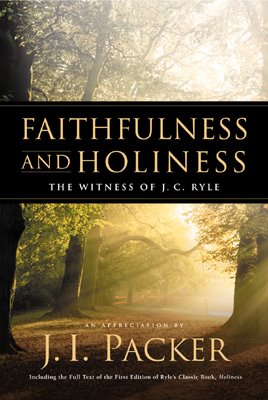
Today I sat down with a copy of the 'new' JI Packer biography of JC Ryle, entitled, Faithfulness and Holiness. My little guy Owen and I reclined on the couch to begin the journey into the life of the great Victorian bishop of Liverpool and easily began to enjoy Packer's appreciation.

As I began to notice the speed with which Packer wrote I flipped through the book to catch a glimpse of some of the chapter titles.

Outrage is all that I can say.

Why do you ask? The 'appreciation' is only 85 pages. The last 3/4 of the book is a copy of one of his greatest works- Holiness.
I am glad that the biography is so great and it is nice that Holiness is included, but do not make a $20 hardcover book that is only 85 pages!

Worth the read- but do not pay full price.

11 June, 2006

Lord's Day a'Brakel

These divine revelations [of justification through Christ] are the foundation upon which saving faith rests. Since all fullness is to be found in Jesus, and since this fullness is being offered to you personally by this good Jesus, receive Him then as your Jesus with a ready and willing mind, heartily surrender yourself to Him, and entrust your soul entirely to Him in order that by Him you may become a partaker of all the benefits of the covenant. The acts of choosing, receiving, surrendering, and entrusting constitute saving faith. The promises are applicable to a person who is thus engaged. "But as many as received Him, to them gave He power to become the sons of God, even to them that believe on His name" (John 1:12); "He that believeth on the Son hath everlasting life" (John 3:36); Blessed are all they that put their trust in Him" (Psa. 2:12) [II: 613].

09 June, 2006

"The Christian's life should put his minister's sermon in print."
WILLIAM GURNALL


How well are you being a commentary on the preaching of your minister?

05 June, 2006

Caleb's Lamb

I have just finished reading Caleb's Lamb, by Helen Santos, to my family. This book is a wonderful look into the life of a young shepherd named Caleb. Caleb learns of his own selfishness and sinfulness as well as substitutionary atonement from his first lamb, Isaac.

This book is such a powerful tool for teaching children (and adults) the power of what it means for one to lay down his life for another. This book has shed light on the purpose of typology and has strengthened the way in which I look at the death of the Lord Jesus Christ.

The Good Shepherd truly loves his sheep and this book will deepen your love for Jesus Christ! It is available here for $7.50. It is a small price for a great book.

04 June, 2006

a' Brakel on Reading the Word

Read, search, and meditate upon the Word of God with all diligence and persistence. This should even be the practice of kings. "And it shall be with him, and he shall read therein all the days of his life" (Deu. 17:19). It is the duty of scholars as well. "Give attendance to reading" (1 Tim. 4:13). It is the privilege and obligation of the lowly and of every individual. "Search the Scriptures" (John 5:39); "Have ye not read?" (Mat. 12:3).
The eunuch read while riding in his chariot (Acts 8:28). The Bereans searched the Scriptures daily (Acts 17:11). How everyone ought to practice this in private, prior to going to work, both by himself alone, and with his family! At noon when one nourishes his body, he ought also to nourish his soul. In the evening after work, one must end the day by seeking some refreshment from the Word of God. In the meantime, while engaged in his occupation, by meditating upon what has been read, the soul will maintain communion with God. He will be enabled to understand the spiritual meaning as well as to experience the power of God's Word. This will cause the soul to grow in grace, protect against vain thoughts, control the tongue, suppress corruptions, and direct man to fear God (I: 77).

01 June, 2006

It Depends On What Your Definition of 'Is' Is.


When does day mean day, and how is one to respond when a church tells you different? I have been thinking a lot about the 'framework' theology debate since a friend of mine has decided to join the OPC ? Any thoughts on whether that should be a standard of the church or should it be classified as 'things indifferent'? Personally, I believe that Presbyterians have a confessional stance on the debate thus binding them to 6 literal days. Any thoughts?

30 May, 2006

An Old Kind of Christian on A New Kind of Christian

I have begun A New Kind of Christian by Brian McLaren. I really have enjoyed some of the insights that McLaren brings to the theological table. We have, in American Evangelical Christianity, read ideals into the Bible that are not there. As an example, many American Christians view democracy as the biblical standard of civil government. In the Middle-Ages the divine right of kings was seen as the biblical standard. We are called to examine these ideas in the light of the Word of God.

Some of the ideas that I am not persuaded by include the idea that Modernity (and the Christianity that fits into it) found its fullness in 19th century rationalism. Most of the book thus far, argues that this is the fullness of Modern Christianity and we interpret our experiences and our understanding of Scripture from this vantage point.

I would argue that there was a decline in Christianity and its adherence to the Word of God after the end of the 17th century. Thus making Modernity itself a falling away from the biblical standard. We are called to a personal as well as a communal relationship with Christ. Modernity stresses the personal at the expense of the communal. Although much fruit for the sake of the Gospel has been produced after the 17th century- Christianity was at its height as a spiritual and cultural power prior to this time.

There are many things that I have enjoyed about the book but I think that McLaren is missing the mark. McLaren challenges Christians to take the leap from Modernity to Post-Modernity to aid in our understanding of culture and Scripture- but I would find the biblical challenge to be to jump out of Modernity and Post-Modernity into an eternal perspective from which to view the world, the Church, and the cultures around us.

23 May, 2006

Dignity of the Pulpit II (Westminster Larger on Preaching)

Q158: By whom is the word of God to be preached?
A158: The word of God is to be preached only by such as are sufficiently gifted,[1] and also duly approved and called to that office.[2]

1. I Tim. 3:2, 6; Eph. 4:8-11; Hosea 4:6; Mal. 2:7; II Cor. 3:62. Jer. 14:15; Rom. 10:15; Heb. 5:4; I Cor. 12:28-29; I Tim. 3:10; 4:14; 5:22

Q159: How is the word of God to be preached by those that are called thereunto?
A159: They that are called to labor in the ministry of the word, are to preach sound doctrine,[1] diligently,[2] in season and out of season;[3] plainly,[4] not in the enticing words of man's wisdom, but in demonstration of the Spirit, and of power;[5] faithfully,[6] making known the whole counsel of God;[7] wisely,[8] applying themselves to the necessities and capacities of the hearers;[9] zealously,[10] with fervent love to God [11] and the souls of his people;[12] sincerely,[13] aiming at his glory,[14] and their conversion,[15] edification,[16] and salvation.[17]

1. Titus 2:1, 82. Acts 18:253. II Tim. 4:24. I Cor. 14:195. I Cor. 2:46. Jer. 23:28; I Cor. 4:1-27. Acts 20:278. Col. 1:28; II Tim. 2:159. I Cor. 3:2; Heb. 5:12-14; Luke 12:4210. Acts 18:2511. II Cor. 5:13-14; Phil. 1:15-1712. Col. 4:12; II Cor. 12:1513. II Cor. 2:17; 4:214. I Thess. 2:4-6; John 7:1815. I Cor. 9:19-2216. II Cor. 12:19; Eph. 4:1217. I Tim. 4:16; Acts 26:16-18

22 May, 2006

The Dignity of the Pulpit

In my seminary we often here the phrase "the dignity of the pulpit". We talk about how the pulpit needs to be a place that is seen as holy and reverent. The preaching of the Word is as Christ speaking to his bride.

My wife and I just heard a sermon by the dean of an evangelical seminary that actually ended his sermon with this- "and if you do not like it I have one word for you- www dot get over it dot com"! The crowd then burst into applause.

Dignified?

21 May, 2006

Lord's Day a'Brakel: On Spiritual Deadness

Listen to the knocking and arousing voice of the Lord Jesus and reflect upon the words of the bride: "I sleep, but my heart waketh: it is the voice of my beloved that knocketh, saying, Open to me, my sister, my love, my dove, my undefiled: for my head is filled with dew, and my locks with the drops of the night." She, not being worthy of arising says, "My beloved put in his hand by the hole of the door, and my bowels were moved for him...My soul failed when he spake" (Song of Sol. 5:2, 4, 6) [IV: 273].

19 May, 2006

Soul Tsunami


Pat Robertson's latest prophecy had better be correct. I think that Moses would not like this kind of thing- neither would Jesus.

Deuteronomy 18:20 But the prophet, which shall presume to speak a word in my name, which I have not commanded him to speak, or that shall speak in the name of other gods, even that prophet shall die.

Sedimentary rock or do you prefer Igneous for tossing?

17 May, 2006

A Hearty Invitation

The graduation services of Puritan Seminary will be available to watch here Thursday evening, 7:00 PM. Mr. Terreth Klaver, who many know and love, will receive his Master's of Divinity at this event. All are welcome to attend if they wish. Commencement speaker will be Rev. Geoffery Thomas who will be speaking on the offices of Christ. We are hoping for an announcement from Terry concerning whether he will accept the call to be a minister in the Southern Presbyterian Church of Tasmania.

15 May, 2006

Systematic Belief in the Believability of Our Belief System

I was reading a great article on the Council of Nicea. A discussion was being had as to the differing views that were debated concerning the Divinity of Christ and His relationship to God the Father and the God the Holy Ghost.

A total side note, but there was a great quote by Saint Augustine as to the Christian faith being a faith of thought. Christ preached first to the mind- Christianity is to be believed. The true faith is one that is believable as well as to be believed.

"No one believes anything unless one's first thought is that it is believable...not everyone who thinks believes, since many think in order not to believe; but everyone who believes thinks, thinks and believes and believes in thinking."

14 May, 2006

Lord's Day a'Brakel

"As we have therefore opportunity, let us do good unto all men, especially unto them who are of the household of faith" (Gal. 6:10). Our compassion must also extend itself toward those who hate us. "Do good to them that hate you" (Mat. 5:44); "Therefore if thine enemy hunger, feed him" (Rom. 12:20). Among all natural relationships with people, our relatives are nearest to us, and they must have preference over all other people. "But if any provide not for his own, and specially for those of his own house, he hath denied the faith, and is worse than an infidel" (1 Tim. 5:8) [IV: 115].

12 May, 2006

Some thoughts on Ephesians

Ephesians 2.19. Then accordingly, you are no longer strangers and aliens, but fellow-citizens with the holy-ones, and of the household of God. 20. And are built over the foundation of the Apostles and Prophets, and the Cornerstone Himself-- Jesus Christ. 21. In whom all the building fit together is caused to grow into a temple, holy unto the Lord. 22. In whom you also are built as a dwelling for God in the Spirit.

Paul shows the Gentile believers in the area of Ephesus their standing before God. There must have been some questions concerning their position as to their citizenship within the body of Christ as well as in the history of the Church (both Old and New Economies). The Apostle answers these questions with great pastoral clarity and compassion. The Gentile believers are not second-class citizens within the household of faith, but are being built upon the same foundation as the Jewish believers past and present.

The foundation on which these believers are being built is the one that has been laid by the Testaments of the Old Economy as well as the New Economy. The Old Economy was laid by the Prophets of old. They were the ones who brought the Word of God, the oracles of God, the thoughts and rebukes of God. The Prophets were the primary writers of the Old Economy and held the schools of prophecy to ensure the preaching of the Word for the covenant people.

The New Testament section of the foundation was laid by the Apostles. The Apostles were the ones who learned at the feet of Christ; they were given the ordination by Christ to preach the Word and to dispense of the sacraments. The Apostles of the New, as the Prophets of Old, were entrusted to ensure the carrying on of preaching, the administration of the sacraments, and the proper use of discipline. The Apostles are the primary Words that are read and studied in the Church today as the Prophets were in the Old Covenant.

The Cornerstone is Jesus Christ. A cornerstone, as a tool of architecture, is important to be laid as straight as possible, since it is the stone by which all other stones will be laid. If the cornerstone is not straight then the rest of a building will be crooked. Jesus Christ is the canon by which all believers are to judge themselves as well as the standard by which all Churches measure their faithfulness.

The purpose of this allegorical building is so that a spiritual habitation can be made for the Spirit of God as well as to grow spiritually in holiness. This needs to be reflected in the Church as the Gentiles as well as the Jews who believe attempt to live lives that are holy and set apart for the use of the Lord. The Church is also to be a dwelling place that is fit for the Spirit of God. A dwelling place for God must be holy and cleansed, and this is what Paul is promoting, as well as the Church of Ephesus is to be set apart for a fit dwelling of the Spirit of God.

02 May, 2006

Closed until May 12

Please pray for me as I attempt to finish this semester . I am having a difficult time managing my time, so I will see you in a week and a half! I also am preaching May 10th at Puritan Seminary, I covet prayer for that as well. See you soon.

30 April, 2006

Lord's Day a' Brakel: Christian Diligence

Diligence is an ornament to the Christian, and it removes the slanderous accusation which worldly citizens make concerning the godly: that they frequent all church services, catechism lessons, lectures, and meetings (going from the one to the other), while neglecting their calling, not giving attention to their families, and being lazy. Citizens of the world think much of diligence and have little use for godliness. You, however, ought to conjoin them, so that everyone may be convinced that godliness renders people both diligent and upright. You will thus be an ornament to the church of God, put those to shame who slander godliness, and stir up others (IV: 110).

28 April, 2006

Reason Number 546,236

Here is reason number 546,236 not to use the public school systems.

26 April, 2006

Jesus Isn't Cool: A Blog


There is a new blog in the blogosphere entitled Jesus Isn't Cool. Add it to your list of blogs to read. It is going to be a great way to stay in touch with Christian culture as well as a way to stay conversant with the movements that ebb and flow through the Christian Church. Tell me what you think!

25 April, 2006

A Breach of the Second Commandment

Without being insensitive or non~compassionate I would like you to read this article. Without getting into the fact that idolatry has consequences or without getting into the fact that God has ordained the way in which He is to be approached I would like you to read it. Without discussing what happened in the Old Testament when man turned to idols or when Jesus said to the Samaritan woman, "you do not know what you worship" I would recommend the article. Remaining compassionate and sincere I say, It saddens PRESBYTERIAN THOUGHTS to know that not all love the Word of God or the Lord Jesus although through works righteousness some attempt to approach Him.

24 April, 2006

A Seminarian on the Other Side of the Globe

Here is a letter from Puritan Reformed Seminarian Terry Klaver who is ministering in Tazmania. I thought that you could all pray for him and be encouraged by his words:

The Lord has continual provided things for me to do here in Tasmania. The longer I am here the more I see the Lord at work in the hearts and minds of the people, and the field here is truly white and ready for harvest. Please allow me to share with you some of the many things that have been going on here since I last wrote.

I continue to preach twice every Sabbath day. The people have appreciated my ministry among them, and the Lord’s Word is not coming back to Him void. Of late there have been several family visiting the Southern Presbyterian Church here in Launceston. The visitors have been from other parts of Northern Tasmania that are looking for true gospel preaching. There are several people in the area hungry for Biblical expository and experiential preaching, and many newly discovering the Reformed faith. By the grace of God, they are finding the necessary food for their hungry souls in the Southern Presbyterian Churches.
The Bible studies I have been leading with a small group of 10 to 15 of these hungry Christians has continued. The Bible study is in the Northern City of Lowhead, about a 45 minute drive from Launceston, near the mouth of the Tamar river. After having an introductory study from the book of Galatians, we have continued onto the theme of "Experiencing Salvation." We are considering together what the Word of God teaches about our sinfulness, how salvation has been provided by the Lord Jesus Christ, how the Spirit applies salvation, places a sinner in Union with Christ in the effectual calling, and the benefits of Justification, Adoption, Sanctification, and Perseverance, that flow from being united to Christ. For many of them this is the first time they have had the gospel clearly explained.

There has also been several opportunities to meet with other Christians looking for help. I have been able to make several visits, have dinners, teas, and bush walks with many searching for a clearer understanding of the Word of God and how it is to be practically lived out. Several of the people are beginning to discover sovereign grace, covenant theology, and the Puritans after being taught Pelagianism, Arminianism, and various types of works righteousness theology. They are growing but, in need of direction.

There also continues to be work with the members and adherents of the church in Launceston. I continue to visit them in their homes. The people are quite open to have you stop by if you are in the area, and seem to greatly appreciate the reading of the Word and prayer. Some of the families have even included me in their various family outings. I have been invited for family dinners, gone on day trips, and been privileged to visit with their friends and family members who are ill, or in need of encouragement. In each circumstance the Lord has helped, and we have had good and encouraging times of fellowship.

The Lord also made a way open to visit several like minded Christians from a church in the city of Ulverston in the North. In the short four days I was there I was able to make several visits, receive visits from others, and various times of tea and dinner. I was also able to meet some of the friends and loved ones of the Krul families from the Heritage Reformed Church of Chilliwack British Columbia.

I have also sought to try and understand Tasmanian history and culture a little while I am here. I have made it a priority to do some reading about the trials and difficulties of the convicts sent here, the coming of early settlers, and their relationship to the Aboriginal peoples. Early tomorrow morning I hope to go to a sunrise service in commemoration of ANZAC day. On this day the Australians remember all those who have served in the A.ustralian N.ew Z.ealand A.rmy C.orp. History is important to Australians, and in a special way it seems to the Tasmanians, but their military history especially so.

I have also tried to get a feel for the different Christian denominations, other religions, and the general outlook of the people. Jews, Muslims, Hindus, and Buddhists all have a presence, as do the major cults, a remarkably large number of Free Masons, Neo-Paganism and the occult, atheism, and deism. Tasmania is a "post-Christian" place, with many people looking almost anywhere for what only the Lord Jesus Christ can provide. Sadly, many have rejected Christianity out of hand because they have never truly heard it taught, or seen it rightly modeled. The genuine Christian witness has always been small, but never more then of late it would seem. By the grace of God their was a type of "mini- revival" of the historic Reformed in Northern Tasmania 50 years ago, but due to fraction, division, and lack of sound guidance, the hot coals and bright flame has gone to embers over the years. But is appears things are changing.

The Lord is doing a work here in Tasmania, and I have been privileged to be a part of it. It will be difficult to leave. I agreed to stay in Tasmania until May 30, but will be returning home early, May 15, to my graduation from seminary on May 18, DV. The people of the church of Launceston have freely aloud me to leave early, despite agreeing with them to stay longer, and they even graciously absorbed the added cost of changing my plane flights.

During my brief few months in Tasmania, I have developed a bond with these people, and a great burden for this island. The people have begun preparations for possibly extending me a call to minister here among them. Please remember them in prayer as they contemplate extending a call, and myself as I will have to seriously consider a call if it is extended. I have no desire to leave the Heritage Reformed Churches whom I greatly love, and who have sacrificed so much for me and my training. The HRC is my Church home and Church family, but I must be open to the leading of the Lord.

Wishing the blessing of the Lord Jesus Christ from Van Diemen’s Land (otherwise known as Tasmania).

Love through out Lord Jesus Christ,
Terry Klaver

23 April, 2006

Lord's Day Dose of Wilhelmus a'Brakel

Delight yourself in your circumstances, since it is the will of God concerning you--especially since God is your Father to whom you pray daily, "Thy will be done." Since you subject yourself to His will in prayer, should you then not also subject yourself to His will in His dealings with you--even if they are not according to your desires? Submit yourself therefore to God and glorify Him in doing so (III: 391).

21 April, 2006

Social Gospel 201

Happy 80th bitrthday to the Queen of England. As the head magistrate in the United Kingdom, the beloved queen also holds office in two very distinct churches.

As head of the Church of England, the Queen is the chief decision maker of this historic denomination. In theory, she presides over each decision that is made in the denomination.

In Scotland, the Queen, in theory, is present at each of the Church of Scotland's assemblies.

In England- prelate.
In Scotland- presbyterian.

Without giving the PRESBYTERIAN THOUGHTS position just yet, what are your thoughts on a magistrate being involved in the Church? American, no. Biblical, ?

18 April, 2006

Social Gospel 101

Liberals are often those accused of turning Christianity into a political religion where Jesus desires a liberation of the poor and oppressed. This is often the case, but the 'religious right' in this country seem to be doing the same thing. For the past month I have been watching one sermon per week by the Rev. Jerry Falwell. They are interesting, they are good stories and anecdotes, they even have some biblical content..but it is not preaching.
This weeks sermon was this text:
1 Chronicles 12:32
And of the children of Issachar, which were men that had understanding of the times, to know what Israel ought to do; the heads of them were two hundred; and all their brethren were at their commandment.

In his introduction to the sermon he told the listeners that there were two things that they needed to do in order to understand the times. The first one was to read the Bible. The second thing that a Christian needs to do is to watch Fox News. He then began to talk about the Republican party and how we need to be on board to help rebuild this country.

These were the two points:
1. We need to know doctrine. I am fine with this, except, in his explanation of what doctrines were necessary to know the times he excluded the Reformed and Presbyterians by saying,
"If you think that some men are predestined to hell and others are chosen to go to heaven, you are plain wrong. If someone really believes that then they have too much education!"
And this, "It is ridiculous to believe in a particular atonement, in a limited atonement...the atonement of Jesus was for everyone!" (At least he understood that the Reformed are well educated!)
2. We need to reinstate family values. Guess how this is done. Yep. The agenda that is the Republican party.

Rev. Falwell told us a lot about the agenda of government, the role that Liberty University plays, and some of his favorite news channels and blogs..but did he tell us about the text? Did he expound the Scriptures? Sadly, no. And the fact is- this is what one will hear at a liberal church...a gospel that is centered in Christ's mission to equipped governments. This is what is heard at Thomas Road Baptist Church as well- a gospel that is centered in Christ's mission to equipped governments (of course they are democratic, limited, and fight abortion first and foremost).

What is the difference?

17 April, 2006

Calvin on Sorrow in David

From this it appears that David contended strongly against his sorrow, lest he should yield to temptation: but what we ought chiefly to observe is, that he had experienced a strong and bitter contest before he obtained the victory over it; or we might rather say, that he was not delivered from it after one alarming assault, but was often called upon to enter into new scenes of conflict. It need not excite our wonder that he was so much disquieted and cast down, since he could not discern any sign of the divine favor towards him. But David here represents himself as if he formed two opposing parties. In so far as in the exercise of faith he relied upon the promises of God, being armed with the Spirit of invincible fortitude, he set himself, in opposition to the affections of his flesh, to restrain and subdue them; and, at the same time, he rebuked his own cowardice and imbecility of heart. Moreover, although he carried on war against the devil and the world, yet he does not enter into open and direct conflict with them, but rather regards himself as the enemy against whom he desires chiefly to contend. -Calvin on Psalm 42

16 April, 2006

Lord's Day Dose of a'Brakel

ON PRIVATE DEVOTIONS
[E]veryone ought to have his private exercises of prayer, which are either prompted by extraordinary circumstances or are commonly conducted…. if we are neglectful in this, we hall perceive that communion with God will decrease. At first we shall not be aware of this, since there will be many ejaculatory prayers during the course of the day. We shall experience, however, that there will be a gradual decrease in ejaculatory prayer, and if we by renewal adhere to regular devotions, we shall perceive how far we have degenerated. Then we shall perceive that there was not such a steadfast basis for intimate communion with God, that there were no extraordinary encounters and illuminations relative to the mysteries of godliness. Yes, we shall perceive that the Spirit of prayer has departed from us and that of ourselves we are not capable to engage in fellowship with God for some period of time. Therefore he who desires to be in an assured state, to have continual fellowship with God, to attain to a higher level of illumination and experience, and to fear God steadfastly, let him strictly observe his devotional time and let him not be neglectful in this--for the devil greatly strives to bring this about (III: 465).

13 April, 2006

How Relevant Are the Confessions Today?

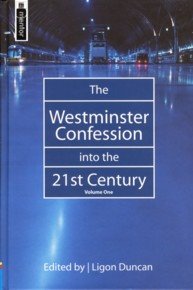
Westminster Into the 21st Century is a project headed up by Ligion Duncan III which will be a four volume set from modern theologians which show the relevancy of the Confession. The title is a bit deceiving since it also has articles concerning the Shorter Catechism, Larger Catechism, and some doctrines which are debatable yet confessional.

Some of the debatable articles include topics such as the Eschatology of the Assembly, The Scot's view of Establishment, and even one on the term "psalms, hymns, and spiritual songs'.

There are two of the four volumes that are available at this time. I got my copy of volume two on Tuesday and by Tuesday evening my pastor had me convinced that he needed to borrow it for the article on the theology of the Larger Catechism!

10 April, 2006

Anne Bradstreet and National Poetry Month

April is National Poetry Month (like anyone really cares). Anne Bradstreet was one of the earliest "American" poets, but many of her poetry remained undiscovered for years. She was a Puritan woman who served Christ and loved Him deeply which is evident by her many poems that have published. She also speaks to those that are lonely of heart as well seeing that her husband, Governor Simon Bradstreet was often away on political business. In recognition of National Poetry Month, pick up a copy of her poems so that you can be refreshed in your love and commitment to the Lord Jesus Christ.
In my distress I sought the Lord
When naught on earth could comfort give,
And when my soul these things abhorred,
Then, Lord, Thou said'st unto me, "Live."

Thou knowest the sorrows that I felt;
My plaints and groans were heard of Thee,
And how in sweat I seemed to melt
Thou help'st and Thou regardest me.

My wasted flesh Thou didst restore,
My feeble loins didst gird with strength,
Yea, when I was most low and poor,
I said I shall praise Thee at length.

What shall I render to my God
For all His bounty showed to me?
Even for His mercies in His rod,
Where pity most of all I see.

My heart I wholly give to Thee;
O make it fruitful, faithful Lord.
My life shall dedicated be
To praise in thought, in deed, in word.

Thou know'st no life I did require Longer
than still Thy name to praise,
Nor ought on earth worthy desire,
In drawing out these wretched days.

Thy name and praise to celebrate,
O Lord, for aye is my request.
O grant I do it in this state,
And then with Thee, which is the best.
09 April, 2006

Lord's Day Feature: a'Brakel on the Spiritual Life

A' BRAKEL ON TRUE PRAYER
A true prayer is originated by the Holy Spirit…. Under the administration of the means of grace he learns that the Holy Spirit is the author of prayer, and he learns from the Word of God that he must pray God for the Holy Spirit. By means of these natural convictions and motions the Holy Spirit works in the elect the inclination to pray and shows them that they neither have the right prayerful disposition, the right desires, nor do they express them correctly. The Holy Spirit will show them that He must work all this in them and that therefore they must pray for the Holy Spirit. They are thus secretly wrought upon to pray for the Spirit, and are therefore already praying for the Spirit by the Spirit. Those who presently perceive in themselves the beginnings of the operation of the Spirit will pray that this might be increased by the Spirit (III: 452-453).

06 April, 2006

People in Need of Change Helping People in Need of Change

Honest about the need for all Christians to change. Straightforward about the sufficiency of Scripture to bring counsel to those who need help. Compassionate in the approach. Reliant on Christ as the changer of hearts. Rebuking in calling out our fears about using the Word as the instrument of change. Worth reading for all Christians who desire to be used by God to aid in the sanctification of others.

"We must not let ourselves become comfortable with the casual, where ministry is limited to offering general principles that would fit anyone's story. The genius of personal ministry is that it is personal. It can take the grand themes of the Great Story and apply them with utter specificity to the particulars of an individual's life. Personal ministry is not preaching to a very small congregation. It is the careful ministry of Christ and his Word to the struggles of heart that have been uncovered by good questions from a committed friend. This means that an effective, God-honoring, heart-changing personal ministry idependentnt on a rich base of personal information. You cannot minister well to someone you do not know". p165

"When we approach moments of personal ministry, we do not come empty-handed, but with the theology of Scripture. The theology of the Word not only describes God's plan of redemption, it explains people as well. The Bible knows us, even to the deepest thoughts and motives of our hearts. It dramatically depicts our suffering and our joy, untangling the complexities of human relationships. It depicts human feeling, knowing, and communicating. If you read the Bible, you will know and understand people". p168

"Rebuke is the word the Bible uses for brining truth to where change is needed, yet most of us don't react positively when we hear it. For example, if I called you one night and said that I would like to come over the next morning and rebuke you, how would you respond? Would you run to a friend and say, 'The most wonderful thing is going to happen to me tomorrow! Paul is coming over to rebuke me. I can't wait! It has been so long since I have been rebuked.' That would not likely be your reaction. Many of us would rather go to the dentist and be drilled without Novocain. When we think of rebuke, we think of harsh words, red faces, ultimatums, and threats. We don't think of an act of patient and committed love. So it is important to consider what a biblical model of rebuke looks like. It is part of the Speak component of personal ministry, and we need to know what 'speaking the truth in love' is all about". p200

"Confronting people should not only confront them with failure and sin, it should also confront them with the gospel. We cannot forget this! We need to remind people of their identity in Christ (2 Peter 1:3-9; 1 John 3:1-3). We need to remind them of God's amazing promise of forgiveness (1 John 1:5-10), and the wonderful gift of the indwelling Holy Spirit (Eph. 3:20), who gives us strength to obey. These truths give believers the courage to examine their hearts, confess their sin, and turn to Christ. If we are speaking as agents of repentance, the law is not enough. We must come with the gospel as well". p213-214

"When we see Christians who do not exhibit Christian character or produce good fruit, we ought to ask why. What is missing? Peter's answer is, 'These people have forgotten who they are' ([2 Peter 1] v9). They have lost sight of their identity in Christ, so they do not realize the resources that are theirs. Because of this, they fail to live with hope, faith, and courage. Their problems worsen and new layers of difficulty are added. This heightens their potential to walk through life with a problem based identity. There are probably more people living like this than we would ever imagine. When I work though this passage with people, I am frequently impressed by how often they respond as if they have never heard these truths before. Their sense of who they are has usually been shaped by their problems". p262

03 April, 2006

Babies at the Lord's Supper

Paedo~communion is a doctrine that seems to be closely connected with the New Perspective on Paul. The new perspective teaches that Paul did not have a problem with the legalism of the Judaisers in the Galatian controversy, but the problem was with the refusal of Peter to commune as a Jew while Gentiles were present. It was not a Soteriological problem in the eyes of the New Perspective, but an Ecclesiological one. The idea of paedo~communion (administering the Lord's supper to infants or children who are able to eat solid food, at the discression of the parents) in the mind of those who promote it, is that since the Church is the new Israel then all of the rules of feasts from the Old Covenant apply. Logically, this leads to the New Perspective which does not have a problem with the legalism (which they call nomism) of the Judaisers, but allows for these 'cultural differences'.

Paedo~communion is attempting to maintain the continuity of the two covenants, but it is at the expense of some of the discontinuity that the New Testament writers show to exist between the covenants. As much as I love to read Douglas Wilson and the crew at Credenda Agenda, I believe that some of his latest theological hobby horses will prove to be nothing more than a Trojan horse full of heinous error.

02 April, 2006

Lord's Day Feature: a'Brakel on the Spiritual Life

RELECTION ON THE LORD'S SUPPER:
Reflection consists in a continual looking unto and having fellowship with the Lord. "...walk before Me, and be thou perfect" (Gen. 17:1); "And Enoch walked with God" (Gen. 5:24). To that end it is necessary that one views God in Christ as a reconciled Father. Even when spiritual light dissipates, if one falls into sin and if strife comes, one must nevertheless hold fast to the immovableness of the covenant. It is neither your feeling nor your standing or falling which determines the steadfastness or stability of the covenant; rather, it is based on the immutability of God. "For the mountains shall depart, and the hills be removed; but My kindness shall not depart from thee, neither shall the covenant of My peace be removed, saith the LORD that hath mercy on thee" (Isa. 54:10); "For I am the LORD, I change not; therefore ye sons of Jacob are not consumed" (Mal. 3:6). Therefore do not succumb so readily; hold fast what you have, be steadfast in faith, and conduct yourself manfully. If, according to your feeling, you cannot conclude the certainty of your state, then make the conclusion judgmentally. Observe this in the following passages: "Likewise reckon ye also yourselves to be dead indeed unto sin, but alive unto God through Jesus Christ our Lord" (Rom. 6:11); "Because we thus judge, that if one died for all, then were all dead" (2 Cor. 5:14). Therefore set the Lord continually before you and live in a continual dialogue with Him--at one time pray, then ask for counsel, then express your dependence upon Him, then wait upon Him, then reverently worship Him, then rest in Him, then thank Him, and then again, offer yourself to His service. Acquaint yourself thus with Him (II: 596].

30 March, 2006

Counsel From Job's Counsel

We live in an age where Christians are encouraged to get angry with God and to tell God all the ways that they disappointed with Him. We are told to lay out all of our "fault-finding" to the God who is sovereign and holds the ability to prevent harm and to improve the way that we live. Job is the Bible's book of pastoral counsel. There is no other book in all of Scripture that deals with the deep and painful hurts that children of God go through at times. Here is God's response to Job when he became a "fault-finder" towards the sovereign God who reigns over all to the point where not a hair can fall from our head outside of His Will and Counsel.
Then the LORD answered Job out of the whirlwind and said,
"Who is this that darkens counsel By words without knowledge?
"Now gird up your loins like a man, And I will ask you, and you instruct Me!
"Where were you when I laid the foundation of the earth? Tell Me, if you have understanding,
Who set its measurements? Since you know. Or who stretched the line on it?
"On what were its bases sunk? Or who laid its cornerstone,
When the morning stars sang together And all the sons of God shouted for joy?
"Or who enclosed the sea with doors When, bursting forth, it went out from the womb;
When I made a cloud its garment And thick darkness its swaddling band,
And I placed boundaries on it And set a bolt and doors,
And I said, 'Thus far you shall come, but no farther; And here shall your proud waves stop'?
"Have you ever in your life commanded the morning, And caused the dawn to know its place,
That it might take hold of the ends of the earth, And the wicked be shaken out of it?
"It is changed like clay under the seal; And they stand forth like a garment.
"From the wicked their light is withheld, And the uplifted arm is broken.
"Have you entered into the springs of the sea Or walked in the recesses of the deep?
"Have the gates of death been revealed to you, Or have you seen the gates of deep darkness?
"Have you understood the expanse of the earth? Tell Me, if you know all this.
"Where is the way to the dwelling of light? And darkness, where is its place,
That you may take it to its territory And that you may discern the paths to its home?
"You know, for you were born then, And the number of your days is great!
"Have you entered the storehouses of the snow, Or have you seen the storehouses of the hail,
Which I have reserved for the time of distress, For the day of war and battle?
"Where is the way that the light is divided, Or the east wind scattered on the earth?
"Who has cleft a channel for the flood, Or a way for the thunderbolt,
To bring rain on a land without people, On a desert without a man in it,
To satisfy the waste and desolate land And to make the seeds of grass to sprout?
"Has the rain a father? Or who has begotten the drops of dew?
"From whose womb has come the ice? And the frost of heaven, who has given it birth?
"Water becomes hard like stone, And the surface of the deep is imprisoned.
"Can you bind the chains of the Pleiades, Or loose the cords of Orion?
"Can you lead forth a constellation in its season, And guide the Bear with her satellites?
"Do you know the ordinances of the heavens, Or fix their rule over the earth?
"Can you lift up your voice to the clouds, So that an abundance of water will cover you?
"Can you send forth lightnings that they may go And say to you, 'Here we are'?
"Who has put wisdom in the innermost being Or given understanding to the mind?
"Who can count the clouds by wisdom, Or tip the water jars of the heavens,
When the dust hardens into a mass And the clods stick together?
"Can you hunt the prey for the lion, Or satisfy the appetite of the young lions,
When they crouch in their dens And lie in wait in their lair?
"Who prepares for the raven its nourishment When its young cry to God And wander about without food?
"Do you know the time the mountain goats give birth? Do you observe the calving of the deer?
"Can you count the months they fulfill, Or do you know the time they give birth?
"They kneel down, they bring forth their young, They get rid of their labor pains.
"Their offspring become strong, they grow up in the open field; They leave and do not return to them.
"Who sent out the wild donkey free? And who loosed the bonds of the swift donkey,
To whom I gave the wilderness for a home And the salt land for his dwelling place?
"He scorns the tumult of the city, The shoutings of the driver he does not hear.
"He explores the mountains for his pasture And searches after every green thing.
"Will the wild ox consent to serve you, Or will he spend the night at your manger?
"Can you bind the wild ox in a furrow with ropes, Or will he harrow the valleys after you?
"Will you trust him because his strength is great And leave your labor to him?
"Will you have faith in him that he will return your grain And gather {it from} your threshing floor?
"The ostriches' wings flap joyously With the pinion and plumage of love,
For she abandons her eggs to the earth And warms them in the dust,
And she forgets that a foot may crush them, Or that a wild beast may trample them.
"She treats her young cruelly, as if they were not hers; Though her labor be in vain, she is unconcerned;
Because God has made her forget wisdom, And has not given her a share of understanding.
"When she lifts herself on high, She laughs at the horse and his rider.
"Do you give the horse his might? Do you clothe his neck with a mane?
"Do you make him leap like the locust? His majestic snorting is terrible.
"He paws in the valley, and rejoices in his strength; He goes out to meet the weapons.
"He laughs at fear and is not dismayed; And he does not turn back from the sword.
"The quiver rattles against him, The flashing spear and javelin.
"With shaking and rage he races over the ground, And he does not stand still at the voice of the trumpet.
"As often as the trumpet sounds he says, 'Aha!' And he scents the battle from afar, And the thunder of the captains and the war cry.
"Is it by your understanding that the hawk soars, Stretching his wings toward the south?
"Is it at your command that the eagle mounts up And makes his nest on high? "On the cliff he dwells and lodges, Upon the rocky crag, an inaccessible place.
"From there he spies out food; His eyes see it from afar.
"His young ones also suck up blood; And where the slain are, there is he."
Then the LORD said to Job,
"Will the faultfinder contend with the Almighty? Let him who reproves God answer it."
-Job 38.1-40.2

27 March, 2006

Physician of the Soul

When Jesus heard it, he saith unto them, They that are whole have no need of the physician, but they that are sick: I came not to call the righteous, but sinners to repentance. ~Mark 2.17

Thank God that we have a Spiritual Physician who has diagnosed us as spiritually dead, yet did not leave us to pay eternally for our diagnosis. Christ has been our diagnostician as well as the one who has made us take the remedy in the application of the redemption of the cross. Let us live our lives as men and women who are thankful for that redemption which has been accomplished and applied for us through Christ.

Christ is the most cheap physician, he takes no fee. He desires us to bring nothing to him but broken hearts; and when he has cured us he desires us to bestow nothing on him but our love.
~Thomas Watson

26 March, 2006

Lord's Day Feature: a'Brakel on the Spiritual Life

True Distinguishing Marks of the Church

The primary and most eminent distinguishing mark is purity of doctrine--doctrine consistent with the Word of God. We are not now dealing with those who deny fundamental principles, but rather with those denominated as Christians who acknowledge God's Word to be the infallible truth. We must therefore consider how God's Word defines the distinguishing marks of the true church. Let him depart who does not wish to conduct himself according to God's Word. However, he who wishes to esteem the Word of God as the only rule of life and doctrine will be able to perceive from this Word that only that church is the true church which has the true doctrine, consistent with the Word (II: 30).

Secondly, one would be in much greater danger of error if one were to depend on the mere testimony of an assembly, since false churches also claim be to the true church. Consequently one must have an infallible and dependable distinguishing mark which is free of error and cannot cause one to err. This is only true for the Word of God. If one therefore hears a church make claim of being the true church, and one examines doctrine and life by this Word and finds them to be in harmony with it, one can say with the believing Samaritans, "Now we believe, not because of thy saying: for we have heard Him ourselves, and know that this is indeed the Christ, the Saviour of the world" (John 4:42). It thus remains certain that the Word is the true distinguishing mark by which it is ascertained which church is true (II: 34).

If holiness is a distinguishing mark of the church, we will be able to identify the church by the same, and thus a church where true holiness is absent is not the true church. Other churches also boast of holiness, but all that is called holiness is not holiness. Therefore we must first determine from God's Word what true holiness is (II: 35).

True holiness springs forth from true faith. Where true faith is absent, true holiness will likewise be absent. Faith receives Christ as Surety unto justification and sanctification (John 1:12). By faith the soul is truly united with Christ (1 Cor. 6:17). By faith Christ, who is their life, dwells in their hearts (Eph. 3:17). Faith purifies the heart (Acts 15:9). Faith worketh by love (Gal. 5:6), and faith causes them to bring forth good works (James 2:18) [II: 35].

We hold the third distinguishing mark of the true church to be the proper administration of the Sacraments. Again this must be determined from the Word of God, and thus not be viewed independently but rather in conjunction with the other distinguishing marks. Wherever the first distinguishing mark is to be found, the others will be found likewise (II: 36).

These keys must not be used independently, however, but in conjunction with all the other distinguishing marks; their correct use must be determined by the Word of God. If those who err in doctrine and lead offensive lives are excluded, whereas those who are orthodox in doctrine and godly in their walk are included, the keys are used correctly; and by this one will be able to identify the true church. If anyone is included, however, regardless of what their doctrine and life may be, or if those are excommunicated who are orthodox in doctrine, while including in the fellowship of the church those who err, then such a practice is very evidently a mark of the false church. As imperfection is to be observed everywhere, and since this accompanying imperfection does not nullify the matter itself, there is also imperfection in the use of these keys. Although in one particular church these keys are used more consistently than in another church, one will find the proper use of the keys in the church (II: 36, 37).

25 March, 2006

Aubourn Avenue vs. the Emergent Church

Credenda Agenda has written a critique of Brian McLaren's A New Kind of Christian. They have a lot to say to us Reformed people. We need to listen to this movement and hold onto that which is good.

For all his flaws, though, let's face it—we have guys like McLaren leading a sizeable heap of Christians because we Reformed types consider the Great Commission something of a spectator sport. We consider intramural arguments among postmillenialists more important than feeding the poor in Africa. We haven't the slightest idea how to get our finely-tuned engine into a car, let alone out on the road. We take our talents, bury them, and call our riskless life "good stewardship." The Kingdom of God is much more than the baptistic evangelical altar call. It is much more than the simpering religious bricolage of Emergent. It is also much more than our own myopic infighting. We know for a fact that the Kingdom, the church, is a conquering, holy nation of kings and priests living in the world that God has promised to liberate and has liberated in Jesus. We know and assent to this—and without needing postmodernism to tell us so—but we won't feel it in our bones until we go out to the highways to bring in the poor and the lame and the maimed and the blind.

Theo-speak


Tulip Girl has shown us via Douglas Wilson that even us Reformed and Presbyterian Christians can speak in tongues. The problem is that some choose to do so at the expense of letting the unconverted, who need to hear the evengelion, understand the epistemological foundations of the divine syllabus thus making our missiological vocatsio of no effect out of acting antithetically to the revealed characterological nature of God which is the speak in condescension and in anthropomorphic terminology.

24 March, 2006

The Law and the Christian

Today's Christians often err on either side of extremes concerning the law and the Christian. On the one hand, Christians who fear being legalistic disregard the law and say that it has no use to the Christian life- this is called Antinomianism. The other extreme is that people are justified by doing the law- they believe that they are saved through the keeping of the law. This is called Legalism.

The historic Protestant position is that the Christ justifies the sinner by grace, based on NOTHING OTHER THAN GRACE. When one is justified he then begins to keep the law out of gratitude and love for Jesus Christ. Jesus said, If you love me, you will keep my commandments.

1 John 2:3-4 And hereby we do know that we know him, if we keep his commandments. He that saith, I know him, and keepeth not his commandments, is a liar, and the truth is not in him.

But there is no one who in everything keeps them; there would thus be no knowledge of God in the world. To this I answer, that the Apostle is by no means inconsistent with himself; since he has before shewed that all are guilty before God, he does not understand that those who keep his commandments wholly satisfy the law (no such example can be found in the world;) but that they are such as strive, according to the capacity of human infirmity, to form their life in conformity to the will of God. For whenever Scripture speaks of the righteousness of the faithful, it does not exclude the remission of sins, but on the contrary, begins with it.
But we are not hence to conclude that faith recumbs on works; for though every one receives a testimony to his faith from his works, yet it does not follow that it is founded on them, since they are added as an evidence. Then the certainty of faith depends on the grace of Christ alone; but piety and holiness of life distinguish true faith from theft knowledge of God which is fictitious and dead; for the truth is, that those who are in Christ, as Paul says, have put off the old man. -Calvin Commentaries

23 March, 2006

To Bear Witness


Is your faith genuine enough to die for it? Ask yourself whether your relationship with Christ is worth your own life.

21 March, 2006

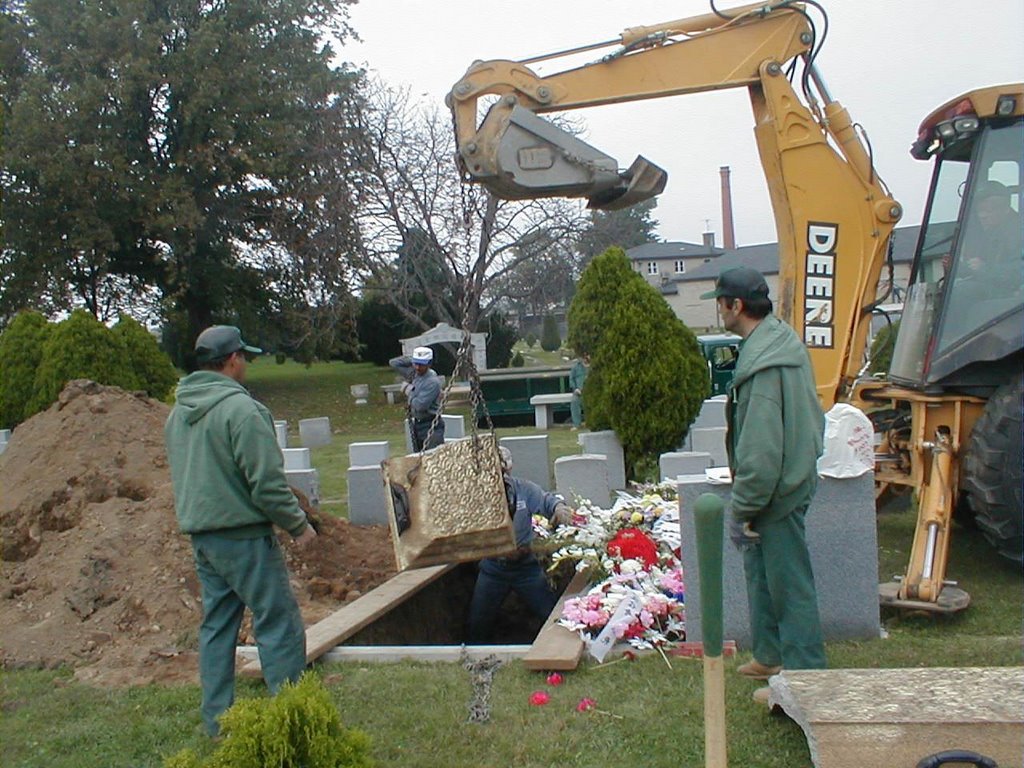
What Will Be Said At Your Funeral?

Then I saw the wicked buried; they used to go in and out of the holy place, and were praised in the city where they had done such things. This also is vanity.
RSV Ecclesiastes 8:10

The Preacher of Ecclesiastes has a lot to say to our age. In the text we see the funeral of a wicked man, a man who has not been converted to Jesus Christ; a man who refused to submit to Christ. The people at the funeral all speak highly of him- because that is what is done at funerals. The people are unaware of the true condition of his heart- wicked, evil, unconverted. This man's life is a lie and he in turn causes others to lie by praising him for his life. Friends, this too is vanity.

The Preacher of Ecclesiastes knew that the heart of the hypocrite, that has spent so much time in the house of God with the people of God, is now in hell for all of eternity. The Preacher calls all of us to see whether or not our faith is genuine. Do you really trust Christ alone through faith alone for salvation, or are you still trying to earn God's favor by good deeds such as going to the holy place. Friends, this is damnable, and it prove that your life too was lived in vanity.

20 March, 2006

Tom Cruise the Theologian

It does not take a Master's of Divinity to understand that there are some religions out there that are just plain scams. Christians should be able to understand the Scriptures enough to reprove those that teach fallacious religions.

I would like all people to have a proper understanding of Apologetics and how one can defend the True Religion. Without getting into VanTil and Presuppositionalism I thought that we could start PRESBYTERIAN THOUGHTS: Apologetics 101 with a lesson in what is one of the most popular religions at the present time.

Watch this to gain a better understanding of what Tom Cruise and his Scientologist friends teach. It is only about three minutes long. Comment on what your impressions were after watching this.

19 March, 2006

Lord's Day Feature: a'Brakel on the Spiritual Life

The Godly Exhorted not to Be Fretful
Do you not perceive that this is idolatry? There is a secret departure from God, a neglect of depending upon Him, and a secret denial of God's providence. There is a secret accusation of cruelty and unwillingness on His part to care for you, of mutability, and of not being faithful to His promises. Under pretense of being concerned about necessities, there is a desire to rely upon temporal things and a living by bread alone--and even if one does not solely put his trust in temporal things, is nevertheless partially true. God and the things of this world together must grant us satisfaction. Or else, do you serve God in order that He would give you temporal things? What an evil disposition this is. How far removed this is from Asaph's disposition: "Whom have I in heaven but Thee? and there is none upon earth that I desire beside Thee. My flesh and my heart faileth: but God is the strength of my heart, and my portion for ever" (Psa. 73:25-26)! Upon coming before God, be therefore ashamed about your sinful disposition (III: 387).

All your concerns are in vain and you will not gain one penny by them. God has already decreed from eternity how much you will have. There is a "convenient" portion (Prov. 30:8) which God has appointed for everyone and which He gives at His time. No one will take away this portion from you nor will it be diminished. With all your concerns and anxiety you will neither add one nickel nor break or change the determinate counsel of God (III: 388).

As far as you yourself are concerned--you bring yourself into continual unrest, apprehension, fear, and anxiety. You rob yourself of delighting and rejoicing in God. You impede your growth, since your disposition displeases God, and renders you unfit to appropriately use the means for spiritual growth. Your concerns will cause the Word and your good inner motions to be choked, thus rendering them unfruitful (Mat. 13:22). Unbelief has opportunity to surface and will toss the anxious soul to and fro. The desire for religious exercise decreases and free access to God is hindered. The thoughts that these adversities come upon you in God's wrath cause the soul to tremble. Thus, to a great extent quietness, dependence upon God, a childlike confidence in God, and walking with God disappear. Would you lose all this for a greater or lesser quantity of bread, for getting your way, for your own honor, and for the future, of which you do not know how it will be? Oh, these matters are too insignificant to permit the well-being of your soul to dissipate (III: 389).

16 March, 2006

Reformed or Dispensationalist?

I have many friends that are Dispensational in their theology. Some know why they are Dispensational, others do not. There are some major differences between Dispensationalists and Reformed people in the way that they view the Bible. I think that this is a fair analysis of what some of the differences are, including some of the major flaws with the arguments.


The difference between Reformed and Dispensational Theology

14 March, 2006

On Conformity to His Image

We can learn a lot about the progression of our sanctification from the way that the Lord called and formed his disciples into the men that he wanted them to be. Each of us grow differently as we draw closer to the Lord in word, thought, and deed. The Lord knows what we are in need of as well as what will need to be mortified and vivified in order to make us the men and the women that he is calling us to be. This is seen very clearly in the different ways that John and Peter grew in grace and knowledge of Jesus Christ.

The faults of the two brethren being so opposite, growth in grace would naturally assume two opposite forms in their respective experiences. In Peter it would take the form of concentration; in John, of expansion. Peter would become less charitable; John would become more charitable. Peter would advance from indiscriminate goodwill to a moral decidedness which should distinguish between friends and foes, the Church and the world; John's progress, on the other hand, would consist in ceasing to be a bigot and in becoming imbued with the genial, humane, sympathetic spirit of his Lord. Peter, in his mature state, would care much less for the opinions and feelings of men than he did at the present time; John again would care much more.
~A.B.Bruce, The Training of the Twelve, p474

12 March, 2006

Lord's Day Feature: a' Brakel on the Spiritual Life

PRESBYTERIAN THOUGHTS will host a new feature (since all great blogs have features) for the Lord's Day. With the Lord's help there will be a classic and meaty quote that can aid in your spiritual meditations for the Lord's Day.

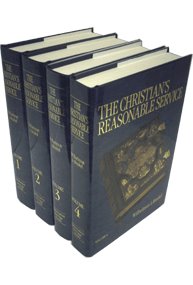
All quotes are going to be taken from the magum opus of Wilhelmus a'Brakel (1635-1711) entitled, A Christian's Reasonable Service. The quotes will all revolve around the Christian's spiritual life. I hope that these meditations will aid in your walk with the Lord Jesus Christ.

~NE

Love is the sweet motion of the heart toward God--infused into the hearts of believers by the Holy Spirit--whereby they, by virtue of union with Him and in view of His perfections, delight themselves in God, and in a joyous embrace of His will fully surrender themselves to His service (III: 264).

The Holy Spirit, igniting love in the hearts of God's children, operates in harmony with man's nature. Man cannot love what he does not know and his love cannot go beyond that which he knows. The Holy Spirit thus also works this love by the medium of knowledge. God gives enlightened eyes of understanding to His children. He reveals Himself to them, they know His perfections, and the love of God is thus ignited in them. "Every one that loveth is born of God, and knoweth God. He that loveth not knoweth not God; for God is love" (1 John 4:7-8); "Thou shalt love the Lord thy God with all thy heart, and with all thy soul, and with all thy mind" (Mat. 22:37) [III: 265].

To love God is a privilege of the elect. They, as others, were the children of wrath. However, God draws them out of the state of sin, gives them life and a child-like disposition, and thus also a loving heart. Since they are born of God, and since God is love, their nature resembles the nature of their heavenly Father, and they love Him. Their intellect, will, and affections have not only been rendered capable, but they are also active in love toward God. It is not sufficient for them to nourish love within, but they are active in manifesting this with their tongue, eye, and the entire body. They are thus known as lovers of God and are therefore also referred to as "those that love." Ye that love the LORD, hate evil" (Psa. 97:10); "They that love His Name shall dwell therein" (Psa. 69:36) [III: 266].

11 March, 2006

Sermons Now Available

Thanks to the compunerdability of James W. Lanning, the recent sermons of Rev.Lanning are now available for downloading. Save them, email them, trade them with your friends!

Sermons of the Associate Reformed Church of Grand Rapids

(1 Kings 21:21) Behold, I will bring evil upon thee...And will cut off...him that pisseth against the wall

Everyone that has spent more than ten minutes in a Christian bookstore recognizes these paintings. Thomas Kinkade is THE evangelical artist who has become a multi-millionaire over the past decade selling his paintings and other related items. They usually have a nice Bible verse about how nice and neat is our God.

This week Thomas Kinkade was arrested (allegedly) for going on a drunken rampage wherein he urinated on a statue of Winnie the Pooh out of a rage concerning his contract. (See article below.)


Galatians 5:22-25 But the fruit of the Spirit is love, joy, peace, longsuffering, gentleness, goodness, faith, Meekness, temperance: against such there is no law. And they that are Christ's have crucified the flesh with the affections and lusts. If we live in the Spirit, let us also walk in the Spirit.

Thomas Kinkade, LA Times

10 March, 2006

The Little Bible

For centuries Reformed Christians have loved the book of Psalms. We have sung them, we have found comfort in them, and especially, we have found much of the Lord Jesus Christ in them! John Calvin called the book of Psalms a complete anatomy of the parts of the soul. The Psalms truly are a "little Bible" as Luther called them- they are full of vibrant, living, and experiential Christianity.

In 1560 a translation of the Bible (complete with Psalms for singing) was completed by some of the world's most foremost Reformed scholars and pastors. This translation, and the notes especially, continue to be loved and cherished by many in the Reformed and Presbyterian tradition. Here is the Geneva Bible's introduction to the book of Psalms. It embodies the way in which the Reformed have viewed this book:

This book of psalms is given to us by the Holy Spirit, to be esteemed as a precious treasure in which all things are contained that bring to true happiness in this present life as well as in the life to come. For the riches of true knowledge and heavenly wisdom, are here set open for us, to take of it most abundantly. If we would know the great and high majesty of God, here we may see the brightness of it shine clearly. If we would seek his incomprehensible wisdom, here is the school of the same profession. If we would comprehend his inestimable bounty, and approach near to it, and fill our hands with that treasure, here we may have a most lively and comfortable taste of it. If we would know where our salvation lies and how to attain to everlasting life, here is Christ our Redeemer, and Mediator most evidently described. The rich man may learn the true use of his riches. The poor man may find full contentment. He who will rejoice will know true joy, and how to keep measure in it. They who are afflicted and oppressed will see what their comfort exists in, and how they should praise God when he sends them deliverance. The wicked and the persecutors of the children of God will see how the hand of God is always against them: and though he permits them to prosper for a while, yet he bridles them, so much so that they cannot touch a hair of ones head unless he permits them, and how in the end their destruction is most miserable. Briefly here we have most present remedies against all temptations and troubles of mind and conscience, so that being well practiced in this, we may be assured against all dangers in this life, live in the true fear and love of God, and at length attain the incorruptible crown of glory, which is laid up for all who love the coming of our Lord Jesus Christ.

08 March, 2006

The Duties of the Government

Either we have no idea what the Bible says about the role of the civil government or we have fallen way off course with the relationship of the State and the Church. Do Christians even believe this stuff? It is the duty of civil government not only to uphold the second table of the law, but also the first. It must see to it that God is honored. It may not tolerate any idolatry, worship of images, or any false religion within her jurisdiction, but must rather eradicate these. It must prevent the vain use of God's Name by way of cursing, swearing, and blasphemy. It must prevent the desecration of the Sabbath, punish violators of this commandment, and see to it that the gospel is proclaimed everywhere within its jurisdiction. It must see to it that the church, as the darling of the Lord Jesus, is protected and preserved; and that neither internal dissension nor any external oppression disturb or destroy the church, but that instead she be safely preserved in the use of the privileges and liberties which her King Jesus has given her

~Wilhelmus a'Brakel (II: 179).

06 March, 2006

Providence Towards Providence

This is a true story of the grace of God at work in the life of a church:
As some of you may have heard, Providence Reformed Church burned extensively last week. This congregation is a group of Christians that split off from the Heritage Reformed Churches for reasons that were not related to doctrine or unbiblical practices on the part of the HNRC. They broke off of this congregation over a ministerial dispute with a pastor.

This week the HNRC offered the chapel at Puritan Seminary for Providence's Sunday services and educational instruction. The very minister that Providence Reformed opposed is now the one that is offering the use of 'his' building until Providence is able to have their building restored.

I see this as a great act of the grace of God in the life of a minister that has been very hurt by this schism. This is also to be seen as the grace of God in the life of a denomination- to offer their facilities to a group that publicly opposes them! May the Lord use this experience to heal this fracture within the body of Christ and call Providence to be reunited with their fellow believers.

Fire does $150,000 damages at Northeast Side church

Tuesday, February 28, 2006
By Dave Murray The Grand Rapids Press
GRAND RAPIDS -- Audrey Rusthoven pointed to the back corner of Providence Reformed Church as smoke poured through its windows. She thought of a day in 1960. "I got married in the chapel, right there," she said, fighting back tears. "It just makes you so sad to see this happen." Firefighters were called to the church around 12:30 p.m. Monday to put out a blaze that apparently started in the northeast corner of the basement and caused more than $150,000 in damage, officials said. Fire Chief John VanSolkema said firefighters broke windows along the back and side of the building to help knock down the fire, but he said stained glass windows and the sanctuary suffered only smoke damage. "I thought the guys really did an excellent job in there," he said. No one was in the building when the fire started, and a firefighter was treated at the scene for a minor injury. VanSolkema said the damage appeared to be contained to the basement and a room above the furnace that a parishioner called a "ladies' lounge." Investigators had yet to determine a cause. The church, at 1700 Coit Ave. NE, has been an anchor in the Northeast Side neighborhood since it was built in 1928. It was known as Bethel Reformed until 2000, when the congregation had dwindled to 35 aging members.
The building was passed on to a new congregation shortly afterward, said Irene Hart, who has worshipped with both groups. "I was just there yesterday," she said. "I've been going to church in that building for 50 years. My husband once worked as the janitor, so I know every square inch of it." It's the second large fire the church has endured. A 1994 blaze caused it to undergo a similar amount of repair. The church serves about 25 families, and is between pastors, although it has offered the job to someone, congregation member Elizabeth Rozeboom said. Neighbor Kirstyn Stevens said she came home for lunch, saw smoke and called firefighters. She ran into her house to grab her cat, Peanut, and some prized family photos. "It was pretty scary because I didn't know if anyone was inside the church," she said.

05 March, 2006

Sermon Quote

Concerning the fruit of Liberal Christianity and especially their view on Christology: "A devout Muslim believes more about Jesus Christ than the average Methodist, Congregationalist, or Presbyterian today".

-Rev. Ray Lanning

03 March, 2006

A Life Viewed Through Faith


By faith we believe that God is working all things to our good and to his glory. By faith we hold onto the promises of Scripture knowing that this world is not our home, knowing that we are mere pilgrims in this world, that we are seeking a city whose builder and maker is God. By faith we march on with confidence, knowing that which the Bible says is true. We believe by faith, we grow in grace by faith, we draw closer to the Lord Jesus Christ by faith. By faith we sit at the feet of Christ learning in his school. We seek more of the Spirit's wisdom by faith and we view the world around us by faith. By faith we are saved, and by faith Christ will carry us to glory upon our departure from this world. By faith we anticipate the dead raised, the world judged, and eternity with our God and our King.

"Faith, I may well say, is the mother of all graces; it conceives and brings them forth, and takes care to promote their growth; it contributes life to them at first, and causes them to thrive and flourish afterwards. With faith our meaner services meet with a cheerful and favorable acceptance; and without it, all the most pompous devotions and all the most tedious and painful mortifications that we could ever practice would be of no value in the sight of God."
- Timothy Rogers, 1691

02 March, 2006

Free Seminary?


I have stated for a long time that I believe that a good Master's of Theology degree would be a great resource for all Christians.

Many Christians today do not have the proper theological instruction to trian their children, discuss with their spouse, or even enough theological knowledge to refute the Jehovah's Witness next door.

Well folks, as the Golden Age draws nigh, more and more theological resources are becoming available for the layman. Covenant Theological Seminary now has all of their lectures available in mp3 format.

Fire up the Ipod and dedicate an hour a day towards advancement in theological knowledge! (If you do not have an Ipod, you can listen on your computer or have someone burn them onto CD.)